Monday, August 5, 2019

Leaving Home 2.0: The Heart of - and Hope for - America Lies Next Door


Leaving Home 2.0
The Heart of - and Hope for - America Lies Next Door


The Metamorphosis


Well I left my happy home to see what I could find out.
I left my folk and friends with the aim to clear my mind out.
I hit the rowdy road and many a kind I met there. Many a story told me of the way to get there.
So on and on I go and seconds take the time out there’s so much left to know and I’m on the road to find out.

~ Cat Stevens


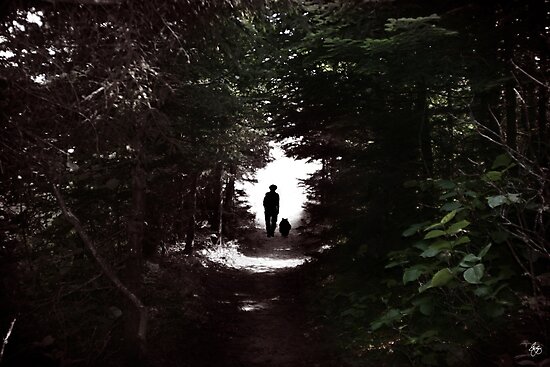
With tears in my eyes I made a final walk-through of my now-empty happy home. About to become the happy home of Jill and Oli and their two beautiful children.

It had been almost a year since losing the love of my life, Alice, and here I was about to experience a second wave of grief. . . Leaving home 2.0. It turned out to be both a source of immense sadness and a powerful and positive lesson in life because the process of saying goodbye to Rumney gave me a new appreciation for what it had given me all these years.

Most of us will have to experience this at least one time, if not more, in our lives. I remember leaving home 1.0, but because of college and some travels with my friend Christopher afterward, the transition did not really seem so difficult then.

I remember that NH’s Tom Rush provided the music of that moment with his “Child’s Song”.


Goodbye Momma
Goodbye to you too Pa.
Little sister you’ll have to wait a while to come along.
Goodbye to this house and all its memories . . .
Got to make one last trip to my bedroom. Guess I’ll have to leave some stuff behind.
Funny how the same old crooked pictures, just don’t seem the same to me tonight.

~ Tom Rush

The Rising Too


It was spring of 1980 when I put down one month’s rent and one month security on a little brown shingled cottage on Main Street in Rumney owned by Joe and Nancy Kolb. Joe and Nancy lived across the street in a rambling beautiful home that served as both their residence and a space for Joe’s woodworking business and Nancy’s Quilt shop. In the three years I lived there Joe was always only a phone call away if there was a problem. He was the model of a reliable landlord and a good neighbor.

Just to the south lived Donald “Pick” Jaquith who was widely acknowledged to have the most beautiful flower gardens in the area. I would often look out my windows toward his gardens and see various neighbors, including Betty Jo and Bill Taffe, or Ann Kent walking the garden with Pick. Pick died a few years after that and he would have been thrilled to see that Betty Jo and Bill picked up the torch after him. Today people stop to look at their beautiful gardens as often as they did with Pick’s. Pick Jaquith showered the community with love and flowers for most of his life and now that role falls to Bill and Betty Jo.

Betty Jo was a Republican State Representative when I first moved to town and for quite a few years after that. She established herself as the leading House authority on Education and she was part of an extraordinary contingent of smart, powerful and moderate Republican women who made all of us proud to be anywhere in their orbits: Donna Sytek, Phoebe Chardon, Liz Hager, Sally Townsend and Caroline Gross to name a few. When I ran as a Democrat for the Senate a few years later, Betty Jo had to be careful about her involvement - but Bill was at my house several times a week building lawn signs and providing moral support. I always knew who’s corner both of them were in and I have always been grateful.

Spring's Dance of Form


Just down the road from Betty Jo and Bill, Cindy Perry and Norrie Parr have lived since before Alice and I built our house up on the Stinson Lake Road. Cindy was a teacher in the Russell School for all the years that Zach was a student there. She was his favorite teacher and he never misses a chance to visit her when he returns to town, even for a few days. An extraordinary teacher breathes life into a child’s imagination that lasts a lifetime. Cindy was that kind of teacher. Norrie was the consulting forester at Grafton County Cooperative Extension and he was always willing to pay us a visit when we needed advice about logging or just managing our small wood lot. Norrie had forgotten more about trees than I ever knew - even though I had been a dendrology ace at UNH during my college years. Cindy, and her neighbors Diana Paquette, Maggie Everts, Barbara McElroy, Melody Funk, and others, along with Alice, were among an extraordinary group of women who formed “GotLunch! Rumney” to provide lunches to children in town who might not have adequate food during the summer months, when the school lunch program was not a source of sustenance. There were plenty of us of the male persuasion who supported the effort, but the brains and the heart of the organization were these amazing women all of whom enriched Alice’s life and mine immeasurably.

As I drove away from my life in this extraordinary town for the first time I thought back on many of those who had come before but were no longer with us. Faith Moulton, from whom I bought my first home, a 17 room monstrous farmhouse with only ¾ of a bath in the entire building and not a lick of insulation anywhere. Faith helped me finance the purchase by taking a second mortgage and I gave her a place to live for a year while she made the transition in her own life. At any one time the building had been the town’s funeral home, Post Office and Town clerks office under the direction of Faith’s late husband Lyn.

There was Doris Tunnell and her daughter-in-law Betty. Doris was a rock ribbed Republican who introduced me at my first Senate campaign announcement. She wore those big glasses so fashionable in the sixties that looked like they had wings. Her smile held a thousand secrets and a sense of humor second to none in Rumney.

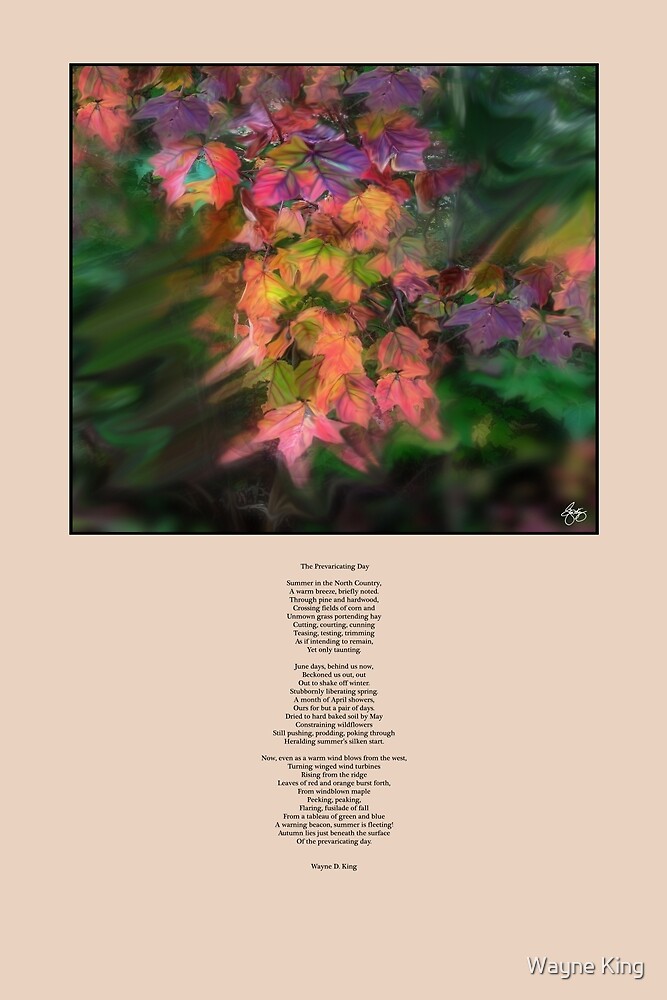
The Prevaricating Day

Purchase a signed original here.


I’ve told you in this column about Ann and Joe Kent who started the Quincy Bog Natural Area. Joe and Ann were the James Carville/Mary Matalin of Rumney. He a Colonel from Vietnam and a true conservative, just as interested in getting the most from a dollar as he was in conserving the natural resources of Rumney including the Bog. Ann had a heart as big and generous as the Mountains. Her heart beats still in her daughters Jennifer and Martha. She was the liberal wing of the Kent household. But like the birds they both spent hours watching together, they flew highest and strongest when both wings were strong and working together as one. Ann and Joe were as different in their ideologies as two people could be yet both were deeply committed to our community. After Joe died Ann had an honored seat at our Thanksgiving and Christmas table every year along with our neighbors Kevin and Debbie Maes and their family. Kevin & Debbie Maes have been friends and neighbors since Alice and I moved in. I was away in Africa on business one year when a microburst felled huge White Pines across our driveway, knocking out the power and stranding Alice and Zach. Kevin was there the next morning - chainsaw in hand - to make sure Alice and Zach were not stranded any longer.

Kevin later ran for State Rep and won and has served with distinction for going on 6 years now. He’s recently been joined by Francesca Gothie Diggs and I can honestly say that the town has not had better representation since Betty Jo Taffe made her mark. Francesca is already making a mark with a strong and empathic community focus to her service.

Not everyone who has had an impact on my life here in Rumney has been a friend or a fan. It took me a lot of years to get Bob Berti to mark the other side of his ballot but he was a giant among those who dedicated a big portion of their lives to the welfare of our little community and I respected the hell out of him and never gave up. Now I am proud to call him my friend and he once even admitted that he had put a check next to my name on more than one occasion.

Then there are Steve & Joanne Decosta - in my earlier years there was rarely a town meeting that didn’t find us on opposite sides of nearly every issue. Even on some very contentious state issues. Yet last year when my dog, Boof, escaped Steve and Joanne rescued him and called me to say he was safe and sound in their home. When I picked Boof up at their home we talked with one another like old friends and I came away humbled by the lesson.

Wind in the Washline Haiku


Arthur Morrill was another person who showed up in support of my opponent in every Senate election and he always had a tough question for me - usually about run away spending. I gave as good as I got in those exchanges - usually suggesting that we should privatize the state agency that Arthur worked for - with tongue firmly planted in cheek. But when Arthur would show up to assess our home for tax purposes every few years he was always fair and honest. I learned an important lesson about honest dialog and free expression from Arthur and I will never forget it.

By now you are well acquainted with Micky Lewis - who kept our long driveway plowed and sanded every winter. Only a few months ago he told me how mad he was at me back in 2005 because I had revealed the location of our local swimming hole in “Heart of New Hampshire Magazine” because for a while it was overrun with “unwanted “ visitors. But his ire was unimportant when we ran out of wood during a brutal cold snap a few years ago and Micky dug into his reserve supply to make sure we stayed warm. Zach and the local young folks call him “coach” because he is always willing to give them the benefit of his wisdom and experience. Over the years he has done the same for Alice and I and we loved him for it.

I’ve only touched the tip of the iceberg that is my beloved community. There’s Keith and Andrea, Lee and Alan, Paul and Joan, Terry and Miriam, Brad and Laurie, Gary and Nancy, Edie, Wally, Brian, Collette and Tony, Mindy, Karen, Ross, and TJ, Carol and John, Nate, Brian, Adrina, Hank and Debbie, Mike and Dolly and I have not even gotten beyond Main Street. . .

Like the long and winding road on which I now find myself embarking, these vignettes I have shared with you have led me along a circuitous route to the lessons of community. They are the acorns that have grown to become the oak of my experience. The lessons I have learned from these people, and others, in my small town - both those still living and those no longer with us - fill my heart with gratitude. The lessons of community here in the shadow of Rattlesnake Ridge reveal a path to a future defined by hope, tolerance and a shared common humanity. The hope for our world and our democracy can be found here - and in every community - in the ever widening circles of our common values and our common humanity.

In his extraordinary book, “The Coddling of the American Mind” co-author Jonathan Haidt quotes civil rights leaders Rev. Dr. Martin Luther King and Rev Dr. Pauli Murray in describing this “Common Humanity Politics” a broadly encompassing and inclusionary vision that seeks to bring us together in common cause. He specifically quotes King’s “I Have a Dream” speech and the words of Rev. Dr. Pauli Murray:

“When my brothers try to draw a circle that excludes me, I will draw a larger circle that includes them. When they speak for the privileges of a puny group, I shall shout for the rights of all mankind.”

For 35 years the people of Rumney have drawn those wider circles that declare we are in this together.

These lessons do not kill the sadness of the changes that must come but they amplify the joy that helps us continue on this journey we call life.

To all of the people of Rumney - thank you. You will be missed. I’m so happy and blessed to have traveled this road with you.


Whisper of a Winter Wood Haiku


About Wayne D. King: Wayne King is an author, artist, activist and recovering politician. A three term State Senator, 1994 Democratic nominee for Governor, former publisher of Heart of New Hampshire Magazine and CEO of MOP Environmental Solutions Inc., and now host of two new Podcasts - The Radical Centrist (www.theradicalcentrist.us) and NH Secrets, Legends and Lore (www.nhsecrets.blogspot.com). His art is exhibited nationally in galleries and he has published three books of his images and a novel "Sacred Trust" a vicarious, high voltage adventure to stop a private powerline all available on Amazon.com. He now lives in Thornton, New Hampshire at the base of Welch Mountain where he proudly flies both the American and Iroquois Flags. His website is: http://bit.ly/WayneDKing . You can help spread the word by following and supporting him at www.Patreon.com/TheRadicalCentrist .
Thursday, July 4, 2019

Want a Green Revolution? Build it from the Center and Work Outward - FAST

The Metamorphosis


Want a Green Revolution? Build it from the Center and Work Outward - FAST
Pathways to a Sustainable and Bipartisan “Green New Deal”

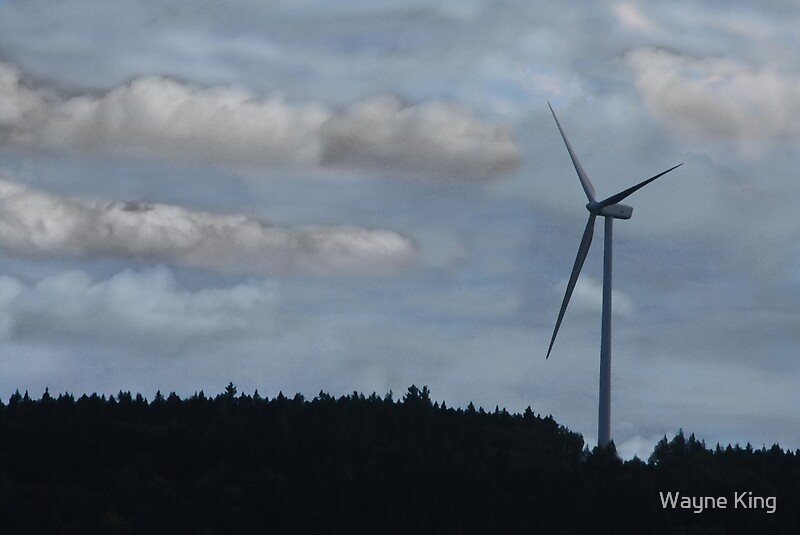
The Bipartisan Energy Innovation & Carbon Dividend Act Reduces Carbon Pollution and Income Inequality and could form the foundation of a real and profound shift toward a cooler planet and a more democratic economy.

In every small cafe, bistro and coffee shop here in the shadow of Rattlesnake Ridge there is growing buzz about the “Green New Deal”. Mostly, on both ends of the political spectrum, it’s a knee jerk reaction on one side or the other based on ideology. Most folks, though, are just puzzled by it because they can’t seem to put their arms around what, exactly, it is, and with good reason, even the sponsors don’t really know.

Some present it as an effort to save the planet, but let’s be real. Mother earth doesn’t need to be saved. . . we do; along with more than a million species who share this planet with us.

Whether we reverse climate change or not, the earth will continue to spin and, until the day our Sun either explodes or simply engulfs the planets, it will continue to spin. Oceans will rise, currents will change directions or shift, catastrophic geologic and atmospheric events will increase, at some point the planet will be plunged into another ice age even, as the effects of warming will, in the geologic cycle of change, be followed by a cooling event. But the earth will go on. The question is: will Homo Sapiens?

Further, the recent alarming UN Report on extinction suggests that we are on the verge of an extinction event for more than one million other species who share the planet with us.

Most experts agree that - at best - we have two decades before the effects of climate change will be irreversible, many insist that 10 years, perhaps fifteen if we are fortunate, is a more accurate number.

We don’t have time to engage in a pitched partisan battle of the extremes, that will only drag this out and in the end the bitter divisions that today cause us to fear for our Republic will become the divisions that threaten the human race.

The good news is that we can have a Green Revolution built from the center out where people of good-will, Democrats, Republicans, Independents and non-voters alike join together to act and act fast.

The Whisper of Wind - Signed Original

The even better news is that this provides an opportunity for Americans to rally around a cause and perhaps find a path beyond the poisonous partisanship that has infected our country.

In actuality “The Green New Deal” is more a set of goals or a Call to Action on the most serious existential threat that humanity has ever faced. How we achieve those goals - even what they are - is completely up to us.

First and foremost, we must be willing to speak with one another and, more important, to listen to one another.

Last month one prominent Democrat dismissed out of hand a set of proposals by Senator Lamar Alexander (R-Tennessee) focusing mostly on Research and Development, despite the fact that it had some very good ideas incorporated into it. More important, Alexander acknowledged the fact of Climate Change and put forward constructive ideas for addressing the problem. If that Democratic Congresswoman had simply welcomed the contributions of Alexander and invited him into the tent, we would now be one vote closer to a tipping point. She, alas, was more interested in partisan political advantage than the crisis at hand.

Make no mistake about it, those who use this crisis to gain partisan political advantage are as guilty as those who deny Climate Change. . . perhaps more because they are cynically exploiting the good will of those who want to solve this problem while inserting a poison pill into the process.

I would have much preferred a different name. “A Green Moon Shot” or something less divisive than a reference to the New Deal, but I’m late to the party when it comes to positioning statements on Climate Change. That horse has already left the barn.

The bottom line is that we need action. The vast majority of our citizens know that we are facing a crisis. They want action.

What we need is to face this challenge as our parents and grandparents faced Hitler. Without regard to political advantage and partisan bickering.

Dance of the Lupine and Birch
No one checked political party status when the Greatest Generation stepped forward to save Democracy. No ideology was protected from the mortars and machine guns trained at Omaha Beach; No soldier was spared on the Bataan Death March in the Philippines because he was in the “right” political party. The Climate Crisis is a threat to all humanity. Those who seek to use it for partisan advantage, irrespective of what side they are on, will receive - and deserve - the scorn and condemnation heaped upon them by future generations; if we are lucky enough to have future generations.

Most of us believe there is still time, though precious little. Furthermore there is a path to get there with equal parts market-based practices and activist government, something for everyone to love . . . and perhaps even hate. There is even a social-justice component built right into that path. Without the need for so ham-handedly inserting it into the process as the “authors” of the Green New Deal propose. Yet there is room for both progressives and conservatives aboard this high speed train. It’s not the only path but it’s one with real promise. Right now time is of the essence.

It begins with HR 763 The Energy Innovation & Carbon Dividend Act. The idea was first proposed by two Republican statesmen George Schultz and James Baker. In 2018, a bill with many similarities to the Baker/Schultz plan called “The Energy Innovation and Carbon Dividend Act” became the first bipartisan carbon fee and dividend bill to be introduced in the U.S. House of Representatives. When it was introduced in the Senate three weeks later, it became the first bipartisan carbon fee and dividend bill to be active in both houses of the U.S. Congress. With a new Congress just seated in January, it was reintroduced in the House of Representatives on January 24, as H.R. 763. and is sponsored by a bi-partisan group of US Representatives including Ted Deutch (D-FL-22) and Francis Rooney (R-FL-19) and more than 20 others in both parties - most recently Congressman Adam Schiff (D-CA-28).

HR 763 The Energy Innovation & Carbon Dividend Act has four major components:

The Carbon Fee: The core of the bill assesses a fee on carbon-emitting fuels, like coal, oil or gas, assessed at the mine, the well, or the port of entry.

Because it is assessed upstream, the fee is very simple and cost effective to administer - only a few thousand entities will pay this “tax” - yet it efficiently covers the entire economy.

The Dividend: The revenues from those fees are distributed equally as a monthly dividend to every American household equally. Rich, poor, black, white, latino, Native American, Asian, every adult and child qualifies for the dividend. The average family of four will see a dividend of about $2,000 per year and as the fee rises the benefit will increase.

70% of households will receive a net increase in their annual income. In other words, the increase in prices of fuel and other related products will be LESS than the dividend they receive. Every action they take to proactively reduce their carbon footprint will increase their individual net income, thereby driving conservation and alternative energy production.

For the first time ever, carbon emitting industries will pay for the cost of CO2 pollution and the American people will receive the dividend. This market-based solution will reduce carbon by 40% or more in the first decade; make a sizeable dent in the savage income disparity that has ballooned in the past 50 years, and, drive local innovation and entrepreneurial activity as citizens work to reduce their own carbon footprint, minimizing their dependence on carbon based fuels and increasing their net income.


Regulatory Adjustment: Because market forces will drive down carbon emissions it will eliminate the need to regulate CO2 and equivalent emissions covered by the fee. Republicans and conservatives, especially, will love this step toward deregulation but Democrats and progressives should be pleased to see less regulation that also more effectively deals with the challenges. After all, regulation purely for the sake of regulation is counter-productive. Current regulations, like auto mileage standards are not affected by this regulatory rollback. Furthermore, if the minimum 40% reduction is not achieved in the next decade EPA is mandated to reinstitute CO2 regulation to achieve the goal. The pause does not impact EPA regulations related to water quality, air quality, health or other issues. This policy’s price on pollution will lower carbon emissions far more than existing and pending EPA regulations. 
Border Carbon Adjustment: Finally to assure that US industry is not disadvantaged by this policy an adjustment is applied on both imports and exports that produce CO2 and other related emissions. The adjustment applies ONLY to products from countries that are not assessing a commensurate fee on carbon. The beauty of this adjustment is that it will create a tipping point to bring the rest of the world’s economies along with the leadership of the United States.

The Energy Innovation & Carbon Dividend Act is supported by a virtual “Who’s Who” of scientists, economists and activists among them: former Obama Secretary of Energy Stephen Chu; Internationally renowned Oceanographer William Boicourt; Martin Feldstein, Chairman of President Reagan’s Economic Advisory Council; Retired Rear-Admiral David W. Titley, Pennsylvania State University founding director of their Center for Solutions to Weather and Climate Risk. He was also NOAA’s chief operating officer from 2012-2013 and the chief oceanographer of the U.S. Navy, in which he served for 32 years; Professor Emeritus Barbara Love, a Professor Emeritus of Social Justice Education at UMass-Amherst; Dr. Shi-Ling Hsu the D’Alemberte Professor of Law and Associate Dean for Environmental Programs at the Florida State University College of Law; Actors Bradley Whitford and Don Cheadle; Oceanographer, Explorer, Author and Lecturer; National Geographic Society Explorer in Residence Dr. Sylvia A. Earle; Dr. James Hansen, formerly Director of the NASA Goddard Institute for Space Studies, is Adjunct Professor at Columbia University’s Earth Institute, where he directs a program in Climate Science, Awareness and Solutions.

The Energy Innovation & Carbon Dividend Act also has high level buy in from both oil, gas and other carbon-based industries and Environmental Organizations.

With this as the basis for agreement we can then build a sustainable future that looks to private individuals, entrepreneurs, and the private sector to push changes from the grassroots and look to government for the big research and development and infrastructure changes that only government can make happen.

From the grassroots will develop shoots.

To borrow a phrase from George H.W. Bush, we will create the opportunity for a hundred thousand points of sustainable light and energy to push up, lowering individual carbon footprints, innovating to create new ideas for clean energy generation on a local level while the power and resources of carefully targeted investments through government research and development creates a smart grid for the distribution of energy; finds more effective ways of energy storage that permit a safer, more secure, and sustainable, distributed energy paradigm to replace the existing vulnerable grid and inefficient storage and production of power.
Now, let’s face it. There are some folks who will still deny Climate Change - in Australia they have taken to calling them “Fossil Fools”, an apt moniker that I suggest we adopt - But to succeed, we must find a way for the rest of us to work together.

Those on the left will need to rise above the opportunity to exploit this crisis for partisan gain. After all, it’s easy to be dogmatic about this - Just watch how Donald Trump works his base and do the same thing he does with yours. Please don’t be tempted by this. Think back on how you have felt over the last two years.

To the Republicans we need to say, “come home”. Let your better angels guide you. Remember that the roots of the environmental movement in this country are the legacy of the Republican Party. All will be forgiven if you will join in the effort to save humanity and our fellow critters.

Even if we disagree on almost everything else right now, let this be the one place where we come together, stand together to sing the American song.

Finally, this approach allows us to test, on a national basis, the idea for an American Dividend that includes people at every level in the economic success of the nation. Fifty years of growing income disparity demand a new capitalism that recognizes the role that every American plays in the success of our economy and creates a broad based system of sharing in those successes.

Can you imagine it? No more talk about reparations that divide us because we are all due reparations from the indigeneous people who were first here to every immigrant who came later, voluntarily or not.

Perhaps, then, we can get on with the business of forming a “more perfect Union.”

Links:

The Radical Centrist Podcast: Beyond Carbon Series:

Ep 05 Carbon Dividend Flannery Winchester CCL 2 by The Radical Centrist

Ripples of Hope: The Plymouth Area Renewable Energy Initiative

EP 07 Parei Sandra Jones Peter Adams 4 27 19 by The Radical Centrist

The Energy Innovation Act: https://energyinnovationact.org/

The Conservative Case for Carbon Dividends

https://www.clcouncil.org/media/2017/03/The-Conservative-Case-for-Carbon-Dividends.pdf


About Wayne D. King: Wayne King is an author, artist, activist and recovering politician. A three term State Senator, 1994 Democratic nominee for Governor, former publisher of Heart of New Hampshire Magazine and CEO of MOP Environmental Solutions Inc., and now host of two new Podcasts - The Radical Centrist (www.theradicalcentrist.us) and NH Secrets, Legends and Lore (www.nhsecrets.blogspot.com). His art is exhibited nationally in galleries and he has published three books of his images and a novel "Sacred Trust" a vicarious, high voltage adventure to stop a private powerline all available on Amazon.com. He lives in the White Mountains where his family has been for ten thousand years or more. His website is: http://bit.ly/WayneDKing . You can support his work at www.Patreon.com/TheRadicalCentrist .


green, new, deal, sustainable, energy, carbon, tax, dividend, Ennergy, innovation Act, George Schultz, James Baker, 


Thursday, April 18, 2019

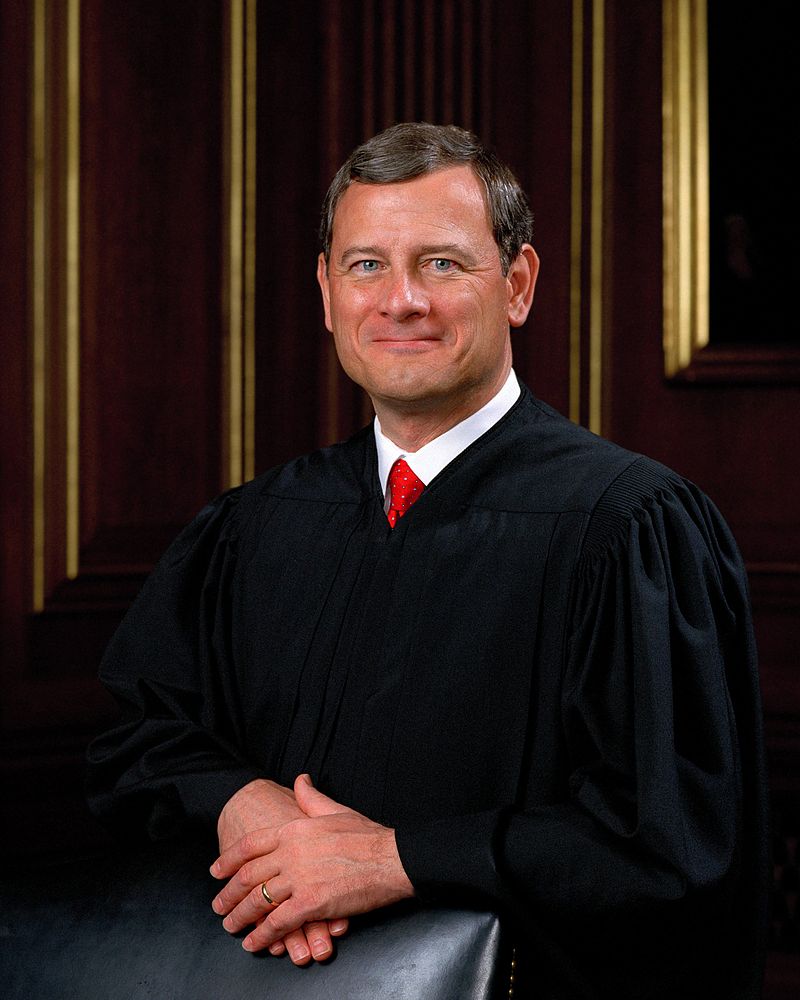
John Roberts’ Moment . . . Without Fear or Favor


The Nation’s Chief Justice Has the Opportunity to Help Lead an American Renewal

Here in the town of Rumney, in the shadow of Rattlesnake Ridge, the remarkable history of this place and this nation unfolds like the oxbows, riffles, and rapids of the river that meanders through its valley.


Originally the Asquamchumaukee, variously translated as “place of mountain waters” and “salmon spawning place” from the Algonquin language of my Great Grandmother and later renamed by European settlers for Lt. Thomas Baker who led a raid on a temporary fishing encampment of Pemigewasset Indians at the confluence of the Baker and Pemigewasset Rivers - attacking while the men were off hunting - and killing and scalping the women and children remaining in camp. It was here too that John Stark, later credited with the famed phrase “Live Free or Die” was taken captive by Abenaki warriors and then adopted into their nation - so impressed were they by his bravery in the face of danger. Stark’s leadership at the Battle of Bennington is often credited as the turning point of the American Revolution.

Just a few hundred feet from the Rattlesnake Mountain Trail that leads to the top of Rattlesnake where the twice-burned-over-summit looks down upon the meandering river as it makes its way to join the Pemigewasset River in Plymouth, is a granite marker denoting the birthplace of Nathan Clifford, United States Supreme Court Justice. Clifford was self-taught in the law and ended up on the Supreme Court for almost 23 years. In 1877 Clifford was the Chairman of the Presidential Commission that decided the outcome of the Tilden v. Hayes Presidential Election; the closest election in American history to that point. He was on the losing side of the outcome if one considers the political party he had served for years before becoming a judge, but in an act of American heroism, he cast the deciding vote to seat Republican Rutherford B. Hayes. Clifford was by no means a perfect man - or jurist - and there is much speculation about what went on among the members of this commission behind the scenes but the fact remains that Clifford accepted the outcome, even though it was not his preferred outcome because he was dedicated to the democratic process.

With this history in its rearview mirror, it’s no wonder that many of the people who live in the shadow of Rattlesnake Ridge have allegiance for the role of the court in steering the ship of state.

Clifford was not the first nor the last Supreme Court Justice to find that the role of a Justice was bigger than party politics. He was not the first or last to realize that the interests of the country and the constitution were bigger than the passions of the day. To some extent, almost every Justice discovers this after they have been welcomed into the country’s most elite club. It’s why we hear stories of the deep friendships between judges like Ruth Bader Ginsburg and Antonin Scalia. However, some Justices, and particularly Chief Justices are summoned to a higher calling than even their esteemed colleagues.
Dance of the Lupine and Birch
Chief Justice Earl Warren was one such Justice. Appointed by Eisenhower as the Chief Justice during the turbulent days of the Civil Rights movement. Warren had not been a judge prior to his appointment. Of all Justices - having been a prosecutor first and then Governor of California - he might have been expected to take a more partisan approach. Yet Warren would rise to the occasion in a way that has made him one of the giants of Supreme Court history, building the consensus for a unanimous decision in Brown Vs. Board of Education and shepherding other decisions such as the Miranda decision and the Baker Vs. Carr decision that solidified the “one person one vote” concept.

Chief Justice Roberts own personal hero is Chief Justice John Marshall - probably the most extraordinary man among the founders, beside George Washington, and the man who is credited with saving the nation in the post-revolutionary period when the passions and rivalry of Jefferson and Adams threatened to tear apart the young nation. Marshall carved a careful path between the Federalists and the Anti-federalists, employing humor, civility, and humility to strengthen the Courts as a genuinely co-equal branch of government. With his Marbury vs Madison decision that made the US Supreme Court the final arbiter of what was constitutional his court stabilized a country rocked by turbulence, rioting, and discontent.

In recent months there has been a general sense of alarm among the more conservative court watchers that Chief Justice Roberts has been leaning more and more to the left. Recent decisions where he has sided with the more liberal justices have caused them to raise the alarm but there is more at play than meets the eye. Make no mistake about it, John Roberts is a conservative but more important than even that, he is an institutionalist. In his zeal to protect the integrity of our Judicial system, he is quite likely to become the new swing vote on the court. Seeking to find common ground that reflects both the country’s direction and his allegiance to the Constitution.

Webster's Confidence

As the Trump administration continues to spiral downward, even while a majority of elected Republican representatives and his base seem willing to suspend all that they have stood for since 1946, Chief Justice John Roberts can’t help but be thinking that the role of the court in preserving the Republic has suddenly become far more imperative than hewing to an ideological line. The partisanship of the Kavanaugh nomination process can only have further stoked the flames of his concerns.

Among Democrats, panicked by the conservative shift in the Supreme Court, there have been various “reforms” contemplated, and in some cases proposed; from some version of Franklin D. Roosevelt’s court-packing scheme to term limits for judges. Short of a constitutional convention, that most experts agree would be a bad idea, none of the ideas are immune to change the moment the other party controls the levers of power. Those who are most vocal, particularly about expanding the Supreme Court, justify their proposal by pointing to the stolen election of judge Merrick Garland who would have maintained some semblance of balance on the court. But meeting the outrages of the Republicans over the Garland nomination with further offenses against the norms and values of our democratic system only takes us deeper into the darkness.

Stepping back from the brink requires that one party or the other, or in the best of all worlds both, say “no more” to the growing violations of American values and political norms.

Just as important, it requires all of us to stand behind those who halt our drift, irrespective of their political party. It also requires all of us to join in a new “21st Century Federalism”. A community by community, state by state, region by region, contest of ideas to define the national norms of our democracy. As Dean Heather Gerken of Yale University, who has done the deepest thinking on this subject says, we all have to “suit up” because you can only win if you are in the game. Short of a lightning strike the Supreme Court is not going to change dramatically. If We the People actively help define the direction of our country, I’m betting that Justice Roberts will take notice.

Links:

21st Century Federalism, Heather Gerken
https://www.youtube.com/watch?v=GwP99tFqnOs

In the Clouds
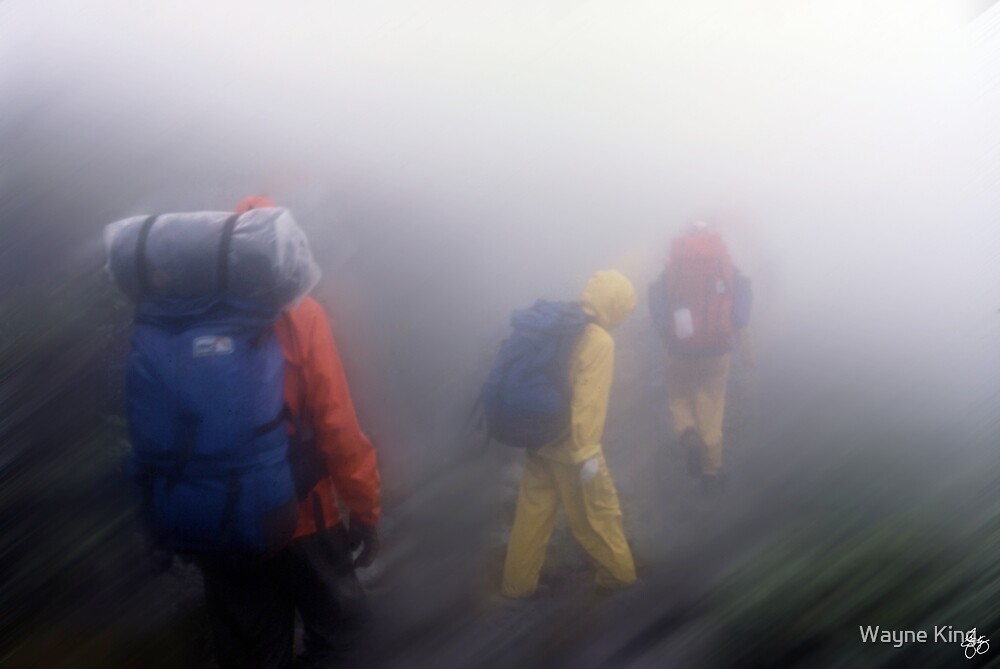
Hikers in the Presidential Range of NH find themselves in the clouds buffeted by winds and rain. Printed in a signed limited edition of 25 prints on fine art rag paper with archival inks. To purchase the original or open edition prints or a poster in one of 2 sizes, email Waynedking9278@gmail.com or click here: http://spreesy.com/waynedking

About Wayne D. King: Wayne King is an author, artist, activist and recovering politician. A three-term State Senator, 1994 Democratic nominee for Governor, former publisher of Heart of New Hampshire Magazine and CEO of MOP Environmental Solutions Inc., and now host of two new Podcasts - The Radical Centrist (www.theradicalcentrist.us) and NH Secrets, Legends and Lore (www.nhsecrets.blogspot.com). His art is exhibited nationally in galleries and he has published three books of his images and a novel "Sacred Trust" a vicarious, high voltage adventure to stop a private powerline all available on Amazon.com. He lives in Rumney at the base of Rattlesnake Ridge. His website is: http://bit.ly/WayneDKing . You can help spread the word by following and supporting him at www.Patreon.com/TheRadicalCentrist .



Spring's Dance of Form


The Prevaricating Day

Purchase a signed original here.


The Gathering Storm Haiku

Purchase a signed original here.


Wind in the Washline Haiku


Whisper of a Winter Wood Haiku


Thursday, February 14, 2019

The NH Presidential Primary Centennial May Be its Swan Song

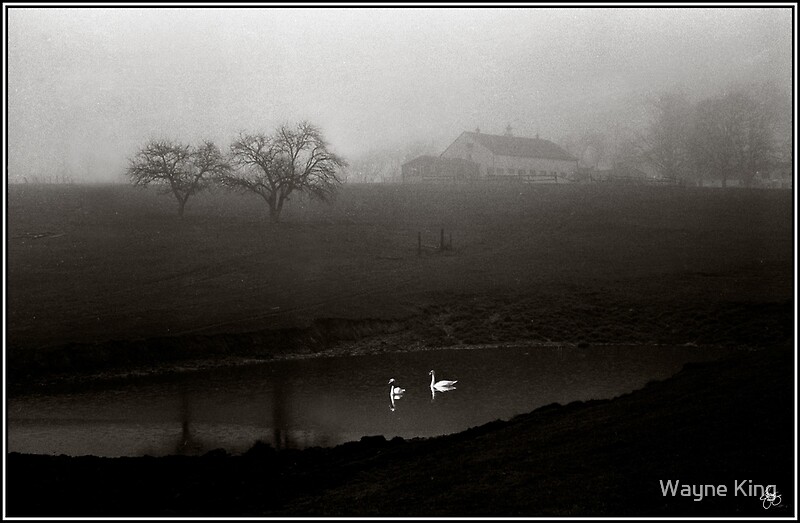
Swans on Scamman Pond


The NH Presidential Primary Centennial May Be its Swan Song
Without Ranked Choice Voting New Hampshire Presidential Primary Will Likely Become Irrelevant
Here in the shadow of Rattlesnake Ridge the sense that Democracy is broken is pervasive and alarming. Republicans and Democrats alike along with Libertarian and Independent voters seem to share a growing disgust with the tone and tenor of the election process and even more so the results of the elections - won by candidates with far less than a majority of votes - and the behavior of those elected by 17%, 20% or 30% of the voters, as they constantly seek partisan advantage rather than trying to work together.

The negative campaigning, that only seems to grow worse with each succeeding year; The bitter and poisonous partisanship that has infected the election process - characterizing even the elections for NH State House and Senate seats - are deeply discouraging to average voters. Worse still, what use to be the “governing phase” of the process where State Representatives and Senators settled into a far less partisan rhythm, intent on governing in the best interests of all their constituents - has virtually disappeared and the two parties now vie to see who can draw the most blood at a time when their constituents want them to be solving problems.
A Child's Dream Among Lupine

As if all this weren’t bad enough, The New Hampshire First in the Nation Presidential Primary, a near sacred institution here in the Granite State - already under attack from those who would like to see its preeminence abolished - is at its hour of maximum danger. Ironically, for the First in the Nation Primary - about to celebrate its Centennial year - that Centennial may also be its Swan Song.

Now I won’t represent that I have always been the staunchest defender of the NH Primary. I have in the past suggested that the divisiveness of the Primary process is harmful to the unity of both the Democratic and Republican parties and a distraction from confronting the challenges we face as a state, but as Emerson said “The years teach much which the days never knew.” The fact is that I have become convinced that the people of New Hampshire take very seriously their solemn responsibility to put the candidates through their paces and to narrow down the field. That alone is reason enough to defend the Primary.

But there has always been a procedural problem with New Hampshire’s Primary and with the size of the field among Democrats this year, that problem is magnified tenfold, just as it was for Republicans in the last Primary. In 2016 there were 17 candidates running in the Republican primary. Only 4 of the 17 received any delegates. As a result over 40,000 Republican voters choices were disregarded completely when it came to handing out delegates. To make matters worse the Democratic Party has recently raised their threshhold for awarding delegates in the Presidential Primary to 15%. In other words only those with at least 15% of the vote qualify for delegates. With as many as 30 potential candidates for the Democratic nomination there is a better than even chance that NO ONE will reach that threshhold. Leaving 100% of voters disenfranchised and allowing the Democratic Party to award those delegates to whomever they choose. In other words, the First in the Nation Primary will be nothing but white noise in the most consequential election of our lifetimes.

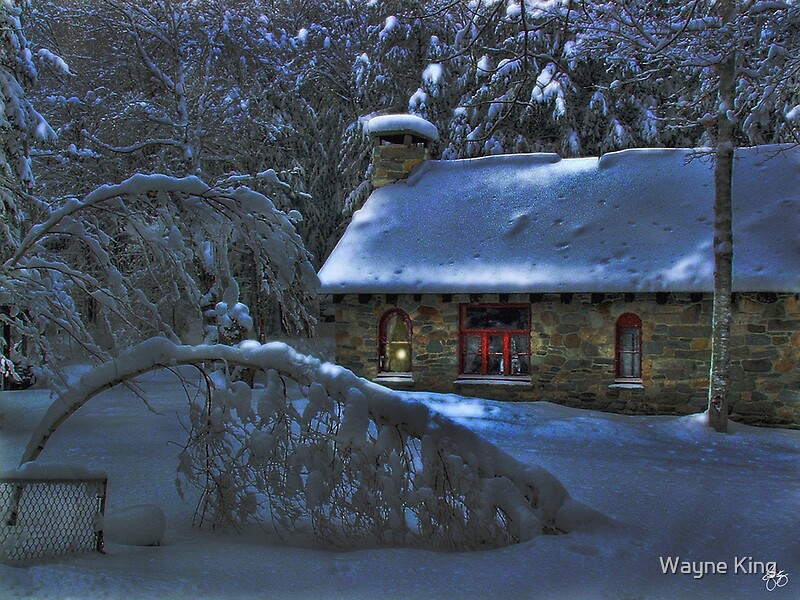
Moonlight On the Stone House


There is a way to resolve this and to save the NH Primary. Ranked Choice Voting. A bill before the NH House, HB 728, Sponsored by Rep Ellen Read of Newmarket, would institute a new system of voting called Ranked Choice Voting allowing every voter to rank their choice in order of preference. So instead of simply choosing one candidate you can select and vote for your first choice, your second choice and your third choice. When the ballots are counted if no one receives a majority of the votes the ballots for those with the fewest votes are reallocated to the second choice.

Maine has just moved smoothly to ranked choice voting with only 3 months between the final court challenge and the election. Mainers voted in record numbers and polling since the election shows broad support for the new system of voting. Iowa too is considering Ranked Choice for their Presidential Caucuses.

Ranked Choice has had a dramatic positive impact on the civility of elections in Maine and California where it is being used. After all what do you think would be a voters second and third choice if a candidate bad mouthed their competition with nasty nicknames or mudslinging?

Mr. Lincoln's Legacy
Ranked Choice means that all of the voters voices are heard, not just a small minority.

Ranked Choice voting puts 3rd party candidate on a level playing field with those in the two major parties but prevents them from becoming spoilers if voters don’t find their message compelling: Think the Bush-Gore-Nader Florida Primary.

Ranked Choice Voting is coming. It is a wave that will not be held back. The only question is whether the members of the NH House of Representatives will choose to be led astray this year by the major parties and sacrifice the NH Presidential Primary in the process. If that happens, the blame will fall squarely on their shoulders. Unfortunately, by then it will be too late.


About Wayne D. King: Wayne King is an author, artist, activist and recovering politician. A three term State Senator, 1994 Democratic nominee for Governor, former publisher of Heart of New Hampshire Magazine and CEO of MOP Environmental Solutions Inc., and now host of two new Podcasts - The Radical Centrist (www.theradicalcentrist.us) and NH Secrets, Legends and Lore. His art is exhibited nationally in galleries and he has published three books of his images and a novel "Sacred Trust" a vicarious, high voltage adventure to stop a private powerline all available on Amazon.com. He lives in Rumney at the base of Rattlesnake Ridge. His website is: http://bit.ly/WayneDKing . You can help spread the word by following and supporting him at www.Patreon.com/TheRadicalCentrist . 
Links:
One minute video description of Ranked Choice Voting


HB 728


Status of Bills NH House and Senate


NH House and Senate Information


Ranked Choice Voting - The Radical Centrist Podcast


Friday, January 18, 2019

There is a Force Bringing Americans Together - Donald Trump

Mr. Lincoln's Legacy


Ideologies separate us. Dreams and anguish bring us together.
~ Eugene Ionesco, Playright

There’s a change in the wind here in the shadow of Rattlesnake Ridge. For months after the 2016 election there was no change in the public polling. Even today, pollsters are still finding the responses from voters reflect little change in the support for the President among his base but they are missing the winds blowing here, that I suspect are blowing in small towns all across America. There is a force beginning to develop that may just bring Americans together after our long winter of discontent.

Among Republicans I sense a new found respect for the corruption-free Presidency of Barack Obama. Among Democrats, a new found respect for presidents George H.W. Bush - even George W Bush - who believed in the rule of law and appreciated, respected and lived by the norms of Democracy - those unwritten rules by which our laws and our constitution are translated into our American anthem, above the din of partisanship and the divisions of tribalism.

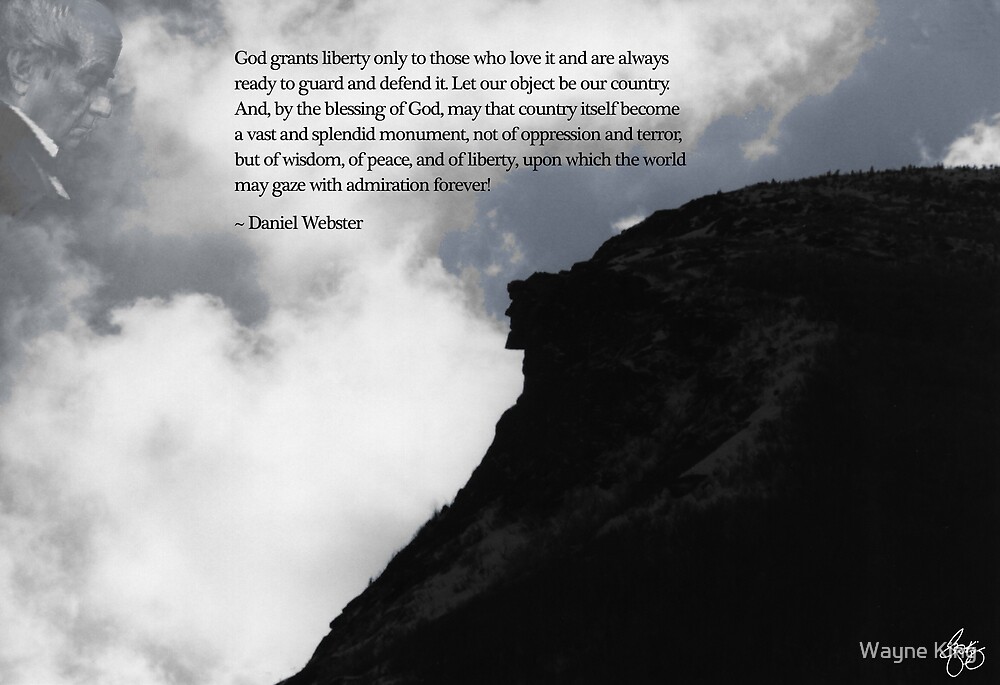
Webster - Wisdom, Peace, Liberty

In this shift lay the seeds of hope for our Republic, and for a world that too often, of late, seems to be sinking in a sea of despotism. World leaders inclined toward authoritarianism have been emboldened by a President who has abandoned the traditions exemplified in the past by American moral leadership. A President who telegraphs his approval for those leaders who flout the rule of law and the civil and human rights of their citizen - turning a blind eye to the excesses of nations like Saudi Arabia, Russia, Turkey and Philippines. These countries are only the tip of the iceberg. What lies below the surface are not only other countries taking their lead from Donald Trump’s rhetoric but also those simply taking advantage of the fact that they no longer feel constrained by American leadership.

In 1997 I spent five hours in a Nigerian jail with my team, held at gunpoint by 5 automatic rifles in the hands of the Nigerian secret police. They arrested us, ostensibly, because one member of my team took a photograph of an old woman selling fruit on a street in Lagos but we believe it was because we were working with pro-democracy, environmental and healthcare NGOs to bring the Internet to West Africa's civil society community. Nigeria at the time was living under military dictatorship. Yet, largely because of pressure from the United States within a year Nigeria held elections and a democratic government began a deliberate and steady climb out of the authoritarian darkness. Within only a few years the corruption, the bribery, the fear had dramatically subsided. However, after nearly two decades of improvement and a growing confidence about the future among the Nigerian people, in the last two years Nigeria has spiraled down at the hands of a President unconstrained by American authority and a State Department crippled by inattention and demoralized by indifference and ignorance. This tragedy has been repeated in countries from Brazil and Nicaragua to Venezuela.

Here at home the walls are closing in on Donald Trump. Most political scientists will tell you that this is likely the most corrupt administration in American history - sadly and finally a real apex achievement for a President so fond of puffing himself up and telling us that one achievement or another is the “biggest, longest, best ever”.

The Gathering Storm Haiku

In a previous column I warned that a storm is coming. Weathering that storm will require all hands on deck. Local, State and Federal governments and agencies, law enforcement, advocacy groups and most of all citizens will be needed to save the Republic from the excesses of Donald Trump.

If we are strong we will prevail, despite a Senate that still remains in Trump’s corner and regularly bullied into submission, a House crippled by partisanship and a Supreme Court that remains an enigma. There will be growing calls for impeachment despite this but replacing a tyrant with a sycophant who will likely pardon him is no victory for the Republic. It will only prolong the agony and anguish.

My advice to those who would be inclined toward impeaching the President is this: America’s best hope - Democracy’s best hope - resides in our people and their capacity for knowing in their hearts and in their minds what is best for our country and for our world. We need to have this change brought about in an election. Not in the partisan bickering of a Congress that has lost touch with the people and the times. We need to send a strong and unambiguous message from the people of the United States of America across this land and to the rest of the world. A liberty love letter. A message that this is NOT who we are. That we are taking back our country, warts and all, and committing ourselves to rebuilding by talking with, and listening to, one another as we face the real challenges of building a brighter future and another American Century.


About Wayne D. King: Wayne King is an author, artist, activist and recovering politician. A three term State Senator, 1994 Democratic nominee for Governor, former publisher of Heart of New Hampshire Magazine and CEO of MOP Environmental Solutions Inc., and now host of two new Podcasts - The Radical Centrist (www.theradicalcentrist.us) and NH Secrets, Legends and Lore. His art is exhibited nationally in galleries and he has published three books of his images and a novel "Sacred Trust" a vicarious, high voltage adventure to stop a private powerline all available on Amazon.com. He lives in Rumney at the base of Rattlesnake Ridge. His website is: http://bit.ly/WayneDKing . You can help spread the word by following and supporting him at www.Patreon.com/TheRadicalCentrist . 



Albert Camus Quote

"In the depth of winter 
I finally learned 
that there was in me 
an invincible summer."
~ Albert Camus


Friday, December 14, 2018

The White Mountain National Forest at 100


On October 8, 1910 an important conference was held in Atlanta Georgia. It was called The Southern Conservation Congress and two giants of conservation were present. Initially the conference started off focused on regional conservation issues but when former President Teddy Roosevelt and Gifford Pinchot, former Director of the US Forest Service strode to the microphone together they had more on their minds than the regional issues of Georgia. Their joint speech called on attendees to join together with thousands of other conservation minded people from Maine to Georgia to support the Weeks Act, that was languishing in the United States Congress. Stalled in large part by the influence of large land-owning timber barons who were wreaking havoc on northern forests from Maine to Georgia.

Almost every adult in America knows that Teddy Roosevelt, with the wise counsel of Pinchot, had built a substantial part of his legacy on the protection of the nation’s natural resources. The Weeks Act was sponsored by New Hampshire born and raised, Congressman John Weeks, now a Congressman from Massachusetts. Weeks had moved to Massachusetts for work but maintained a Summer residence in the area of the family homestead. Today the Weeks Estate is a part of the New Hampshire State Park system and part of the estate in listed in the register of national historic sites. In the act, Weeks had stipulated that “the federal government has the constitutional right amounting to a national duty to acquire lands for forest purposes in the interest of a future timber supply, watershed protection, navigation, power, and the general welfare of the people.”

Though recent interpretations of the Commerce Clause of the Constitution have confirmed the correctness of Week’s position, in 1910 there was little national experience with national investments to protect public resources and Weeks was running afoul of Senators and Representatives who were determined to keep the Federal Government from encroaching on the rights of their states to control these lands, especially because many of these same Senators were beholden to the timber interests in their own states. Until a Supreme Court Decision could clear the way on this matter, it was incumbent upon Weeks, Roosevelt, and conservation leaders from throughout the country to secure specific permission from the Congress to make land purchases that protected watersheds and the people and environments they served.


A substantial number of the votes needed to pass the Weeks Act would be required to come from Southern Congressmen and Senators. Roosevelt and Pinchot were appealing to the enlightened self interest of these representatives by calling upon their constituents to use their political clout. Although the Week’s Act did not contain provisions covering the forests and lands of the South, it would not be long before they too would see its benefits for they too had experienced similar problems. By the time conservationists had gathered together for this conference more than 50% of the South’s original woodlands were gone and a sense of alarm about the sustainability of the forests was beginning to grow. This concern put them four-square in alliance with the conservationists of the Northeast who were raising the alarm over the devastation of the woodlands in the Northeast.

Learning to Fish
Nowhere was this emergent environmental crisis more apparent, and immediate, than in the regions of New Hampshire along the major river corridors: The Connecticut; The Baker; The Pemigewasset and the Merrimack into which it flowed; the Androscoggin and the Saco. Thoughtless clear cutting, especially on the steep mountainsides was resulting in catastrophic flooding, landslides and fires that devastated the towns affected and turned the rivers into open sewers of ash, effluent and refuse that affected not only the regions being logged but all of the downstream communities that relied on these rivers for everything from drinking water to irrigation, power and more.

TR and Gifford Pinchot left the conference that fateful day with the explicit support of this powerful southern conservation organization for the Weeks Act and, in a little recognized historic moment, may have made the difference for the struggling Weeks Act because these conservationists launched a ripple that soon would turn to a wave of reform. At their urging, states began passing laws that granted the US Forest Service and other Federal Agencies permission to purchase lands for the protection of critical watersheds and advocates could feel the winds beginning to shift.

The Eye of the Stone


The country itself was in the middle of a “great awakening”, today known as the Progressive Era. A time when science, and the newly emerging fields of social science, were on the ascendency and where research and progressive activism were becoming the twin driving forces of social change. The research gave legitimacy and power to ideas; and progressive activism lent direction and momentum.

Still there were those who resisted . . . the climate change deniers of their day. Speaker of the House Joseph Cannon responded to calls for the protection of critical lands with the simplistic quip that there “would not be one cent for Scenery;” proving that the simplistic soundbite is not unique to modern times.

According to many historians, Cannon was one of the most powerful speakers in American history. With Cannon at the helm, the House of Representatives rejected more than 40 different bills that would seek to authorize the purchase of land by the federal government during his eight year tenure. Fortunately for the Weeks Act supporters Cannon’s tenure ended in 1911 and in the final months of his speakership Weeks and NH Senator Jacob Gallinger, who had submitted an identical bill in the US Senate, were finally able to convince Cannon to at least remain neutral on the Act. With the support of powerful environmental conservation organizations like the Society for the Protection of New Hampshire Forests, which had already been advocating for the protection of critical watersheds for more than ten years, the Congress finally began to turn around. In early spring, March of 1911, President Taft signed the Weeks Act into law. Now the difficult task of establishing National Forests in the Northeast could begin.

Daylight Fades on Eisenhower
It is important to understand, here, the difference between National Parks and National Forests. National Parks are preservation lands where National Forests are conservation lands. Where National Parks are preserves for wilderness recreation and wildlife and habitat protection, National Forests are multiple-use conservation lands, allowing for limited private use - including sustainable forestry. This difference made the process of convincing the people of the region to support the National Forest a much simpler task, but still not simple in a country where private land ownership had become a way of life that differentiated the still-young America from most other countries.

The first priority lands identified for protection were those around the Presidential Mountain Range in New Hampshire and the surrounding mountain ranges. These included the Carter Moriah Range - which extends into Maine - as well as the Franconia Range and the Pemigewasset River Wilderness area, where logging by steam engine had already laid most of the timbered land bare. The Forest Service and Conservation groups issued calls for donations of land and offers to sell at reduced rates.

Not surprisingly, logging consortiums that had already laid waste to many areas were more than happy to sell off land that would take nearly one hundred years to regrow its cash crop. For them this was an unexpected windfall (so to speak) and they were among the first to sign on. Still, a surprising number of public spirited citizens also stepped forward to join in the effort offering their property in these areas at substantial discount from market based prices with some even donating land outright. By 1915 a substantial portion of the lands that would become the White Mountain National Forest had been purchased or donated and on May 16, 1918 President Woodrow Wilson signed Executive Order 1449 creating the White Mountain National Forest in Maine and New Hampshire.

For those interested in the broader history of the White Mountains, a Centennial within a BiCentennial occurs on this auspicious occasion. In the year that the WMNF was first established Abel Crawford and his son Ethan Allen Crawford, had they still been living, would have celebrated the first one hundred years of the trail that they built to guide the first intrepid (European*) hikers up Mount Washington. The Crawford Path, the nation’s oldest continuously used hiking trail extended from the site of the Crawford’s original homestead and Inn, in Hart’s Location, to the summit of Mount Washington. 

Spring's Dance of Form


The Crawford Path was initially built as a hiking trail but in 1698 Abel Crawford - at the ripe old age of 80 - accompanied by Ethan Allen, summited Mount Washington on horseback as the hiking trail was opened as a double duty “Bridal Path” to the summit as well.

Initially in the range of about 435,000 acres, today the WMNF has expanded to nearly 800,000 acres having most recently added woodlands in the Great North Woods section of New Hampshire. The forest plays a major role in what has become a nine (9) billion dollar a year outdoor recreation industry in New Hampshire, supporting nearly 80,000 jobs.


Interesting Links:
The Battle for the Weeks Act: http://bit.ly/WeeksActBattle
Record of the Vote on the Weeks Act: http://bit.ly/WeeksVote
The John Weeks Story: http://bit.ly/JohnWeeks
The Weeks Estate, Weeks State Park: http://www.nhstateparks.org/visit/state-parks/weeks-state-park.aspx


*While it is commonly believed that Native American people - mostly those of the Algonquin Speaking First Nations people - did not climb mountains, there is no solid evidence that this is anything more than an assumption on the part of early European settlers. The extent of the evidence seems to be based upon superstitions related by some early traders, both Native and European - to early settlers in the area specifically about Mt. Washington (“Agiochook” or “Agiocochook” in Abenaki an Algonquian speaking tribe and part of the Wabanaki Confederacy of tribes). These general superstitions may or may not have been true. Furthermore, general superstitions shared among members of the Algonquin people would not necessarily preclude an ascent by an individual First Nations hunter or traveler from either the Algonquin speaking tribes of the Wabanaki Confederacy or members of the Iroquois Confederacy who dominated the region of New Hampshire above Dixville Notch including the disputed territory known for a short time as The Indian Stream Republic. Hence, Darby Field, the white man credited with the first ascent of Mount Washington, may or may not have been the first person to the summit. We will never know for sure. We do, however, know that Field ascended Washington with two Native American Guides who went all the way to the summit with him. The names of those guides appear to have been lost to history. However, the fact that they summited the mountain with Darby Field is, in and of itself, reason enough to suspect the presumption.


About Wayne D. King: Wayne King is an author, artist, activist and recovering politician. A three term State Senator, 1994 Democratic nominee for Governor, former publisher of Heart of New Hampshire Magazine and CEO of MOP Environmental Solutions Inc., and now host of two new Podcasts - The Radical Centrist (www.theradicalcentrist.us) and NH Secrets, Legends and Lore (www.nhsecrets.blogspot.com). His art is exhibited nationally in galleries and he has published three books of his images and a novel "Sacred Trust" a vicarious, high voltage adventure to stop a private powerline all available on Amazon.com. He lives in Rumney at the base of Rattlesnake Ridge. His website is: http://bit.ly/WayneDKing . You can help spread the word by following and supporting him at www.Patreon.com/TheRadicalCentrist .

The Prevaricating Day

Purchase a signed original here.

From "Screen Door" to "String Too Short to Keep"

  From "Screen Door" to "String Too Short to Keep"  A poetic journey across time and space in New Hampshire with Poet El...