Showing posts with label #NoNorthernPass. Show all posts

Wednesday, April 4, 2018

An Opportunity in a Crisis - Time for NH Eversource to Move On From Northern Pass

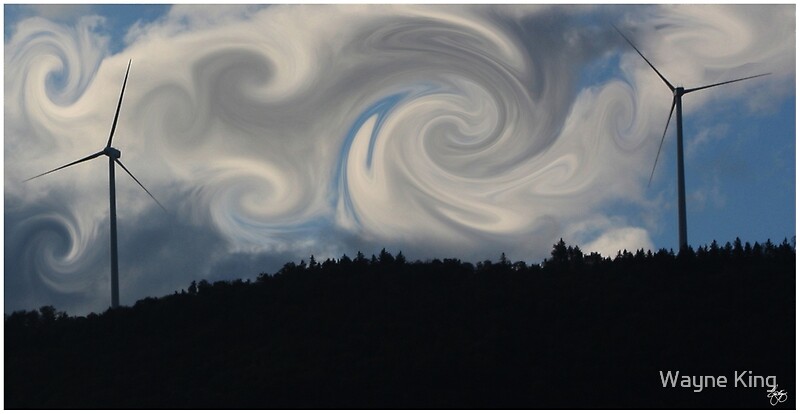
The Whisper of Wind 

Here in the shadow of Rattlesnake Ridge winter is slowly evolving into spring. The morning calls of the Black Capped Chickadees or the Blue Jays alerts us to that fact. Today I listened to the winter remembrances of one woman who was stunned when she was able to walk right up to a group of ducks on a frozen lake this winter, only to discover that their feet were frozen in the ice.


NH Eversource, New Hampshire’s largest utility company, has a problem . . . They are stuck in the 1980s. The world has changed around them and they have remained firmly implanted. Like ducks with their feet frozen in the ice. They have hunkered down in the face of a wintry storm of deregulation and relied on the old standbys: elect a governor who will be “your guy” - better yet, your toady - spread some cash around and you’ll get whatever you want. That’s how we got the highest electricity rates in the country, some will recall.

To summarize just how we arrived at the place we are today, I’ll make the blatantly self-interested - but nevertheless appropriate - reference to my new novel “Sacred Trust”. In this fictional account, a group of citizens who have banded together to stop “Granite Skyway” a powerline proposed by a consortium of investors including the state’s principle utility company. In this excerpt James Kitchen, a journalist covering the fight, gives the following factually-based summary.

=*=*=*=*=*=*=*=*=*=*=*=*=*=*=*=*=*=*=*=*=*=*=*=*=*=*=*=*=*=*

“Two years before Jimmy Carter ascended to the Presidency, New Hampshire held an election for a United States Senator to replace the retiring Norris Cotton. A close contest between the Democrat John Durkin and the Republican Louis Wyman led to two recounts; the first won by Durkin by ten votes and the second won by Wyman by 2 votes. Finally, headed for another recount and seemingly at an impasse, the election was decided in the US Senate and Durkin was seated.

Two years later, as the Carter (Administration’s) National Energy Policy Act was moving through the congress John Durkin slipped an amendment into it. The amendment required utility companies to purchase power - at market rates - from any producer of electricity generating fewer than 80 megawatts.

Durkin originally believed he was helping establish a foothold (for New Hampshire-based) wood to energy biomass and trash to energy cogeneration. He was. But the door he opened with his amendment turned out to be big enough for every dreamer and entrepreneur, with a viable idea for generating electricity renewably, to walk through. Soon proposals for small hydro (called Low Head Hydro), solar power, wind power and other renewable resources were on the drawing board or underway.

The National Energy Policy Act passed the Senate by 1 vote.

Over the years since then changes have been made to the Energy Act, but all moving the country toward the day when renewable energy would account for a larger and larger portion of the power produced.

The changes of the 70s represented the first steps in a changing relationship between America’s public utilities and the people and businesses that consumed the energy. Utilities no longer held complete monopoly power over both the sale and the purchase of electricity as well as its transmission.

(This transmission line) represents a well-planned effort to reverse the evolutionary chain of events leading us to this place. (The state’s largest utility) and a large group of investors, both individuals and institutions, have joined together to build a private transmission line. Not subject to the same constraints of public utilities, allowing them to circumvent many of the requirements the utility would be subject to had they proposed to do this alone, as a public utility. At the same time, because the utility company is an investor in the project, they are able to make side deals between their company and the Transmission project that gives it access to the electric utility rights of way - - perhaps even - - a backdoor to allow the project to use state laws providing protection from losses that result from so-called stranded assets, to assure that if the investment made turns out to be uncompetitive - as the cost of renewables continue to go down - The Transmission project will still be able to charge New Hampshire ratepayers for a portion of the costs of the transmission line.

From the Canadian Border to a terminus in Southern New Hampshire, the only electricity that will flow through the transmission lines will be what it purchases from Hydro-Quebec in Canada. This will effectively limit the number of renewable energy projects possible forcing the state backwards relative to our surrounding states.
The motivation that brought on this Transmission line proposal is, despite all this, understandable. The changes that have taken place over the past twenty years represent an existential challenge to many utility companies, including ours. They are casting around for ways to generate more profits in an era of shrinking opportunities.”
=*=*=*=*=*=*=*=*=*=*=*=*=*=*=*=*=*=*=*=*=*=*=*=*=*=*=*=*=*=*

The final paragraph of the excerpt above is an important reality to understand. In fairness to NH Eversource, the changes taking place in an era of deregulation represent an existential threat to utility companies nationwide. Particularly those whose feet remain stuck in the ice.

In the coming “Age of Electricity” the principal battleground will be over who controls the production and distribution of power. All across America today the battle lines are being drawn and the two sides are rushing to create advantages for themselves. Already many other power transmission projects are proposed from Maine to Washington State and the Canadian Electricity Association projects a tripling of that demand in the next ten years. In most instances these transmission projects are being proposed by utility companies or consortiums that include a local utility company.

Utility companies, like NH Eversource, represent one front in this battle over competing visions of our energy future. After more than 3 decades of shifting regulations and with the backdrop of a growing movement toward smaller, green energy sources, utility companies are in an existential battle for survival.

Most utility companies, including Eversource, are seeking to maintain control of the revenues generated by the flow of electricity.

With a few rare exceptions, they are pitted against those advocates of a new distributed energy paradigm where small, renewable power production replaces the large electricity generators of today.

Most Americans notice that things are changing with respect to energy production and transmission but they have yet to put together the full picture of what will be a sea change in life for every American this presages.

This clash between the past and the, as yet unwritten, future is the overarching theme of “Sacred Trust” because it is the overarching theme of the fight for a sustainable future.

But here’s where things get interesting. Within this existential crisis for NH Eversource are the seeds of opportunity. It may require a house-cleaning at Eversource, though it is within the power of those already there to make these changes (and in the interest of transparency I have some folks there whom I consider friends). Some will describe such changes as revolutionary; others will say the changes required are simply evolutionary changes that Eversource missed out on because they thought that continuing to play the game of “power politics” would sustain them; Still more will simply describe them as getting back to the fundamentals of giving the customer what they want.

NH Eversource’s Northern Pass proposal represents the tragic and classic example of a company that has lost touch with its main mission, to serve its customers. Despite the outrage of the Governor over the decision of the Site Evaluation Committee, the unanimous decision - made quickly and decisively by the SEC - should have been the proverbial two by four between the eyes of the jackass, but Eversource persists.

It’s time for NH Eversource to drop the Northern Pass like week-old roadkill, and, if they hope to survive, to begin the process of reinventing the company. While I think it’s unlikely that they would go so far as to apologize to the people of New Hampshire for putting the interests of a small group of investors ahead of the people of the state, just the act of publicly beginning an introspective process to build consensus among stakeholders would go a long way toward restoring confidence among our citizens.

It really doesn’t need to be painful. Eversource - and the State of New Hampshire - can start by taking a page from Vermont’s play book.

Mary Powell, CEO of Vermont’s largest Utility, Green Mountain Power, with the support of her team, has transformed GMP into a powerhouse among Utility companies (though she calls GMP an energy transformation company); Delivering clean, cost-effective and highly reliable power to customers all across Vermont, with the highest customer approval ratings in the US. The list of her honors and awards from prestigious organizations would take up most of this column, including being named “Vermonter of the Year” in 2015 by the Burlington Free Press.

Here’s how she explains her company’s success:

“The first thing I got to do, which was really an amazing opportunity, was to radically transform the culture of our company, from a very traditional, bureaucratic, slower-moving organization to one with the credo “fast, fun, effective and customer-obsessed.” To make sure we were talking about customers, not meters, leaning in the direction customers wanted us to go.

The reason we love solar and distributed resources …was because that’s what our customers told us they wanted to do. It sounds trite, but in my experience working in different spaces, when you’re focused on the bottom line of your customers and your communities and those that you serve, you ultimately will do fine for yourself as an organization whether you’re a utility or a company selling t-shirts.”

“fast, fun, effective and customer-obsessed.” You don’t see the word shareholder anywhere in this. It’s not because no one cares about shareholders, it’s simply because if you do the job right, the customers will benefit first and the shareholders will follow.

Links:

http://midwestenergynews.com/2016/01/19/qa-a-vermont-utility-ceo-brings-her-story-to-wisconsin/

https://greenmountainpower.com/2010/01/11/president-ceo-mary-powell/

https://www.forbes.com/sites/peterdetwiler/2017/04/06/green-mountain-power-customer-obsessed-and-designing-for-elegance


About Wayne D. King: Wayne King is an author, artist, activist and recovering politician. He was a three term State Senator, who Chaired the Senate Economic Development Committee and the NH Senate Economic Summit. In 1994 King was the Democratic nominee for Governor and most recently the CEO of MOP Environmental Solutions Inc., a public company in the environmental cleanup space. His art is exhibited nationally in galleries and he has published three books of his images. His most recent novel "Sacred Trust" a vicarious, high voltage adventure to stop a private powerline has been published on Amazon.com as an ebook (http://bit.ly/STrust ) or in paper at http://bit.ly/STPaper . He lives in Rumney at the base of Rattlesnake Ridge. His website is: http://bit.ly/WayneDKing

Thursday, October 5, 2017

The Opportunity Costs of Northern Pass

Short-sighted Politicians and Eversource are Taking NH Down a Primrose Path
Wayne D. King


In a week or two the hills will be ablaze with color.


Depending on which scientists you choose to believe it will either be the most stunning autumn we have experienced in years or the trees will go from green to brown, disappointing all of us, including those who come to New Hampshire to see unrivaled foliage displays. Oddly enough, while the scientists differ wildly in their predictions of the effect, there is not the slightest difference on the causality side of the equation . . .  the changing climate of mother earth. Mother nature is calling, and man is she pissed.


When Northern Pass was first introduced, I was open to the idea. It seemed logical that hydro-power from Quebec would be a responsible approach to reducing the region’s dependence on carbon-based fuels like oil, coal and gas. However, the loss of millions of acres of forest serving as a powerful carbon sink for the planet as well as the methane and CO2 generated by the creation of the impoundments necessary for most of the hydro dams turns out to offset the benefits. The effects of the dams - not constructed in areas adjacent to the border where there would be objections from people with political power - but instead built on the lands that provide sustenance to the Cree, the Innu and the Inuit are turning once rich fisheries into a toxic stew of mercury, methane and dioxin. Since nearly 50% of the blood that flows in my veins is Iroquois, mixed with a bit of Blackfoot and Algonquin, I am particularly sensitive to this as you might imagine. In the United States native people usually found themselves displaced and dispossessed because of Gold Fever. In the Eastern provinces of Canada that gold is hydro-power.


I am not so naive to believe that the treatment of the First Nations of Canada are going to be a deciding factor for folks in New Hampshire, not if their own country feels free to ignore the issue. In fairness to the provincial governments there is not unanimity within the First Nations communities over this and that too makes it unlikely that New Hampshire folks will develop their opinion about Northern Pass based on this.


However, there are many compelling reasons beyond this for us to reject Northern Pass.

Autumn through an Ancient Window


A Threat to Our Way of Life:
Much has already been written in opposition to Northern Pass by people far more eloquent than I. To many Northern Pass represents an existential threat to a way of life. A glorified “extension cord”, of monstrous steel towers, clearcuts and scars, intended to provide electricity to the suburbs of Boston and beyond with no benefit to New Hampshire. They are right.


Politicians and Eversource tout the “Private” aspect of the project as if to suggest that they are saving ratepayers and residents the cost of construction.  In fact, the nature of the Private partnership proposing to build Northern Pass allows the investors, including Eversource, to have the best of both worlds. Eversource’s participation gives the project the ability to use public Rights-of-Way  and the entire proposal socializes the costs of construction by erecting massive towers, clearcuts and scars on the landscape for transmission lines; In other words, the people of New Hampshire enhance their profits with a generations-long environmental debt.


In the middle of the last century, these would have been the same people who used the air and water for their waste disposal system, leaving the public an environmental legacy that is largely responsible for today’s fight over climate change . . . In response to this, Richard Nixon created the EPA; his most shining domestic achievement. Nixon recognized the con game that had been played at the public’s expense for more than a century - privatizing profits and socializing costs.  It is an age-old and time-tested methodology employed by the one percent to enhance their bottom line at the expense of the rest of us.


Economic Upheaval:
The threat to New Hampshire’s second most important economic asset, the tourism industry has spurred most towns and tourism organizations along the route to oppose its construction. Ask anyone in the Real Estate business in the area and they will tell you that the demand for second homes, and even primary homes, in the areas along the various proposed routes has dropped sharply. One well known developer lost a PGA quality golf resort after word began to spread about the Northern Pass Route and demand for high end homes and lots around the course “collapsed”. They say that approval of Northern Pass, if it is approved, will ripple through the economy, especially of the North Country. They are right.


The untimely death of Executive Councilor Raymond Burton surely was a terrible blow to those who had hoped he would lead the political battle to stop Northern Pass. By all accounts he should have been for the Northern Pass if just a few of the claims made by the proponents of Northern Pass had been defensible, but they were not. Ray was a lion for the North Country. He cared about quality jobs and the economy. Unlike me, he was no tree hugger. He would not have been moved by the environmental arguments alone. In a conversation that we had shortly before his diagnosis with cancer was revealed he told me he was unalterably opposed to the project and that he was not moving an inch on his opposition. The jobs were temporary and the cost to our way of life was permanent.  If you knew Ray, you know that his word was his bond, and no one in state government could build a coalition of Democrats and Republicans the way he could. If Northern Pass is approved, Ray’s loss will loom large to all of us.


On the other hand, a lot of political leaders are downright squishy on the matter of Northern Pass. When asked they will tell you that they would “prefer” that the entire line be buried, but not what they will do if it is not; or they want to be “sure that there will be a real economic benefit from the project.” but not what that real economic benefit might look like. They will ride the fence for as long as they are able. . . right to the end if possible.


I am puzzled by this; particularly when some of those politicians are generally strong voices for us. This is especially disappointing when at least one alternative proposal, from National Grid, has been offered that will have minimal environmental impact and create real opportunity for the development of local distributed renewable energy generation along its path; which means real and lasting, organically grown jobs.


My best advice to anyone who is straddling the fence on this, from someone who is guilty of having done his share of fence straddling over the years, is to pick a side and fight like hell for it because this battle is going to shape New Hampshire for the rest of our lives and well beyond. Nothing can be gained from straddling the fence. In the end, everyone is mad at you. To merge a pair of phrases offered up by both Jim Hightower and singer songwriter Loudon Wainright III, on this one there ain’t nothin’ in the middle of the road but yellow lines and dead skunks (stinkin’ to high heaven!).


If Ray Burton had lived that is the advice I think he would have offered as well and many a State Senator and State Rep would have drawn courage from his example. I hope they’ll read this and rethink their positions.  This one is for keeps.


Long-term Environmental Damage:
Every environmental organization active in the state is opposed: from the staid, centrist Society for the Protection of NH Forests and the Appalachian Mountain Club to the Sierra Club and the Nature Conservancy. They too are right. The towers will be a blight on the landscape and burial of the lines, for the entire length of the path, may be acceptable to some political types but the scars left by the massive equipment necessary will be long lasting and disruptive. Especially in light of the existence of a far less onerous alternative.


Declining Demand for Electricity:
The folks from Northern Pass are quick to tell us that the National Grid proposal doesn’t preclude Northern Pass but the facts just don’t bear this out.  Earlier in the year the Carsey Institute at UNH released a report showing that demand for electricity has been declining for more than a decade despite robust economic growth. Surely if one massive powerline is not needed, then two are just plain silly.


In fact, there is good reason to believe that by the time the project would be completed Massachusetts and the other states, who would be the recipients of electricity, will have improved their grids sufficiently to take advantage of all of the organically grown electric production from homes and businesses net metering and new local sources of electric generation and microgrids - to say nothing of other as-yet unrevealed new technology for both generation and storage of electricity.  


Additionally, by the time Northern Pass would be completed, most military installations, Universities and large companies and institutions like hospitals will be producing their own power from advanced microgrids, essentially islands of self-sustaining electrical production and storage, capable of operation off the grid entirely but also a contributor to capacity when they are not forced by circumstances to disconnect from it.  These military microgrids are already under construction, many of the others are as well.


The US Military, fortunately for all of us, has always been ahead of the curve with respect to social and technological advancement. Beginning with integration of the forces under Truman while the rest of the country was still suffering under Jim Crow; to full on acknowledgement of the dangers to national security from Climate Change; to the acceptance of LGBTQ soldiers that opened the doors to a national change of heart on marriage equality and other protections due our citizens under the Equal Protection Clause of the 14th amendment. If you want to know where the future of electric power generation and transmission is going, take a look at the extraordinary things happening at military bases here and abroad.


The Vagaries of Multi-National Cooperation and Security:
Each of the above are reason enough to reject Northern Pass and I have not even addressed the dangers inherent from dependence on a supply of electricity whose source resides in another country where we have no control over any of the vagaries of the economy, the security of the grid, or domestic needs for power.  Nor have I addressed the dangers inherent from terrorism capable of throwing the entire eastern seaboard into darkness with one or two well placed explosives; or the risk that relying on the policies and practices of two separate countries for grid security poses. These are serious matters and require serious thought.


Opportunity Costs:
To all of these things, I add one very important item I think has not been adequately discussed: the Opportunity Costs of the Northern Pass.


One of my closest friends, Michael Hutchings, who was a Republican State Representative from Plymouth, elected to the Legislature the same year as I, and who has one of the finest minds I have ever run across, first introduced me to the finer aspects of this economic concept. We often commuted together to the legislature and both of us honed our skills together on those long car rides. In the legislature I became the Yin to his Yang and he became the Barney Rubble to my Fred Flintstone. Many a time we found that one Republican and one Democrat, willing to work together, could be a highly effective team.


Opportunity Cost, simply put, is the benefit that could have been gained from an alternative use of the same resources. In this case, the concept of Opportunity Cost applies to both the resources of our state’s largest utility as well as the resources of the state.


Sadly, the brainpower and financial resources of both have, through calculation and hubris, been directed at building Northern Pass - an investment that has no benefit to our own state and in no way improves our grid or makes it smarter and more resilient.  


No effort was made to involve the public or ratepayers in the early planning stages. No effort was made to build support and consensus. One only need look to Vermont to see how highly effective public utilities operate. For nearly twenty years Vermont utilities have been working to build consensus among themselves and with Vermont citizens and ratepayers. The result is that, while there are of course areas of disagreement, Vermont is well on its way to building a 21st Century electric grid and a safe, sound and resilient distributed energy infrastructure. But despite the outstanding example set by our neighbor NH officials and our largest utility have been content to look the other way.


The jobs created by Northern Pass will be a temporary bump, gone once the transmission line is completed. Yet, had they directed those resources at creating the grid of the future - for New Hampshire - a grid with resilience and the capability to harness the distributed resources being created right now by homeowners, businesses and entrepreneurs - the job creation would be organic, substantial and enduring.


Currently, all of the homes and businesses that have net metering are not calculated into the equation when we estimate the contributions to the grid from renewable sources of electricity. Why? Because the grid, as it is now, is not capable of measuring their contribution, or effectively utilizing their contribution to meet everyday needs. Are we investing in ways to change this? No, our energies and financial resources are directed at Northern Pass - a transmission system that privatizes profits and socializes the environmental, social and economic costs and consequences and in no way enhances our energy future here in NH.


The world is changing under our feet. The era of electricity is here. States all around us are responding but NH politicians and Eversource are sitting on their hands.


With the cost of solar panels falling dramatically, the number of homes and businesses that are Prosumers - both contributors and consumers of electricity from the grid - is likely to rise dramatically in the next ten years. Yet we are not investing in a smarter grid to take advantage of this, despite the fact that reputable experts predict that the electricity produced by distributed energy from renewable sources will enable us to replace the power generated by the large producers of electricity that are scheduled for decommissioning in the next two decades.


This is the biggest betrayal of all: At a time when we need our primary state utility to be planning, and building, the transmission grid of the future; advocating and advancing the generation of renewable power in a post-carbon era;  and standing up for the values that define our beautiful natural state, they are wasting their time and resources on a glorified extension cord with no future value to our state whatsoever.


All around us states have begun planning - and constructing - smart grids that meet the challenges of the future and support distributed energy sources, but not here, with the notable exception of the NH Electric Coop - a consumer owned and operated nonprofit.


It is malpractice; malfeasance of the highest order.


In “Sacred Trust”, my novel about a group of citizens who organize to stop a powerline, employing creative civil disobedience. These citizens risk their livelihoods and freedom to fight what they see as an existential threat to their way of life.


Northern Pass is just such a threat.


Let’s hope that sanity prevails in the process and that one of the alternative approaches to utilizing Canadian hydro-power without erecting massive towers, clearcutting and scarring the land and shutting off local innovation prevails. . . before citizens feel that extraordinary measures are needed.


About Wayne D. King: Wayne King is an author, artist, activist and recovering politician. He was a three term State Senator,  who Chaired the Senate Economic Development Committee and the NH Senate Economic Summit. In 1994 King was the Democratic nominee for Governor and most recently the CEO of MOP Environmental Solutions Inc., a public company in the environmental cleanup space.  His art is exhibited nationally in galleries and he has published three books of his images. His most recent novel "Sacred Trust"  a vicarious, high voltage adventure to stop a private powerline has been published on Amazon.com as an ebook (http://bit.ly/STrust ) with the paper edition due in Mid-October. He lives in Rumney at the base of Rattlesnake Ridge. His website is: http://bit.ly/WayneDKing

From "Screen Door" to "String Too Short to Keep"

  From "Screen Door" to "String Too Short to Keep"  A poetic journey across time and space in New Hampshire with Poet El...