Showing posts with label Precariat. Show all posts

Saturday, May 12, 2018

Lessons from the March for Our Lives and the Scottish Parliament - Time to Give 16 and 17-Year-Olds the Right to Vote

Ruminations from an Unabashed Optimist, an Environmental Patriot and a Radical Centrist


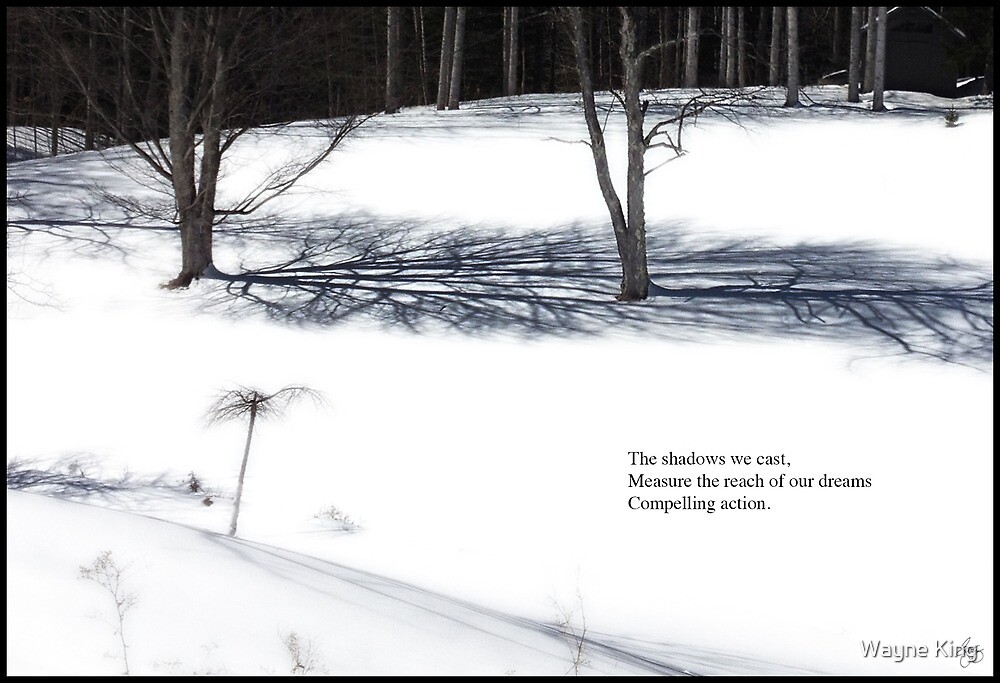
The Shadows We Cast Haiku

Here in the shadow of Rattlesnake Ridge we’ve been treating 16 and 17-year-olds as adults for a long time. Rural life sometimes works that way. Especially now when changes in the world of work present such disruptive challenges to families and individuals.

Just up the road from us one particular family we know is one example. Dad walked out and left Mom and five kids to fend for themselves. He had done pretty well for himself and he could have helped his family but he chose not to and Mom could not afford the “luxury” of hiring an attorney to press her case. So the rule in this household was that if you were 16 or older, you worked and contributed to the cost of the mortgage, food and fuel. If you think this is an unusual circumstance, you need to get out more. A lot of families, especially those within the precariat, find this a necessary avenue to financial survival.

The truth is that we expect more and more of our young people once they reach the age of 16 and more and more of the legislation that winds its way through state and federal governments impacts their lives - when they have little power to affect it.

In my last "View from Rattlesnake Ridge" column ( http://bit.ly/RestoreCenter ) I suggested as an afterthought that we should lower the voting age to 16, but then I watched as a group of mostly 16 and 17-year-olds orchestrated the largest peaceful protest in American and World history with “The March for Our Lives” and now I want to put it right up front: It's time to give 16 & 17-year-old Americans the right to vote. Although a large number of politicians and “Adults” vied for the opportunity to address the crowd of more than 800,000 people on the Mall in Washington, the students who organized the march made it clear that this was going to be their moment, and it WAS. I stood and watched as these students demonstrated a sense of civic involvement far greater than most of their elders.

Life has changed and in an Age of Accelerations - a term coined by Thomas Friedman - we should, at a minimum, begin debating the merits of allowing 16 and 17-year-olds to vote. When a 16-year-old is accused of a violent crime they are, almost without exception, treated as an adult. We place no restrictions at all on the number of hours they may work. In most states they are allowed to marry - though from experience I wish they wouldn’t.

The Whisper of Winter Wood (Redux) Haiku


A wealth of research on the difference between the mental faculties of 16 and 17-year-olds and those of their “elders”, even the only-slightly older ones, provides evidence that the 16 and 17-year-olds are just as capable of making informed decisions as their 18-21-year-old peers. Even more interesting is that research shows that 16 and 17-year-olds are much more likely to participate in the democratic process than those between the ages of 18-25.

In 2011 Norway decided to test allowing 16 and 17-year-olds to vote. They found that participation (voting) among the 16 and 17 year-olds was closer to the average of adults 40-60 and well ahead of the numbers for those between the ages of 18 and 25. According to a University of Vienna study, a similar experiment in Austria yielded similar results. Both of these countries now allow 16 and 17 year-olds to vote.

Now there are probably a lot of reasons for this differential, not the least of which is that 18 to 25-year-olds are in the most turbulent time of their lives with changes coming at them at the speed of light, but the fact remains that where ever genuine social science has been done on this issue 16 and 17-year-olds come out on top.

According to Zachary Crockett, who has done some of the most compelling research for VOX, the reason that 16 is a preferable age for allowing young people to vote (my characterization - not his) is that 16 and 17 are better ages for forming civic habits than 18. 16 and 17-year-olds are in High School and most are living in homes that provide them with a reasonable level of security. According to Crockett: “Entrenched both in familial and institutional support groups, 16-year-olds are in a better place to form long-lasting voting habits than 18-year-olds — but only if the right to vote is accompanied by a robust civics education.”

This civics education can be delivered by schools - which is essential in my opinion - or by engagement with civically minded peers and adults - both of which were true of the students who are driving the the “March for Our Lives” and its outgrowth the “Never Again” movement. It is also what moved the Parliament of Scotland to UNANIMOUSLY vote to give 16 and 17 year-olds the right to vote after testing it with the recent vote on Independence.

The voting age nationally is 18 but the US constitution was crafted to (wisely) leave the age of voting to the states. Some states are experimenting with allowing younger voters to participate in caucuses and local elections. Perhaps the movement to allow 16 and 17 year-olds the right to vote will be driven by the states and not the lugubrious Federal Government that we have now. But that is a matter for another column . . . or several other ones.

For now, I for one am going to become an outspoken advocate for giving 16 and 17-year-olds the right to vote.

If you’d like to join in - or even to cast your vote for the other side, weigh in at #Let16Vote.


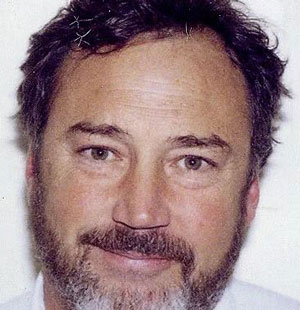
About Wayne D. King: Wayne King is an author, artist, activist and recovering politician. A three term State Senator, he was the 1994 Democratic nominee for Governor and most recently the CEO of MOP Environmental Solutions Inc., a public company in the environmental cleanup space.  His art is exhibited nationally in galleries and he has published three books of his images. His most recent novel "Sacred Trust" a vicarious, high voltage adventure to stop a private powerline, has been published on Amazon.com http://bit.ly/STPaper. He lives in Rumney at the base of Rattlesnake Ridge and proudly flies both the American and Iroquois Flags. His website is: http://bit.ly/WayneDKing
-------
#Precariat, #TheRadicalCentrist, #marchforourlives, #NeverAgain



The Bridge at Chappy


Friday, March 9, 2018

The Hidden Time Bomb within the Good Employment News


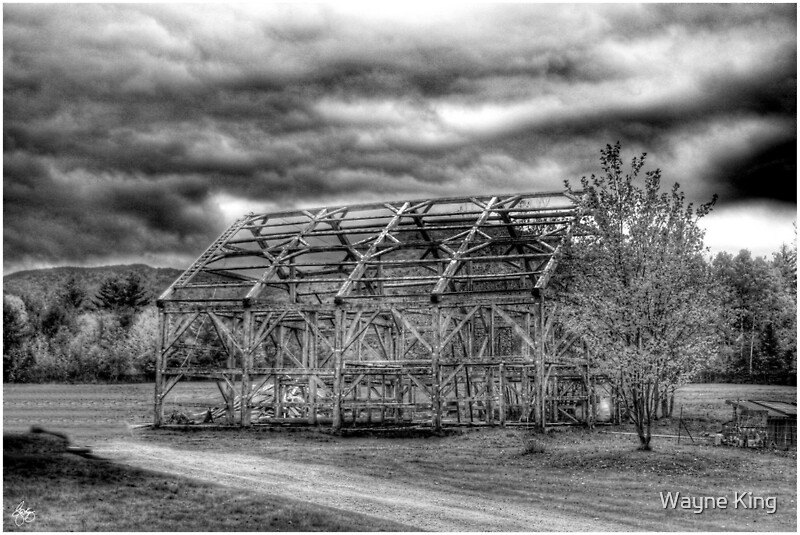
Barn Shell Monochrome

If you ever needed proof of the disconnect between Wall Street and average folks it is the response of the Markets to the unemployment numbers from last month. Not only were markets excited with the growth in the number of people employed but they were especially excited at the lack of wage growth. Their argument was that it means that inflation is not heating up; but lets call it what it is, a continuation of nearly 50 years of stagnant wages for middle class and working class families.

Indeed, the unemployment news today is very good for the economy. Whether you wish to credit President Obama or President Trump is your call; economists make pretty good arguments both ways. Within these numbers, however, there is the long-term crisis of income inequality that represents the single greatest threat to the American Republic, there is also a ticking time bomb that threatens to lock it in . . . Non-compete clauses for hourly workers.ffw

What? You say. If you have ever heard discussions about non-compete clauses in the past it was in conjunction with the employment of management level employees and people who are engaged in work that involves closely held intellectual property and trade secrets.

The fact is that since 2014 non-compete clauses for lower wage employees has been growing dramatically. It is now estimated that 25% of low wage workers are being required to sign non-compete clauses.

In year’s past there have been spurts in wage growth associated with a strong economy because employers had to raise wages in order to keep their workforce. Now they are requiring new hires to sign non-compete clauses instead.

Are you managing the line at a Pizza Hut and the local Papa John’s is offering to double your pay if you’ll come on board with them? Great news for you. Great news for your family too. Here’s your chance to take another step up the ladder of the American Dream. Hold on there! If you signed a non-compete agreement with your employee when you were hired - or after that - chances are that you are stuck. Worse still, you’ve got no leverage with your current boss because when you ask him or her for a raise - especially if you mention the offer from Papa John’s. He’ll just remind you that your non-compete clause means you can’t take that job. If you think you can take the job and accept the legal consequences, keep in mind that you may end up spending all or more of your increased wages on lawyers to defend you from your former boss.

Asking low wage workers to sign non-compete clauses is a blatant use of a legal contract clause intended to protect intellectual property to suppress wages for working class and middle income workers. If this practice grows we will have effectively locked in shrinking wage growth, especially for the poor and working class - the precariat - and made more desperate the hopes of overcoming the growing inequality of income in America.

To those who think this is not a threat to both the Republic and the economy I say, where will your consumers come from if this continues?


Alton Washday Revisited


About Wayne D. King: Wayne King is an author, artist, activist and recovering politician. He was a three term State Senator, who Chaired the Senate Economic Development Committee and the NH Senate Economic Summit. In 1994 King was the Democratic nominee for Governor and most recently the CEO of MOP Environmental Solutions Inc., a public company in the environmental cleanup space. His art is exhibited nationally in galleries and he has published three books of his images. His most recent novel "Sacred Trust" a vicarious, high voltage adventure to stop a private powerline has been published on Amazon.com as an ebook (http://bit.ly/STrust ) or in paper at http://bit.ly/STPaper . He lives in Rumney at the base of Rattlesnake Ridge. His website is: http://bit.ly/WayneDKing

3/9/2018

Monday, December 4, 2017

GOP Tax Reform is a Massive Transfer of Wealth to the Wealthy

Government Doesn't Create Jobs, Businesses Don't Create Jobs . . . CUSTOMERS create jobs and we are squeezing them. Here's my latest column from Rattlesnake Ridge.

Government Doesn’t Create Jobs, Neither Do Businesses
By Wayne D. King
There’s a whole lot of head-scratching going on here in the shadow of Rattlesnake Ridge.
Whatever your choice of news delivery, it’s filled with news about the Tax “Reform” Bill that the President is hawking. He’s going around the country like the proverbial snake oil salesman, telling us it’s going to feel a whole lot better once we buy his special concoction, once we have allowed it to “trickle down” our gullets anyway. You’d think by now we would know that every time he says “believe me!” he’s about to tell us a whopper.
Throw out that fourth grade handout you’ve been keeping about “How a Bill Becomes a Law.” The Republican Congress has ignored all of the normal constitutional procedures for creating a bill. Given that, it’s not hard to understand why I probably know more than the President about what they are up to, but no more than anyone else who has tried to stay up to date on the back-room shenanigans.
Wayne D. King
Don’t think for a minute that I’m being partisan. No, the Democrats are at least partly to blame as well. Democrats have been too spineless to offer an alternative vision to the country. They had the opportunity to demonstrate both transparency and a saner set of economic principles, maybe even to pick off a few rational Republicans in the process, but they squandered it.
Instead, we’ve had to rely on a few organizations that managed to get a hold of some snippets of the bill and, from that, to give us reports on the impact of some pieces of the puzzle, which are troubling to say the least. At the same time, the President and Congress treated all of us like mushrooms – you know what I mean – kept in the dark and fed the proverbial BS.
The good news is that the polls show that the American people are not buying it. Almost 70% of them are against what they have heard, or at least skeptical (49% opposed completely, 21% unsure). The bad news is that the Republicans – even the folks we have come to depend upon for their independence – don’t seem to care.
If the Democrats had only been able to sway four of them with a rational alternative, we might not be staring down the barrel at a bullet with our name on it.
Actually, the bullet more accurately is labeled: “The Precariat” on one side and “The Middle Class” on the other.
If you wondered whether this column would be as “highbrow” as the last one – as highbrow as we get up here along Rattlesnake Ridge anyway – this is where it begins . . .
The Precariat is a relatively new term in sociology and economics describing those who live day to day in a precarious struggle for economic survival. This essentially includes the poor and working class families in our nation. However, even the middle class is in danger, because a growing number of them are falling into the Precariat every year. Economists describe this as a “hollowing out” of the middle class.
Economists differ on exactly when the problem of stagnant wages began, but most agree that since at least 1977 wages for both the Precariat and the Middle Class have been stagnant while wages for the top ten percent have grown significantly and the top one percent obscenely. Think about this; for forty years wages earned by 90 percent of our people have not grown in real dollars.
In his acclaimed book “Capital in the 21st Century,” author and economist Thomas Piketty asserts that this is the natural order of things. Left unchecked, the natural state of Capitalist systems is to concentrate wealth.
Most of the people in the Precariat can not be described as consumers. They do not have disposable income to spend on much more than housing and food. Consumers with disposable income – those who have enough available capital to purchase goods and services – come from the middle class and the wealthy . . . the vast majority from the middle class by sheer numbers alone, but their numbers are shrinking.
That brings us back to the title of this piece.
Few are probably surprised at the statement that “government doesn’t create jobs;” but it may have surprised you that I would say “businesses don’t create jobs.” No doubt this goes against the current accepted orthodoxy.
Government doesn’t create jobs and, in the final analysis, neither do businesses because customers create jobs. Without customers – demand for their products – businesses will not have the incentive or means to hire, and government will not have the ability to develop their economies.
As the middle class continues to hollow out from a growing disparity of income and wealth, fewer and fewer of them will be able to buy the products offered by the businesses who are reaping the economic rewards of their consumption.
What the Republicans, and even the Democrats to some extent, don’t seem to realize is that – without change – a time will come when the ten percent will realize that the customers have stopped coming because they can no longer afford their products.
The current tax bill, seemingly destined for Donald Trump’s desk, hastens the day when we will wake to find this the case. It’s not hard to understand why. Even the more conservative think-tank-types are saying that between 70-80% of the tax benefits will go to the 10% of people at the top of the income scale, with 50% to the top one percent.
Today the plutocrats will be reaping the lion’s share of the tax cuts. Tomorrow, if we do not act, WE will face the pitchforks.
I don’t say this to be an alarmist. As a radical centrist, I am also a capitalist – through and through. I believe that the capitalist system is the most effective economic system ever conceived for creating prosperity and solving problems. Perfect, it is not.
I also believe that it is the responsibility of government to assure that the Capitalist system serves the broadest possible interests of all the people, ameliorating the concentration of wealth that Piketty describes; and that no system of government has been devised, more effective at doing this than Democracy – – when it is at its best.
But our Democracy is broken . . . or, more accurately, it is moribund, gridlocked, sloth-like.
In an age of accelerations when our economy is more innovative, more entrepreneurial, more dynamic and capable of solving nearly every problem we face, our Democratic institutions are failing to provide the guidance and leadership needed to steer these changes.
If you think this has all been without warning, think again. According to multiple studies done over the last 12 months, more than 10% of voters supported Obama in 2012 and then switched to Trump in 2016. Despite Hillary’s claims of misogyny and other related factors being the primary driver of the election results, it is more likely that this was an ongoing and desperate call for help. In any case, it was enough to decide the election.
The irony is what we are watching is one of the greatest bait and switch cons in modern American history taking place right in front of us. Desperate citizens provided the margin of victory for the election of Donald Trump because he promised to look after the “little guy.” Now, the President and the Congress have spent months waving the colorful flag of tax relief for the small business person and the middle income worker in front of us before dropping it into their top hat, but the rabbit they are pulling out of the hat is a giant tax cut for the very wealthy.
It may be that it is too late to stop the largest transfer of wealth from the Middle Class and the Precariat to the wealthy in American history, but I still hold out some hope that if we raise our voices now, before the House and Senate reconcile the two versions of the bill, that we can find enough Republicans to vote no on final passage.
About Wayne D. King: Wayne King is an author, artist, activist and recovering politician. A three term State Senator, he was the 1994 Democratic nominee for Governor and most recently the CEO of MOP Environmental Solutions Inc., a public company in the environmental cleanup space. His art is exhibited nationally in galleries and he has published three books of his images. His most recent novel “Sacred Trust” a vicarious, high voltage adventure to stop a private powerline has been published on Amazon.com as an ebook with the paper edition due soon. He lives in Rumney at the base of Rattlesnake Ridge. His website is: http://bit.ly/WayneDKing
Editor’s note – The opinions expressed here belong to the columnist and do not represent those of InDepthNH.org

From "Screen Door" to "String Too Short to Keep"

  From "Screen Door" to "String Too Short to Keep"  A poetic journey across time and space in New Hampshire with Poet El...