The View From Rattlesnake Ridge
Ruminations from an Unabashed Optimist, an Environmental Patriot and a Radical Centrist
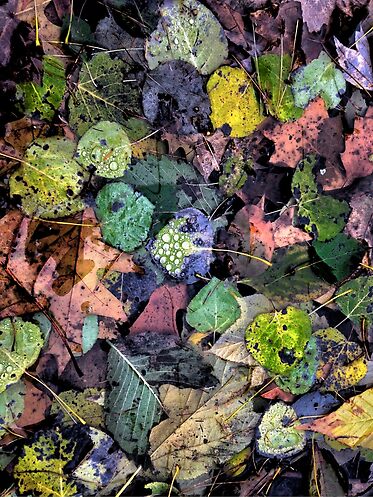
Despite the Climate Emergency wreaking havoc throughout the nation and the world, and the Covid 19 pandemic still plaguing us, autumn here in the valleys between the Rattlesnake Ridge and the Sandwich Range has been just about picture-perfect this year. Welcome periods of warm sunny days, punctuated with mostly gentle soaking rains, beckoning to hikers and climbers and leg-stretchers like Kodi and I. Inviting us to partake of the autumn colors.
It has also been a banner year for mushrooms and fungi. In fact, I have never in my life seen the forest floor covered by so many mushrooms. Even now as their presence is beginning to wane people are still commenting on the abundance and speculating on the reasons.
Mushrooms are the gloriously emerging fruiting bodies of a fungus that is growing underground (mostly) from what are called mycelium, nerve-like tendrils that can spread for many miles without ever being seen.
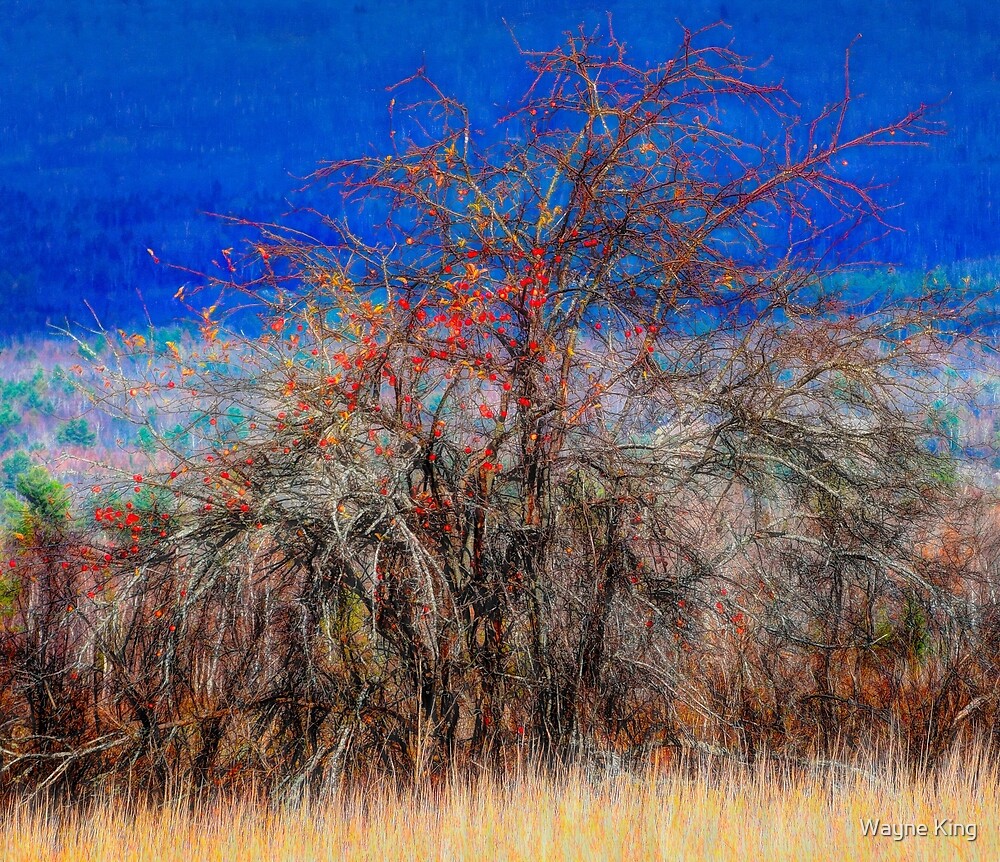
Now I know just enough about mushrooms to be dangerous, which is why I am very cautious about gathering them to consume. Most of the time I rely on my son Zach who is far more experienced at partaking of wild edible mushrooms. But there are certain mushrooms, like the Morel family, that are quite distinctive and even I can safely gather them for dinner. Problem is, they are usually pretty rare around these parts. But this year I have found them growing in an old abandoned apple orchard that Kodi and I enjoy often on our rambles.
All these mushrooms aren’t new to the northeast or wherever they can be found; the mycelium has been here underground all along, just waiting for the ideal temperatures and rain we had this summer and fall. In theory they could go for hundreds of years without ever popping their fruiting bodies above ground.
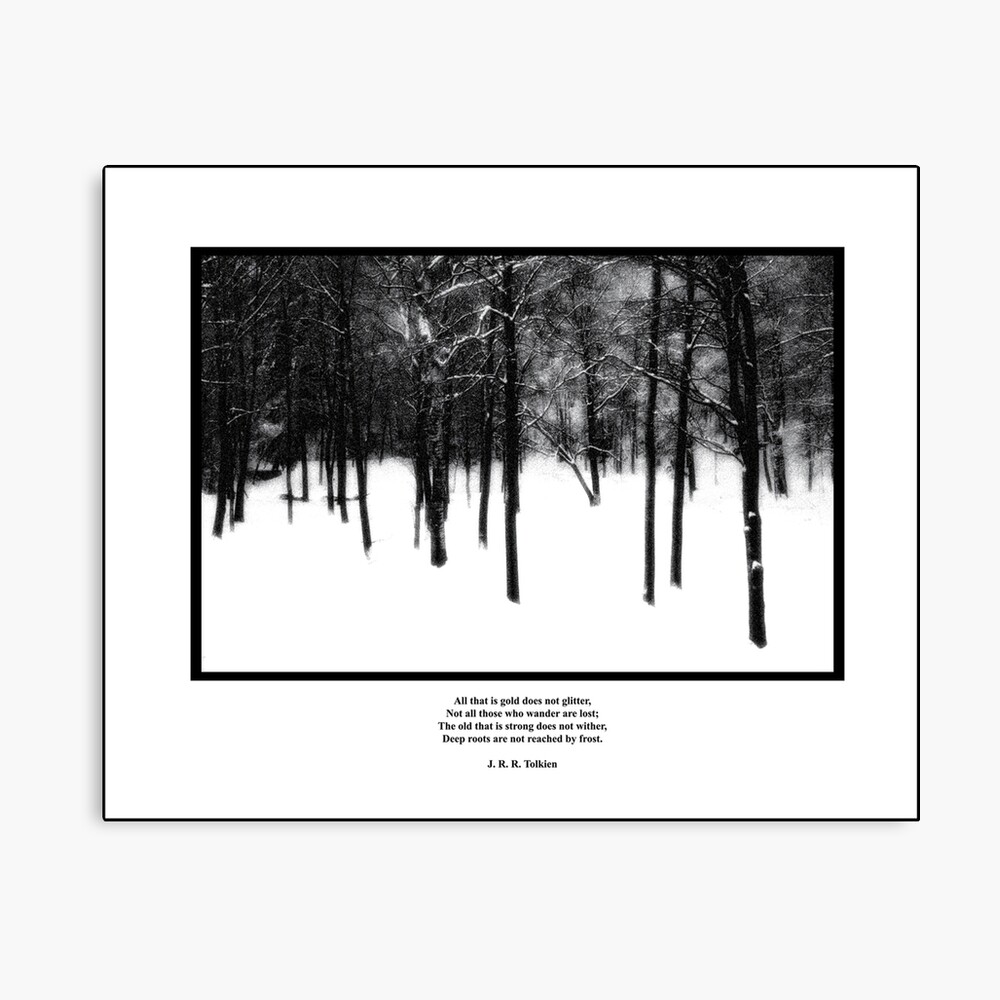
The natural wonder of all this is a balm for the souls of the wanderers, but, to quote Tolkein, “not all those who wander are lost.” For the past 30 years scientists have turned increasingly to the hidden miracles of mycelium and what they have discovered - as well as what they continue to discover - is likely to hold an entire world of revolutionary changes to both our understanding of the natural world and our ability to rebuild our own species into a sustainable cohabitant of the planet.
When most of us walk through a forest or a park we see only the trees, shrubs, and plants above ground. We know from experience and education that these plants have root systems but what has only recently been discovered is that the entire ecosystem in which we are wandering communicates through the mycelial network below ground in what scientists have come to dub the “Wood-Wide-Web”; weaving in and out and through root systems and creating a biological neural network - sharing information, nutrients, water and carbon across distance, species and ecosystems.
Moreover, far broader implications are being discovered from the wonders of what is called the mycorrhizal network. According to Scientific American: “mycelium can be coaxed to build predictable structures by controlling temperature, CO2, humidity and airflow to influence the growth of tissue. This is a rapid process: the accumulation of fibers becomes a visible speck after a few hours, a visible sheet after a day or two, and an 18-by-2-by-12-inch sheet weighing a couple of pounds within the course of a week.” All powered by simple and relatively inexpensive nutrients like wood waste or sugars. “
The possibilities are mind-bending. Mycelium's fast-growing fibers that produce materials used for packaging, clothing, food and construction - again according to SA “everything from leather to plant-based steak to scaffolding for growing organs. Mycelium, when harnessed as a technology, helps replace plastics that are rapidly accumulating in the environment.”
“All these benefits come with little environmental cost: the process of growing mycelium results in limited waste (mostly compostable) and requires minimal energy consumption.” Already bio-degradable packaging is being created in the US and Europe using this technology.
Now you may be wondering, if you read this column now and then, how I am going to turn this all into a discussion of current political and policy questions.
Start with the fact that much of the research being done in this area is under the research umbrella of DARPA; The very same government entity that developed the World Wide Web is doing research - based on the “Wood-wide Web” that will unleash a new massive wave of economic and environmental benefits.
Unfortunately, if the past is prologue, the billions of dollars of taxpayer money used for research to create this revolution will ultimately accrue to a few select companies and individuals who will capture and patent technologies based on the work of these government research institutes and affiliates. The economic benefits to average taxpayers will be crumbs by comparison. But it need not be that way.
Shouldn’t the revolution created by this amazing research also lead to a revolution in the public policies by which we employ and enjoy the benefits - sharing the wealth with those who have paid for that research - the American people?
Congress is currently deadlocked over a 3.5 trillion “human infrastructure” bill which has deteriorated into a food fight over numbers, with very little attention paid to what lies behind the spending. As much as the Democrats have tried to refocus the conversation to the content of the bill, they have been unable to so do. Those opposed, even the Republicans, refuse to specify what they would choose to remove, largely because they know if they pinpoint anything it will affect the outcome of their next election. Face it, people are hurting and 50 years of growing disparity of wealth in America has opened up a hole in the hearts of too many of our fellow Americans. In 2016 Donald Trump walked through that hole and quite nearly destroyed the Republic.
It isn’t just the Republicans who willingly and knowingly followed Donald Trump down that rabbit hole who are responsible.
The Democrats, including Joe Manchin and Krysten Sinema, bear some responsibility as well. But Manchin and Sinema are only nominally more responsible than many others who simply see the opportunity to feather the nests of their own pet issues. When faced with the opportunity to really do something different, many of the Democrats fell right back on their old playbook: Picking winners and losers and leaving the status quo essentially unchanged. In the process, leaving a whole lot of our fellow citizens feeling abandoned in their desperation, and leaving that hole in their hearts equally vulnerable to a second Trump candidacy - or a Trump surrogate - in 2024.
If we really want to bring Americans together again, and it will not be easy, we need to abandon the status quo; the additive process of increased spending based on winners and losers. Our focus must be more on change that benefits everyone and - on the other side of the ledger - requires joint sacrifice to confront our most important challenges.
Doing this might just cause some of the moderate Republicans, hiding in the tall grass, to show the backbone needed to save their party from oblivion or their country from a descent into totalitarianism.
It might just be, in fact, it is highly likely, if we sincerely reformed the existing system, we could do more with less. A Universal Basic Income for every American citizen, supported by many conservative and progressive economists, would not favor community colleges over great small private or public colleges or quality certification programs in dozens of fields. Those who chose to spend some or all of their UBI on continuing education would be able to make their own personal choice. A UBI would not prioritize care of a dying parent over care of a newborn or vice versa; it would not prioritize dental care over other healthcare needs or personal needs. It would give every American the freedom to choose how their benefit would most effectively enhance their life and the life of their family. It would allow us to take a serious look at the massive social service bureaucracy that we have built over the years in the name of protecting citizens from themselves or punishing those we felt were less deserving for whatever reason. Unleashing real freedom of choice for low-income and working and middle-class Americans.
While a UBI would be the most effective and revolutionary change it would not be without it’s notable advocates. First proposed by Thomas Paine it was also supported by Richard Nixon who successfully shepherded it through the U.S.House only to have it killed in the Senate by Democrats and Nixon’s own personal failings. Supporting Nixon’s UBI back then was the conservative Economist Milton Freidman to whom Republicans, even today, continue to pledge fealty. 2020 Presidential candidate Andrew Yang is even now indicating that he expects to create a third political party with a UBI as a central tenet. If you think this represents an existential threat to the two-party system, you’re right. But if you think that Trump would be the beneficiary you have missed the reason he won to begin with altogether.
While we are at it, it's high time we had national service in this country. One or two years of service in either the military or civilian corps would go a long way to bridging the differences that continue to manifest themselves in tribalism among our citizens. It need not be absolutely mandatory. For example we could create an opt-out similar to the conscious objector exception during the Vietnam era, or we could simply tie national service to qualification for the UBI. Interestingly, a good deal of research suggests that a “gap year” (or two) following High School would be dramatically beneficial to post-high school educational performance for most students.
Of course, not every priority requires the same treatment. The Climate Emergency initiatives - or at the very least equivalent effort built on other ideas - will benefit everyone and address our most urgent, existential crisis. The unity required of the effort is built into the nature of the challenge.
A scientific revolution, brought on by breakthroughs like those chronicled above - perhaps equal to the birth of the Internet, has a power of its own and creates radical change defined by its possibilities, not by status quo politics and self-interested politicians; Limited only by our imagination and dedication to the premise outlined in our constitution:
"To form a more perfect union, establish justice, insure domestic tranquility, provide for the common defence, promote the general welfare, and secure the blessings of liberty to ourselves and our posterity.”
Democracy is not a static state, nor is capitalism. They are operating systems, requiring leadership that fearlessly embraces change to achieve its optimum outcome on an ongoing basis . . . that is how we achieve a more perfect union . . . and perhaps how we come together again.
Links
Scientific American
The Mycelium Revolution Is upon Us
https://blogs.scientificamerican.com/observations/the-mycelium-revolution-is-upon-us/
The National Forest Foundation
Underground Networking: The Amazing Connections Beneath Your Feet
https://www.nationalforests.org/blog/underground-mycorrhizal-network
About Wayne D. King: Wayne King is an author, artist, activist and recovering politician. A three-term State Senator, 1994 Democratic nominee for Governor; he is the former publisher of Heart of New Hampshire Magazine and CEO of MOP Environmental Solutions Inc., and now a columnist for the New Hampshire Center for Public Interest Journalism (inDepthNH.org) where he writes “The View from Rattlesnake Ridge” and hosts two Podcasts: The Radical Centrist (www.theradicalcentrist.us) and NH Secrets, Legends and Lore (www.nhsecrets.blogspot.com). His art (www.waynedking.com) is exhibited nationally in galleries and he has published four books of his images and a novel "Sacred Trust" a vicarious, high voltage adventure to stop a private powerline - all available on Amazon.com. His art website is: www.waynedking.com , and his writing site: http://bit.ly/WayneDKing . He lives in Thornton, New Hampshire at the base of Welch Mountain where he proudly flies both the American and Iroquois Flags.