Ruminations from an Unabashed Optimist, an Environmental Patriot and a Radical Centrist
As the oldest, most successful republican system of government, there is much about the American political, social and cultural systems in which we can take considerable pride. For more than 200 years, with relatively few exceptions – some notable whoppers among them – our system of governance and the people who have been elected, appointed and hired to represent us have served us well.
Each generation in that time has played its part in questioning, evaluating and putting to the test the institutions that we have created, allowing our government and our culture to continue to evolve. Sometimes that evolution came by renewing our allegiance to those institutions and sometimes by changing or even abolishing them. Sometimes the evolution of institutions has been gradual and sometimes by upheaval.
When the Republic was first established, the first ten amendments to the Constitution were essential to its adoption as the nation exercised its right to create changes to the structure and form of government right from the start. Insisting that the ten proposed amendments were essential to define the limits of power vested in the Federal Government and the essential rights of the individual and the states.
Likewise, over time, other amendments would codify the changes brought on by campaigns for change driven by the people and moving the country toward that “more perfect union.” In 1865, following the greatest single test of the young nation, and the loss of more than half a million American lives, the thirteenth Amendment ended America’s greatest shame, slavery.
In 1869 it became illegal for a man to be discriminated against in voting based on race, though women, to our everlasting regret, would remain completely disenfranchised for almost a half century more and most of those covered by the fourteenth amendment would also not fully realize their franchise until even more time had passed. In 1912 Senators, who had been selected by state legislatures for the first 125 years of the United States system, were selected by direct election of the people for the first time and six years later women finally obtained the right to vote after a long and hard fought campaign for suffrage.
Like the then-emerging understanding of natural law, propounded by Charles Darwin, so too did it seem that the process of evolving toward a more perfect union was one in which competing forces served to dictate the speed of that evolution, driven by a complex algorithm of activism, courage, perseverance and patience.
It also seemed, until fairly recently, that with our system of governance, so dexterously woven by the founders, they foresaw within its structures and institutions that there would be a natural obsolescence, the result of the nexus of time, human endeavor and achievement pushing forward the evolution of society.
Each of these major political changes as well as those wrought by social and economic forces including two Industrial Revolutions, the Labor Union Movement, The Progressive Era, The Women’s Suffrage Movement, the Great Depression, two World Wars, the Civil Rights Movement and the Cold War, merged with the political changes to create ongoing movements and moments defining continuously reinvented versions of the American Paradigm.
But in the last two generations something has happened to this natural progression . . . something has changed.
If you are a Millennial or from Generation X you may not have noticed. That’s because the changes seem less dramatic when viewed in the scope of 20 years than over more than half a century.
Each generation of Americans have faced this to some extent but the leap from horses and buggies in the late 1800s to fast cars and SUVs in the late 1900s is not nearly as mind-blowing as the changes that have taken place since the turn of this millennium.
Today the world is shifting beneath our feet. Change is not only the rule, it is both friend and foe. To make matters worse, it is often difficult to distinguish between when it is friend and when it is foe.
As important as the rapidly accelerating pace of technological change is to understanding where we are and where we are headed, what is even more important is to acknowledge that there has been a dramatic decoupling of the responsiveness to change between those driven by the human spirit, innovation and entrepreneurial initiative and our increasingly moribund and tribalized national politics that threaten to infect our state, local and community politics.
Even those of us who are Boomers have accommodated ourselves to the rapid pace of social change, as difficult as that may seem from time to time. Every day we hear new stories of entrepreneurs who have created remarkable new products that solve real problems. The pace of these victories of the human spirit and the entrepreneurial ethos continues to accelerate; but the ability of government to respond seems inversely proportional to its size and level. The further government is removed from the people the less dynamic it seems to be in its capability to respond to change and the more partisan it has become.
Until recently our political institutions have seemed to be up to the task of evolving with the culture and the economy. No more. In fact, they have been out of sync for some time now, the lag, it turns out, was in our understanding of this.
The Collapse of Middle Class and Precariat Income and Wages
Believe it or not, 1973 was the last year that wages for the Middle Class and the Precariat rose in response to increasing productivity. Since that time wages for both have stagnated while the real income of the top 1% has risen dramatically.
This growing income gap is the greatest threat to our democracy and our most important challenge as a Republic. Furthermore it is a virtual iceberg of sadness, rage and division within our society. Where most of the danger lies beneath the surface of the water. One need only observe that the margin of Hillary Clinton’s loss to Donald Trump in the 2016 elections can be found in the number of people who voted for Barack Obama in 2008 and 2012 – desperately seeking hope – and then having found that still no one seemed to be listening – they voted to burn the system down by switching to Donald Trump.
This collapse and the growing disparity of income in America represents a grave and existential danger to our Republic. The stability of a democracy is built on the strength of its middle class and the belief that even those in the Precariat can aspire to moving up . . . the belief that if you work hard and play by the rules that every American has the opportunity to succeed. When people begin to lose faith in this the Republic is in peril.
Equally as important, though rarely observed, this disparity represents a nearly complete denial of what has contributed to an American economy that is second to no other in humanity’s history. The Gross Domestic Product of our nation is a complex synthesis of recent success and hard won achievement built over more than 500 years of history.
Try telling the families of the Creek, the Cherokee, the Chocktaw, the Chickasaw and other nations who unwillingly participated in the death march now known as the “Trail of Tears” that some of the wealth of this great nation, reflected in its GDP today, did not come from the theft of their lands and wealth or that of any of the other 558 other tribes within the United States that have managed to survive the informal genocide of disease and the more formal one of the eradication campaigns that followed them.
Try telling the descendants of African American slaves who, for more than 200 years, padded the numbers of the national GDP with free labor that their toil and pain played no role in the equation.
Try telling the women of this nation, who even today earn less than 80 cents on a dollar compared with men in the American economy, that their labor is not of equal value and worthy of recognition in the equation.
Try telling the descendants of every immigrant group that came to this nation seeking opportunity and endured the slings and arrows of xenophobia and prejudice while providing low wage labor to generations of American Oligarchs; or the families of Japanese Americans held in prisoner camps during World War II and stripped of their wealth that their sacrifices in the national interest don’t matter.
I could go on but my point is not to dredge up the mistakes of the past but rather to recognize that – as a nation built by immigrants on lands stolen from indigenous people, we are all aggrieved, we are all due reparations. We are mutually responsible for our successes and failures and mutually entitled to a National American Social Dividend paid for with the blood, sweat and tears of every American who labored, and fought for the American Dream over the past 500 years – even before the dream was fully formed.
Mutually Entitled is the key phrase here. This National American Social Dividend is the birthright of everyone from the richest oligarch to the poorest American cobbling together four minimum wage part-time jobs to keep his or her head above water. Recognizing this will be critical to solving the problems associated with it lest it simply become one more flashpoint in the ongoing culture wars and tribalism that pits one American against another.
Back in the early 1970s when wages had not decoupled from productivity and the share of the wealth the bottom 99% of wage earners was still growing it seemed that we might see ‘the invisible hand of the market’ adjust accordingly to correct for the problem of income disparity, but time has a nasty way of revealing to us the truths behind our sacred cows.
In the last decade, time has, like a capital black hole, collapsed on itself in a landslide of cascading realities that have shaken our confidence in the American system to the core.
American productivity has never been better, yet productivity has produced a rush to the bottom in marginal costs of products, great it you are a consumer – but fewer and fewer of us find ourselves able to afford the luxury of being consumers these days.
American productivity is rarely today referred to in the quaint old fashioned parlance as “worker productivity” because fewer and fewer workers actually lay hands on the products. Astounding gains in artificial intelligence will only serve to make this problem worse and this train has left the station, there is no turning back.
Depending upon what futurist or prognosticator you are listening to between 40% and 60% of existing jobs will be performed autonomously within a decade, requiring few if any human hands earning wages. Even some of the newest jobs created within the “Gig Economy” like Uber Driver will vanish while the driver’s seat is barely warm. Within ten years almost all jobs related to transporting passengers and freight will likely be driverless as will many others that require only rote learning. Even a significant number of jobs that we would not imagine capable of being performed by anything other than a human will vanish without a trace.
There is no consensus about whether this dramatic job loss will be accompanied by equally dramatic growth of new jobs. Historically the case can be made that such revolutions in employment generate more jobs, not fewer. However, it’s worth asking ourselves if there are any trends that run contrary to this optimists outlook.
According to Mark Blyth, Professor of Political Economy at the Watson Center for International Studies at Brown University, 94% of jobs created since 2008 have been agency contract, part time jobs – most without benefits. If this trend continues, and there is no reason to believe it won’t, the majority of Americans will no longer be working a single job but multiple jobs, again with few, if any, employer provided benefits.
The stress that this has already exerted on the fabric of America can be seen in the growing partisan divisions of our politics, in the tribalism that pits one American against another even to the point of casting aside some of our most cherished beliefs including our pride in our own immigrant heritage and the role it has played in creating the most diverse and vibrant democracy on the planet.
All of those people who took such pride in the election of Barack Obama as President did not just abandon their core beliefs to choose Donald Trump. They came to believe that the light they saw at the end of the tunnel was – in fact – a train coming at them full speed. Fear has a powerful way of changing our perceptions.
Thomas Piketty said, in his landmark work “Capital,” “The natural course of capitalism is the concentration of wealth.” but there is a solution to this. A robust democracy that doesn’t accept it as a fait accompli. Assigning blame is counter productive. This is no-one’s fault, but it is everyone’s problem. Overcoming it will be the great challenge of our time. It will require us to reinvent many of the institutions that have defined us over the centuries. It will require us to find new ways to bridge the divides that threaten us.
It will require Democrats to embrace smaller government and Republicans to accept economies of scale. It will require those who would prefer to punish the poor for being . . . well, poor . . . granting them more freedom and responsibility and require those inclined to act as nannies to enfranchise the poor with the freedom to fail. It will require that we do not downsize government or upsize government but rightsize government, vesting power where it is most effectively wielded.
It will require us to create a new American Paradigm including a means for accessing and employing a National American Social Dividend as a means for creating a pathway to national renewal.
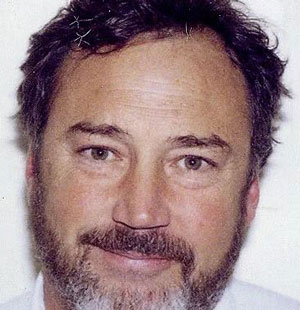
About Wayne D. King: Wayne King is an author, artist, activist and recovering politician. He was a three term State Senator, who Chaired the Senate Economic Development Committee and the NH Senate Economic Summit. In 1994 King was the Democratic nominee for Governor and most recently the CEO of MOP Environmental Solutions Inc., a public company in the environmental cleanup space. His art is exhibited nationally in galleries and he has published three books of his images. His most recent novel “Sacred Trust” a vicarious, high voltage adventure to stop a private powerline has been published on Amazon.com as an ebook (http://bit.ly/STrust ) or in paper at http://bit.ly/STPaper . He lives in Rumney at the base of Rattlesnake Ridge. His website is: http://bit.ly/WayneDKing