Friday, October 20, 2017
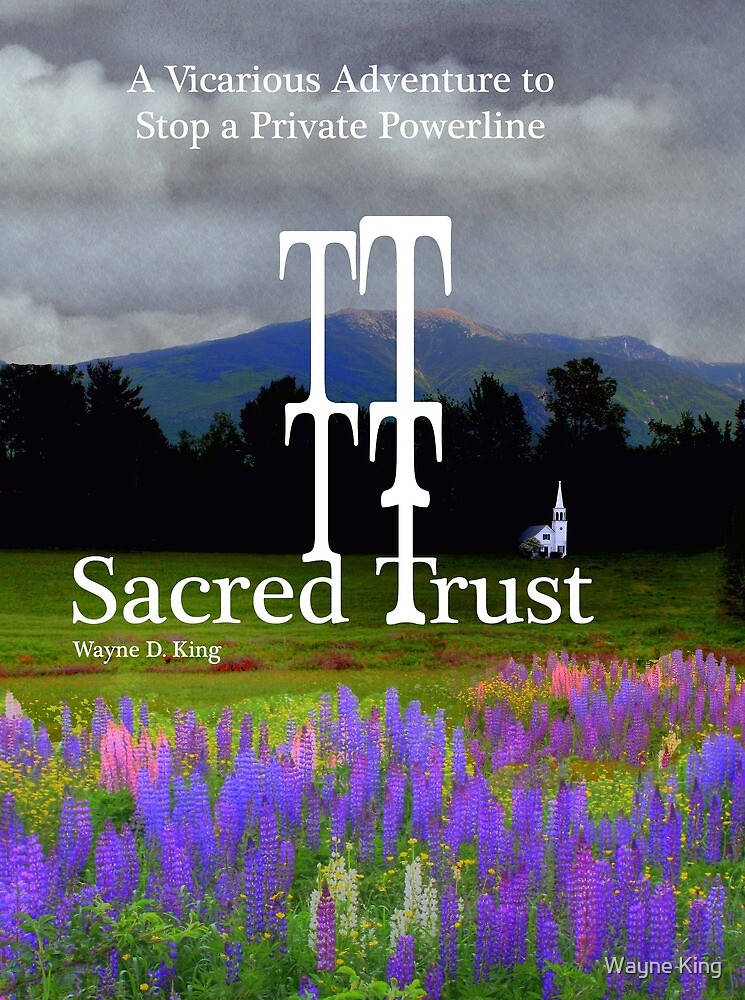
One day left! Free Download October 19-21! "Sacred Trust"
One day left! Free Download October 19-21! "Sacred Trust" A vicarious eco-thriller where citizens take on a "Northern Pass-like" powerline project using creative civil disobedience to stop the travesty. To download the ebook go to Amazon.com and type in any of the following keywords: Eco-thriller, Creative Civil Disobedience, Environmental Action, Sacred Trust. The eBook is free for 3 days only (10/19-10/21). If you like it I'd appreciate a review from you but its not required.
Short cut link:
http://bit.ly/STrust
Thursday, October 19, 2017
Re-Post: Waiting for Color, Waiting for Hope
In Case You Missed my Column Posted on Monday both here and on my Rattlesnake Ridge Blog I am re-posting it again, mostly as a celebration of the fact that two former Presidents have already stepped up.
“Whether they cooperate to step forward together or simply speak out individually we need our living past Presidents to speak out; leaders who still believe in the transformative possibilities of America. Leaders who still believe in the American dream and the possibilities and power of extending that dream to every American without regard to race, color or creed.”
Yesterday both President Obama and George W. Bush spoke out loud and proud about REAL American values and while they did not call out the President by name we all knew of whom they spoke.
https://viewfromrattlesnake.blogspot.com/2017/10/waiting-for-color-waiting-for-hope.html
Wednesday, October 18, 2017
Download "Sacred Trust" Free for 3 Days only Oct 19-21
Free Download October 19-21! "Sacred Trust" A vicarious eco-thriller where citizens take on a "Northern Pass-like" powerline project using creative civil disobedience to stop the travesty. To download the ebook go to Amazon.com and type in any of the following keywords: Eco-thriller, Creative Civil Disobedience, Environmental Action, Sacred Trust. The eBook is free for 3 days only (10/19-10/21). If you like it I'd appreciate a review from you but its not required.
Monday, October 16, 2017
A Song Softly Sung
A Song Softly Sung
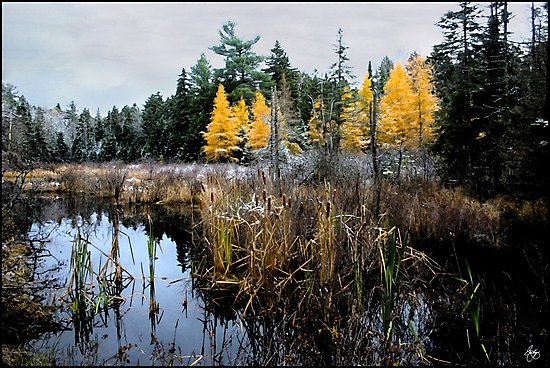
Tamarack are the final dancers among autumn’s stars.
Golden needles ignoring all the coniferous rules.
Changing, clinging, willfully waiting, poised for peak performance.
Let the maples have their moment
The oaks, the ash, the sumac too
They will be gone with the gawkers, following the foliage.
Until, until that sweet surrender, gold gilding black bark
As wintery winds, spraying snow, bear other leaves away
Borne, blown, buried in drifts of leafy litter
A golden moment, a shining sundance
A song, softly sung, after the symphony has ended
And the audience has gone home.
Wayne D. King
Waiting for Color, Waiting for Hope
Past Presidents Should Call a Temporary Break from the Tradition of Silence
The view from Rattlesnake Ridge this week has been sobering. Either autumn’s show is very late to arrive or it’s not coming; at least not in the style to which we are accustomed.
Every morning I arise hoping that somehow the hand of the Great Spirit will have swept through during the night turning the greens to to orange and yellow and red but so far I have been disappointed.
There is enough green remaining on the mountains that hope still abides but if the maples outside our post office, usually a bright orange at this time, are any indication hope will not abide for long, today they are a dry brown and likely to devoid of foliage within the week.
There is a Sugar Maple at the home of my neighbor, Peter, that is always the most stunning orange this week. I have watched children playing in her leaves beneath a cerulean sky, laughing and throwing leaves into the air; reaching for them as they flutter back to earth. Today it is as if that beautiful tree is fighting to give us even a hint of her former glory. Most of her leaves are gone but among the few that remain some still hint at what use to be.
![]() |
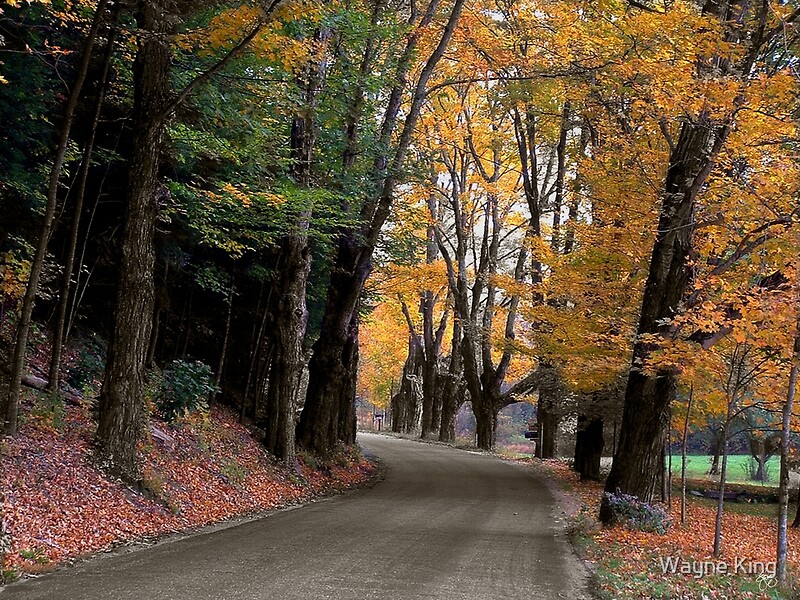
| Autumn Color Dance |
In years past you could not have kept me from reveling in the glory of this moment. Even a rainy, or foggy day would find me wandering the woods and the mountain trails, camera in hand. I would often find myself explaining to others how the overcast day brought out the colors and created ever shifting moods in the landscape.
Today, the drabness of the landscape reflects a sorrow clouding my own inner spirit. As much as I fear for my mountains, I am distracted from that because I fear more for my country.
In the span of less than a year we have gone from the leader of the free world and the standard bearer for a world where tolerance, civility, resilience and compassion provide hope and a reason for optimism to even those suffering under the yoke of tyranny; to a country that coddles those tyrants who oppress their people and walks away from its leadership role on the great issues of our time, again and again.
Only four years ago the United States military and an “army” of healthcare workers and volunteers from around the world prevented the Ebola outbreak in Guinea from becoming a worldwide pandemic. Who today believes we would step up to prevent that?
Today, the drabness of the landscape reflects a sorrow clouding my own inner spirit. As much as I fear for my mountains, I am distracted from that because I fear more for my country.
In the span of less than a year we have gone from the leader of the free world and the standard bearer for a world where tolerance, civility, resilience and compassion provide hope and a reason for optimism to even those suffering under the yoke of tyranny; to a country that coddles those tyrants who oppress their people and walks away from its leadership role on the great issues of our time, again and again.
Only four years ago the United States military and an “army” of healthcare workers and volunteers from around the world prevented the Ebola outbreak in Guinea from becoming a worldwide pandemic. Who today believes we would step up to prevent that?
Two years ago it appeared that the Paris Climate talks were going to end without agreement when the President of the United States stepped in and brokered a final agreement. The entire world celebrated. Would the world celebrate with us today?
In 2008 the world economy was on the verge of collapse the outgoing President George W. Bush and the incoming President Barack Obama put aside partisan differences to agree on a set of emergency measures to save the international economic system. Between those measures and the further action taken by the Obama Administration the United States averted a world wide depression and ushered in the longest period of sustained economic growth of the modern era. Could we expect such statesmanship today?
Republican members of Congress are paralyzed by fear; Democrats are incapacitated by ambition, but we need them now. We cannot wait three years for leaders to emerge.
I know that the tradition of restraint by former Presidents is almost sacrosanct but perilous times call for unprecedented measures. Whether they cooperate to step forward together or simply speak out individually we need our living past Presidents to speak out; leaders who still believe in the transformative possibilities of America. Leaders who still believe in the American dream and the possibilities and power of extending that dream to every American without regard to race, color or creed.
We need leaders who will say that America was already great before, when we didn’t need to brag about it, when actions spoke louder than words. Leaders who know that systematically dismantling all that has made us great will only make us weak and irrelevant.
Jimmy, stop being the greatest Ex-President long enough to weigh in.
Stop shaking your head in disgust Papa Bush. Do something about it. The entire nation is proud of the sacrifices you made for our country, don’t let one man make them meaningless.
Laura, tell “W” it’s time to stop clearing brush. It’s time to dust off his kickers and remind us that he’s still relevant and he’s not going to let the people who elected him for two terms down.
Bill, Hillary had her moment in the sun, you don’t have to stand in the background now. Step up.
Barack, stop yelling at the TV and get out here. We know you deserve some rest after the last eight years but there will be plenty of time to rest after this fight is over.
All of you . . . we don’t expect you to agree on every little thing. Just the big stuff. The moral leadership of the planet, stuff like that. . .
Jimmy, stop being the greatest Ex-President long enough to weigh in.
Stop shaking your head in disgust Papa Bush. Do something about it. The entire nation is proud of the sacrifices you made for our country, don’t let one man make them meaningless.
Laura, tell “W” it’s time to stop clearing brush. It’s time to dust off his kickers and remind us that he’s still relevant and he’s not going to let the people who elected him for two terms down.
Bill, Hillary had her moment in the sun, you don’t have to stand in the background now. Step up.
Barack, stop yelling at the TV and get out here. We know you deserve some rest after the last eight years but there will be plenty of time to rest after this fight is over.
All of you . . . we don’t expect you to agree on every little thing. Just the big stuff. The moral leadership of the planet, stuff like that. . .
As Nobel laureate Bob Dylan said, “There’s a battle outside and it’s raging.”
![]() |
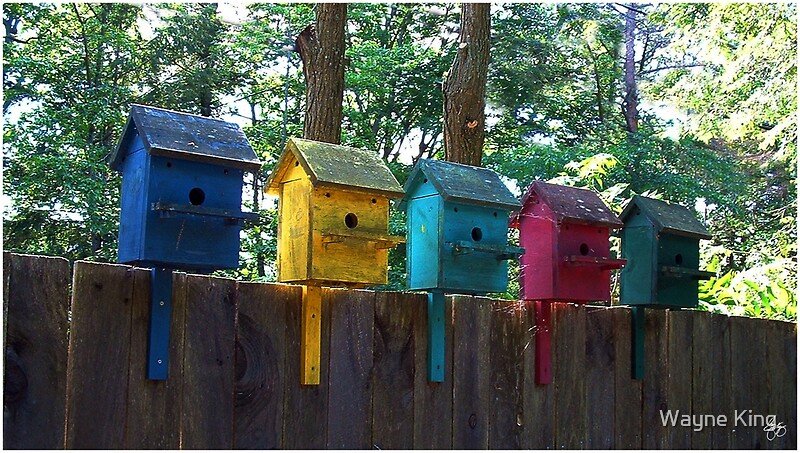
| Bird Houses on a Fence |
Friday, October 6, 2017
New Hampshire’s Outsized Role in The Renewable Energy Revolution
Want to Know who to thank for The Revolution? Start with John Durkin. . . and Jimmy Carter
![]() |
| Sunlight on a Woodstock Beaver Pond |
Summer’s fleeting pleasures are quickly yielding to the bittersweet days of autumn here on Rattlesnake Ridge. Autumn always seems to summon forth the highs and lows of our inner spirits; one moment we want to run and jump and throw our hands in the air, rejoicing at the beauty of the world around us and the next we are close to tears, often for reasons that seem completely unfathomable . . . bouncing between joy and sadness, though I sense that the passage of time, more acutely felt, is the primary motivating force.
In a week or two the hills will be ablaze with color. At least we all hope so. The effects of climate change seem to be having an effect on autumn foliage, but we really don’t know what the effect is. Some climate scientists say it will enhance colors, at least in the short term. Others insist the leaves will turn from green to brown and simply fall off the tree, but we don’t know how much of that is because of climate change and how much is because of an extremely dry summer and fall. Scientists differ wildly in their predictions of the effect but there is not the slightest difference on the causality side of the equation . . . the changing climate of our earth mother.
Recently I finished my first novel, “Sacred Trust” and published it as an eBook on Amazon Kindle (http://bit.ly/STrust) while I finish the process of readying it for publication in paper - and if I’m really lucky finding a publisher and/or a production company that agrees with me that it would make a great movie.
In Sacred Trust An existential environmental time bomb, in the form of a massive powerline, is about to explode an entire way of life for the people of the North Country. Nine unlikely oddballs: rock climbers, paddlers, a deer farmer and a former spook, are all that stands between the people and the powerline.
Most readers find themselves praying for the Oddballs. . . If the storyline sounds familiar it is at least in part because I was seeking a vicarious way to express my own frustration with the current situation here in New Hampshire, but also in states across the nation where the same scenario is taking shape.
The novel is somewhat unique, I think, in that the story divides itself between our heroes - citizens engaged in creative civil disobedience as the last defense against the powerline; a group of writers, calling themselves the Gazetteers, writing against the powerline project in the style of the authors of the Federalist Papers; and, finally, a serious-minded journalist who is writing a well researched analysis about both the project and the national and international challenges of the advancing “Age of Electricity”.
It was, and is, my hope to create a work of fiction that was enjoyable to read but that also helped readers to understand some of the challenges and nuance of the world in which we are all living and the world we are beginning to see emerge . . . the post-carbon world. Whether this education occurs on an individual basis or as a creative tool for the classroom, or both, it was my hope that art could be harnessed to facilitate change and dialog.
In doing research for Sacred Trust I learned a great deal and found to my delight and surprise that New Hampshire played an outsized role in today’s Renewable Energy Revolution. Furthermore, there were some civics lessons that also could be gleaned from the process that has brought us to this place.
Most of the remainder of this column is taken, almost verbatim, from Chapter 57 of Sacred Trust, in which journalist James Kitchen discusses the renewable energy revolution and New Hampshire’s role in its genesis.
Kitchen begins by describing a shifting paradigm that replaces carbon-based energy sources with sustainable green energy and some of the choices, challenges and dilemmas associated with the changeover.
Understanding the choices that our nation faces as we struggle to build a new energy paradigm requires that we have at least a basic understanding about how we got to where we are today and that journey - strangely enough - winds right through New Hampshire. In more ways than one . . .
Most politicians and even most citizens in New Hampshire consider the place of our state in the national election process as sacrosanct. The First-in-the-Nation presidential primary provides a jolt of cash to the state’s economy every four years but most people, particularly the staunchest defenders of the Primary, will tell you that there are more important reasons for protecting our place as first in the nation.
They will explain that only in a small state like New Hampshire does a candidate with limited money - but a great message - have a chance. In larger states, where the election is dominated by big business, big labor, and exorbitant media costs a great candidate without deep pockets will never have such a chance.
New Hampshire folks take their role in the process of winnowing down the field of candidates in their primary very seriously. They study the issues, they vigorously question the candidates, and then, once they have made up their minds, they roll up their sleeves and get involved in one campaign or another.
To understand where we are today we need to go back to the mid 1970s. Richard Nixon had resigned, to avoid being impeached, and Gerald Ford, appointed by Nixon after the untimely (and from many accounts unseemly) death of Nelson Rockefeller, was our first unelected President.
The Presidential primary of 1976 saw a very crowded primary among Democrats. Depending on who you count there were almost twenty people testing the waters or outright campaigning for the nomination. From that process, an unknown Governor named Jimmy Carter emerged and swept to the nomination as the “un-politician”. Carter won in Iowa and during the last three weeks of the New Hampshire Primary, capitalized on his Iowa win and zoomed from a 2% standing to over 30%, capturing New Hampshire. These two wins would serve to create a groundswell and Carter would go on to win the Democratic nomination. By the time the General Election rolled around James Earl Carter had sold himself as the first “outsider” candidate of the modern era and he won handily over Gerald Ford.
Carter’s one-term presidency was roiled by controversy and crisis, from an Arab Oil Embargo to the taking of American hostages at the American Embassy in Iran and a disastrous attempt to rescue those hostages.
Hidden in the layers of these controversies and crises is a legislative record that created the framework for a renewable energy revolution that has, of late, taken the country by storm. Carter’s team shepherded through Congress the landmark Nation Energy Policy Act, including a section called PURPA - the Public Utility Regulatory Policies Act. These massive pieces of Federal legislation included the first national policies on renewable energy and energy conservation, among other things.
Two years before Carter ascended to the Presidency, New Hampshire held an election for a United States Senator to replace the retiring Norris Cotton. A close contest between the Democrat John Durkin and the Republican Louis Wyman led to two recounts; the first won by Durkin, by ten votes; and, the second, won by Wyman, by 2 votes. Any citizen who wonders if their vote counts, need only look at the outcome of this election. Finally, at an impasse, the election was decided in the US Senate and Durkin was seated. Two years later, as the Carter Energy policy was moving through the Congress, John Durkin quietly and without fanfare, added an amendment into the PURPA act. The amendment required that utility companies purchase power - at market rates - from any producer of electricity generating fewer than 80 megawatts from a renewable energy source.
Durkin originally believed that he was helping to establish a foothold for wood to energy biomass and trash to energy co-generation, and he was, but the door that he opened with his amendment turned out to be big enough for every dreamer and entrepreneur, with a viable idea for generating electricity renewably, to walk through.
Soon proposals for small hydro (also called low head hydro), solar power, wind power and other renewable resources were on the drawing board and underway.
The Energy Policy Act passed the Senate by 1 vote. Again, a civics lesson in the importance of every vote in a democracy.
Over the years since then a few changes have been made to the Energy Act, but all continuing to move the country toward the day when renewable energy would account for a larger and larger portion of the power produced.
The changes of the 70s represented the first step in a changing relationship between America’s public utilities and the people and businesses who consumed the energy. Utilities no longer held complete monopoly power over both the sale and the purchase of electricity as well as its transmission.
To be fair to utility companies, it is important to note that these changes have created serious disruption in the model that they had been employing to govern their business plans and for many would come to represent an existential threat to their economic viability.
Different utility companies have approached the challenges posed by this deregulation in different ways. Almost immediately Vermont utilities formed a working group among utilities to come up with approaches that would allow them to create sustainable business models and one of the first things they did was to add ratepayers and citizens to the process to create forward momentum and a consensus building approach that made everyone a participant in a process that strengthened utility companies and encouraged the development of renewable energy.
Those who simply tried to squeeze more from a diminishing set of profit centers hastened toward crisis. The changes that have taken place over the past twenty years represent an existential challenge to many utility companies. They are casting around for ways to generate more profits in an era of shrinking opportunities.
The more progressive utilities are doing this by working to build an infrastructure that enhances the opportunities for renewable energy and the organic job growth that comes with it. Others are simply clinging to the past and trying to enhance their bottom line through transmission proposals that link together large generators of power with lucrative markets.
There are many lessons to be learned from the approaches employed to enhance their sustainability by utility companies all across America. But there is no doubt about one thing.
One short paragraph, authored by John Durkin and his team, had successfully wrested monopoly control over the electric grid from the utility companies and opened the gates for a flood of small alternative power producers and eventually individual homeowners and businesses.
For the first time the American people, just beginning to experience a growing environmental consciousness back in the 70s, had a say in the kinds of energy that we were using and could participate in the creation of that energy. For that we can thank Jimmy Carter, John Durkin and the 95th Congress of the United States.
About Wayne D. King: Wayne King is an author, artist, activist and recovering politician. A three term State Senator, he was the 1994 Democratic nominee for Governor and most recently the CEO of MOP Environmental Solutions Inc., a public company in the environmental cleanup space. His art is exhibited nationally in galleries and he has published three books of his images. His most recent novel "Sacred Trust" a vicarious, high voltage adventure to stop a private powerline has been published on Amazon.com as an ebook (http://bit.ly/STrust ) with the paper edition due in Mid-October. He lives in Rumney at the base of Rattlesnake Ridge. His website is: http://bit.ly/WayneDKing
Thursday, October 5, 2017
The Opportunity Costs of Northern Pass
Short-sighted Politicians and Eversource are Taking NH Down a Primrose Path
Wayne D. King
In a week or two the hills will be ablaze with color.
Depending on which scientists you choose to believe it will either be the most stunning autumn we have experienced in years or the trees will go from green to brown, disappointing all of us, including those who come to New Hampshire to see unrivaled foliage displays. Oddly enough, while the scientists differ wildly in their predictions of the effect, there is not the slightest difference on the causality side of the equation . . . the changing climate of mother earth. Mother nature is calling, and man is she pissed.
When Northern Pass was first introduced, I was open to the idea. It seemed logical that hydro-power from Quebec would be a responsible approach to reducing the region’s dependence on carbon-based fuels like oil, coal and gas. However, the loss of millions of acres of forest serving as a powerful carbon sink for the planet as well as the methane and CO2 generated by the creation of the impoundments necessary for most of the hydro dams turns out to offset the benefits. The effects of the dams - not constructed in areas adjacent to the border where there would be objections from people with political power - but instead built on the lands that provide sustenance to the Cree, the Innu and the Inuit are turning once rich fisheries into a toxic stew of mercury, methane and dioxin. Since nearly 50% of the blood that flows in my veins is Iroquois, mixed with a bit of Blackfoot and Algonquin, I am particularly sensitive to this as you might imagine. In the United States native people usually found themselves displaced and dispossessed because of Gold Fever. In the Eastern provinces of Canada that gold is hydro-power.
I am not so naive to believe that the treatment of the First Nations of Canada are going to be a deciding factor for folks in New Hampshire, not if their own country feels free to ignore the issue. In fairness to the provincial governments there is not unanimity within the First Nations communities over this and that too makes it unlikely that New Hampshire folks will develop their opinion about Northern Pass based on this.
However, there are many compelling reasons beyond this for us to reject Northern Pass.
![]() |
| Autumn through an Ancient Window |
A Threat to Our Way of Life:
Much has already been written in opposition to Northern Pass by people far more eloquent than I. To many Northern Pass represents an existential threat to a way of life. A glorified “extension cord”, of monstrous steel towers, clearcuts and scars, intended to provide electricity to the suburbs of Boston and beyond with no benefit to New Hampshire. They are right.
Politicians and Eversource tout the “Private” aspect of the project as if to suggest that they are saving ratepayers and residents the cost of construction. In fact, the nature of the Private partnership proposing to build Northern Pass allows the investors, including Eversource, to have the best of both worlds. Eversource’s participation gives the project the ability to use public Rights-of-Way and the entire proposal socializes the costs of construction by erecting massive towers, clearcuts and scars on the landscape for transmission lines; In other words, the people of New Hampshire enhance their profits with a generations-long environmental debt.
In the middle of the last century, these would have been the same people who used the air and water for their waste disposal system, leaving the public an environmental legacy that is largely responsible for today’s fight over climate change . . . In response to this, Richard Nixon created the EPA; his most shining domestic achievement. Nixon recognized the con game that had been played at the public’s expense for more than a century - privatizing profits and socializing costs. It is an age-old and time-tested methodology employed by the one percent to enhance their bottom line at the expense of the rest of us.
Economic Upheaval:
The threat to New Hampshire’s second most important economic asset, the tourism industry has spurred most towns and tourism organizations along the route to oppose its construction. Ask anyone in the Real Estate business in the area and they will tell you that the demand for second homes, and even primary homes, in the areas along the various proposed routes has dropped sharply. One well known developer lost a PGA quality golf resort after word began to spread about the Northern Pass Route and demand for high end homes and lots around the course “collapsed”. They say that approval of Northern Pass, if it is approved, will ripple through the economy, especially of the North Country. They are right.
The untimely death of Executive Councilor Raymond Burton surely was a terrible blow to those who had hoped he would lead the political battle to stop Northern Pass. By all accounts he should have been for the Northern Pass if just a few of the claims made by the proponents of Northern Pass had been defensible, but they were not. Ray was a lion for the North Country. He cared about quality jobs and the economy. Unlike me, he was no tree hugger. He would not have been moved by the environmental arguments alone. In a conversation that we had shortly before his diagnosis with cancer was revealed he told me he was unalterably opposed to the project and that he was not moving an inch on his opposition. The jobs were temporary and the cost to our way of life was permanent. If you knew Ray, you know that his word was his bond, and no one in state government could build a coalition of Democrats and Republicans the way he could. If Northern Pass is approved, Ray’s loss will loom large to all of us.
On the other hand, a lot of political leaders are downright squishy on the matter of Northern Pass. When asked they will tell you that they would “prefer” that the entire line be buried, but not what they will do if it is not; or they want to be “sure that there will be a real economic benefit from the project.” but not what that real economic benefit might look like. They will ride the fence for as long as they are able. . . right to the end if possible.
I am puzzled by this; particularly when some of those politicians are generally strong voices for us. This is especially disappointing when at least one alternative proposal, from National Grid, has been offered that will have minimal environmental impact and create real opportunity for the development of local distributed renewable energy generation along its path; which means real and lasting, organically grown jobs.
My best advice to anyone who is straddling the fence on this, from someone who is guilty of having done his share of fence straddling over the years, is to pick a side and fight like hell for it because this battle is going to shape New Hampshire for the rest of our lives and well beyond. Nothing can be gained from straddling the fence. In the end, everyone is mad at you. To merge a pair of phrases offered up by both Jim Hightower and singer songwriter Loudon Wainright III, on this one there ain’t nothin’ in the middle of the road but yellow lines and dead skunks (stinkin’ to high heaven!).
If Ray Burton had lived that is the advice I think he would have offered as well and many a State Senator and State Rep would have drawn courage from his example. I hope they’ll read this and rethink their positions. This one is for keeps.
Long-term Environmental Damage:
Every environmental organization active in the state is opposed: from the staid, centrist Society for the Protection of NH Forests and the Appalachian Mountain Club to the Sierra Club and the Nature Conservancy. They too are right. The towers will be a blight on the landscape and burial of the lines, for the entire length of the path, may be acceptable to some political types but the scars left by the massive equipment necessary will be long lasting and disruptive. Especially in light of the existence of a far less onerous alternative.
Declining Demand for Electricity:
The folks from Northern Pass are quick to tell us that the National Grid proposal doesn’t preclude Northern Pass but the facts just don’t bear this out. Earlier in the year the Carsey Institute at UNH released a report showing that demand for electricity has been declining for more than a decade despite robust economic growth. Surely if one massive powerline is not needed, then two are just plain silly.
In fact, there is good reason to believe that by the time the project would be completed Massachusetts and the other states, who would be the recipients of electricity, will have improved their grids sufficiently to take advantage of all of the organically grown electric production from homes and businesses net metering and new local sources of electric generation and microgrids - to say nothing of other as-yet unrevealed new technology for both generation and storage of electricity.
Additionally, by the time Northern Pass would be completed, most military installations, Universities and large companies and institutions like hospitals will be producing their own power from advanced microgrids, essentially islands of self-sustaining electrical production and storage, capable of operation off the grid entirely but also a contributor to capacity when they are not forced by circumstances to disconnect from it. These military microgrids are already under construction, many of the others are as well.
The US Military, fortunately for all of us, has always been ahead of the curve with respect to social and technological advancement. Beginning with integration of the forces under Truman while the rest of the country was still suffering under Jim Crow; to full on acknowledgement of the dangers to national security from Climate Change; to the acceptance of LGBTQ soldiers that opened the doors to a national change of heart on marriage equality and other protections due our citizens under the Equal Protection Clause of the 14th amendment. If you want to know where the future of electric power generation and transmission is going, take a look at the extraordinary things happening at military bases here and abroad.
The Vagaries of Multi-National Cooperation and Security:
Each of the above are reason enough to reject Northern Pass and I have not even addressed the dangers inherent from dependence on a supply of electricity whose source resides in another country where we have no control over any of the vagaries of the economy, the security of the grid, or domestic needs for power. Nor have I addressed the dangers inherent from terrorism capable of throwing the entire eastern seaboard into darkness with one or two well placed explosives; or the risk that relying on the policies and practices of two separate countries for grid security poses. These are serious matters and require serious thought.
Opportunity Costs:
To all of these things, I add one very important item I think has not been adequately discussed: the Opportunity Costs of the Northern Pass.
One of my closest friends, Michael Hutchings, who was a Republican State Representative from Plymouth, elected to the Legislature the same year as I, and who has one of the finest minds I have ever run across, first introduced me to the finer aspects of this economic concept. We often commuted together to the legislature and both of us honed our skills together on those long car rides. In the legislature I became the Yin to his Yang and he became the Barney Rubble to my Fred Flintstone. Many a time we found that one Republican and one Democrat, willing to work together, could be a highly effective team.
Opportunity Cost, simply put, is the benefit that could have been gained from an alternative use of the same resources. In this case, the concept of Opportunity Cost applies to both the resources of our state’s largest utility as well as the resources of the state.
Sadly, the brainpower and financial resources of both have, through calculation and hubris, been directed at building Northern Pass - an investment that has no benefit to our own state and in no way improves our grid or makes it smarter and more resilient.
No effort was made to involve the public or ratepayers in the early planning stages. No effort was made to build support and consensus. One only need look to Vermont to see how highly effective public utilities operate. For nearly twenty years Vermont utilities have been working to build consensus among themselves and with Vermont citizens and ratepayers. The result is that, while there are of course areas of disagreement, Vermont is well on its way to building a 21st Century electric grid and a safe, sound and resilient distributed energy infrastructure. But despite the outstanding example set by our neighbor NH officials and our largest utility have been content to look the other way.
The jobs created by Northern Pass will be a temporary bump, gone once the transmission line is completed. Yet, had they directed those resources at creating the grid of the future - for New Hampshire - a grid with resilience and the capability to harness the distributed resources being created right now by homeowners, businesses and entrepreneurs - the job creation would be organic, substantial and enduring.
Currently, all of the homes and businesses that have net metering are not calculated into the equation when we estimate the contributions to the grid from renewable sources of electricity. Why? Because the grid, as it is now, is not capable of measuring their contribution, or effectively utilizing their contribution to meet everyday needs. Are we investing in ways to change this? No, our energies and financial resources are directed at Northern Pass - a transmission system that privatizes profits and socializes the environmental, social and economic costs and consequences and in no way enhances our energy future here in NH.
The world is changing under our feet. The era of electricity is here. States all around us are responding but NH politicians and Eversource are sitting on their hands.
With the cost of solar panels falling dramatically, the number of homes and businesses that are Prosumers - both contributors and consumers of electricity from the grid - is likely to rise dramatically in the next ten years. Yet we are not investing in a smarter grid to take advantage of this, despite the fact that reputable experts predict that the electricity produced by distributed energy from renewable sources will enable us to replace the power generated by the large producers of electricity that are scheduled for decommissioning in the next two decades.
This is the biggest betrayal of all: At a time when we need our primary state utility to be planning, and building, the transmission grid of the future; advocating and advancing the generation of renewable power in a post-carbon era; and standing up for the values that define our beautiful natural state, they are wasting their time and resources on a glorified extension cord with no future value to our state whatsoever.
All around us states have begun planning - and constructing - smart grids that meet the challenges of the future and support distributed energy sources, but not here, with the notable exception of the NH Electric Coop - a consumer owned and operated nonprofit.
It is malpractice; malfeasance of the highest order.
In “Sacred Trust”, my novel about a group of citizens who organize to stop a powerline, employing creative civil disobedience. These citizens risk their livelihoods and freedom to fight what they see as an existential threat to their way of life.
Northern Pass is just such a threat.
Let’s hope that sanity prevails in the process and that one of the alternative approaches to utilizing Canadian hydro-power without erecting massive towers, clearcutting and scarring the land and shutting off local innovation prevails. . . before citizens feel that extraordinary measures are needed.
About Wayne D. King: Wayne King is an author, artist, activist and recovering politician. He was a three term State Senator, who Chaired the Senate Economic Development Committee and the NH Senate Economic Summit. In 1994 King was the Democratic nominee for Governor and most recently the CEO of MOP Environmental Solutions Inc., a public company in the environmental cleanup space. His art is exhibited nationally in galleries and he has published three books of his images. His most recent novel "Sacred Trust" a vicarious, high voltage adventure to stop a private powerline has been published on Amazon.com as an ebook (http://bit.ly/STrust ) with the paper edition due in Mid-October. He lives in Rumney at the base of Rattlesnake Ridge. His website is: http://bit.ly/WayneDKing
Subscribe to:
Posts (Atom)
From "Screen Door" to "String Too Short to Keep"
From "Screen Door" to "String Too Short to Keep" A poetic journey across time and space in New Hampshire with Poet El...
-
From "Screen Door" to "String Too Short to Keep" A poetic journey across time and space in New Hampshire with Poet El...
-
Butternut Mist Originals Open edition Prints Time to Tell a Different Story on Inflation & Debt? Modern Monetary Theory offe...
-
The Aliens Have Landed - Now What? The triple threats of Climate, Inequality and Ai Offer an International Opportunity Lately, as Kodi and...