Monday, December 4, 2017

GOP Tax Reform is a Massive Transfer of Wealth to the Wealthy

Government Doesn't Create Jobs, Businesses Don't Create Jobs . . . CUSTOMERS create jobs and we are squeezing them. Here's my latest column from Rattlesnake Ridge.

Government Doesn’t Create Jobs, Neither Do Businesses
By Wayne D. King
There’s a whole lot of head-scratching going on here in the shadow of Rattlesnake Ridge.
Whatever your choice of news delivery, it’s filled with news about the Tax “Reform” Bill that the President is hawking. He’s going around the country like the proverbial snake oil salesman, telling us it’s going to feel a whole lot better once we buy his special concoction, once we have allowed it to “trickle down” our gullets anyway. You’d think by now we would know that every time he says “believe me!” he’s about to tell us a whopper.
Throw out that fourth grade handout you’ve been keeping about “How a Bill Becomes a Law.” The Republican Congress has ignored all of the normal constitutional procedures for creating a bill. Given that, it’s not hard to understand why I probably know more than the President about what they are up to, but no more than anyone else who has tried to stay up to date on the back-room shenanigans.
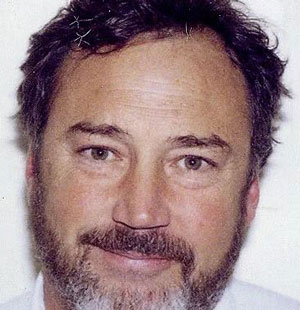
Wayne D. King
Don’t think for a minute that I’m being partisan. No, the Democrats are at least partly to blame as well. Democrats have been too spineless to offer an alternative vision to the country. They had the opportunity to demonstrate both transparency and a saner set of economic principles, maybe even to pick off a few rational Republicans in the process, but they squandered it.
Instead, we’ve had to rely on a few organizations that managed to get a hold of some snippets of the bill and, from that, to give us reports on the impact of some pieces of the puzzle, which are troubling to say the least. At the same time, the President and Congress treated all of us like mushrooms – you know what I mean – kept in the dark and fed the proverbial BS.
The good news is that the polls show that the American people are not buying it. Almost 70% of them are against what they have heard, or at least skeptical (49% opposed completely, 21% unsure). The bad news is that the Republicans – even the folks we have come to depend upon for their independence – don’t seem to care.
If the Democrats had only been able to sway four of them with a rational alternative, we might not be staring down the barrel at a bullet with our name on it.
Actually, the bullet more accurately is labeled: “The Precariat” on one side and “The Middle Class” on the other.
If you wondered whether this column would be as “highbrow” as the last one – as highbrow as we get up here along Rattlesnake Ridge anyway – this is where it begins . . .
The Precariat is a relatively new term in sociology and economics describing those who live day to day in a precarious struggle for economic survival. This essentially includes the poor and working class families in our nation. However, even the middle class is in danger, because a growing number of them are falling into the Precariat every year. Economists describe this as a “hollowing out” of the middle class.
Economists differ on exactly when the problem of stagnant wages began, but most agree that since at least 1977 wages for both the Precariat and the Middle Class have been stagnant while wages for the top ten percent have grown significantly and the top one percent obscenely. Think about this; for forty years wages earned by 90 percent of our people have not grown in real dollars.
In his acclaimed book “Capital in the 21st Century,” author and economist Thomas Piketty asserts that this is the natural order of things. Left unchecked, the natural state of Capitalist systems is to concentrate wealth.
Most of the people in the Precariat can not be described as consumers. They do not have disposable income to spend on much more than housing and food. Consumers with disposable income – those who have enough available capital to purchase goods and services – come from the middle class and the wealthy . . . the vast majority from the middle class by sheer numbers alone, but their numbers are shrinking.
That brings us back to the title of this piece.
Few are probably surprised at the statement that “government doesn’t create jobs;” but it may have surprised you that I would say “businesses don’t create jobs.” No doubt this goes against the current accepted orthodoxy.
Government doesn’t create jobs and, in the final analysis, neither do businesses because customers create jobs. Without customers – demand for their products – businesses will not have the incentive or means to hire, and government will not have the ability to develop their economies.
As the middle class continues to hollow out from a growing disparity of income and wealth, fewer and fewer of them will be able to buy the products offered by the businesses who are reaping the economic rewards of their consumption.
What the Republicans, and even the Democrats to some extent, don’t seem to realize is that – without change – a time will come when the ten percent will realize that the customers have stopped coming because they can no longer afford their products.
The current tax bill, seemingly destined for Donald Trump’s desk, hastens the day when we will wake to find this the case. It’s not hard to understand why. Even the more conservative think-tank-types are saying that between 70-80% of the tax benefits will go to the 10% of people at the top of the income scale, with 50% to the top one percent.
Today the plutocrats will be reaping the lion’s share of the tax cuts. Tomorrow, if we do not act, WE will face the pitchforks.
I don’t say this to be an alarmist. As a radical centrist, I am also a capitalist – through and through. I believe that the capitalist system is the most effective economic system ever conceived for creating prosperity and solving problems. Perfect, it is not.
I also believe that it is the responsibility of government to assure that the Capitalist system serves the broadest possible interests of all the people, ameliorating the concentration of wealth that Piketty describes; and that no system of government has been devised, more effective at doing this than Democracy – – when it is at its best.
But our Democracy is broken . . . or, more accurately, it is moribund, gridlocked, sloth-like.
In an age of accelerations when our economy is more innovative, more entrepreneurial, more dynamic and capable of solving nearly every problem we face, our Democratic institutions are failing to provide the guidance and leadership needed to steer these changes.
If you think this has all been without warning, think again. According to multiple studies done over the last 12 months, more than 10% of voters supported Obama in 2012 and then switched to Trump in 2016. Despite Hillary’s claims of misogyny and other related factors being the primary driver of the election results, it is more likely that this was an ongoing and desperate call for help. In any case, it was enough to decide the election.
The irony is what we are watching is one of the greatest bait and switch cons in modern American history taking place right in front of us. Desperate citizens provided the margin of victory for the election of Donald Trump because he promised to look after the “little guy.” Now, the President and the Congress have spent months waving the colorful flag of tax relief for the small business person and the middle income worker in front of us before dropping it into their top hat, but the rabbit they are pulling out of the hat is a giant tax cut for the very wealthy.
It may be that it is too late to stop the largest transfer of wealth from the Middle Class and the Precariat to the wealthy in American history, but I still hold out some hope that if we raise our voices now, before the House and Senate reconcile the two versions of the bill, that we can find enough Republicans to vote no on final passage.
About Wayne D. King: Wayne King is an author, artist, activist and recovering politician. A three term State Senator, he was the 1994 Democratic nominee for Governor and most recently the CEO of MOP Environmental Solutions Inc., a public company in the environmental cleanup space. His art is exhibited nationally in galleries and he has published three books of his images. His most recent novel “Sacred Trust” a vicarious, high voltage adventure to stop a private powerline has been published on Amazon.com as an ebook with the paper edition due soon. He lives in Rumney at the base of Rattlesnake Ridge. His website is: http://bit.ly/WayneDKing
Editor’s note – The opinions expressed here belong to the columnist and do not represent those of InDepthNH.org

Monday, November 20, 2017

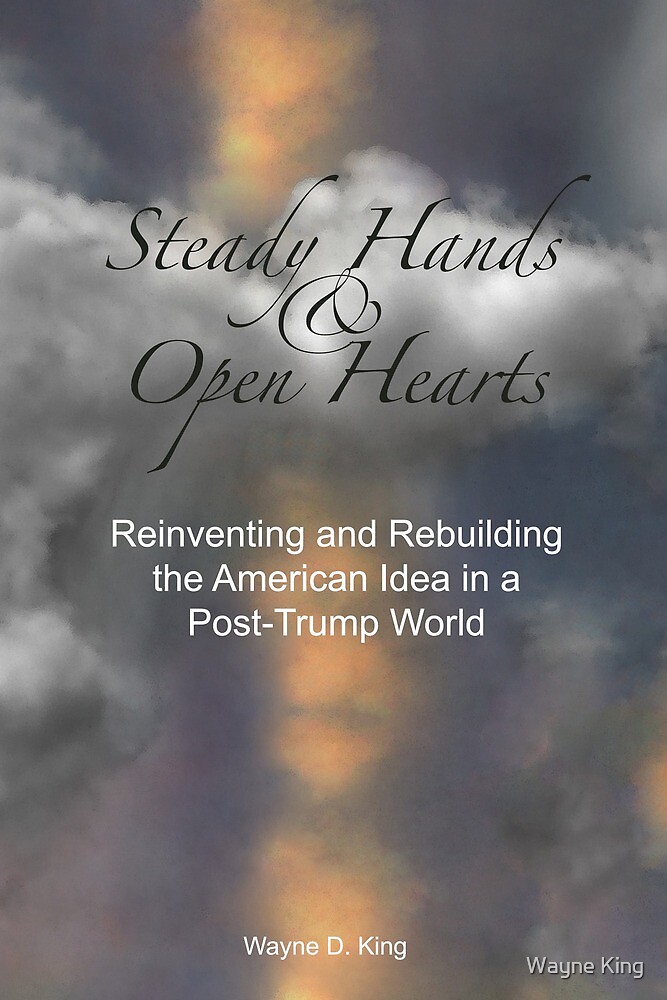
Steady Hands & Open Hearts is headed for a book!


Steady Hands & Open Hearts is headed for a book!

I've had such positive feedback about my latest column - A Steady Hand & an Open Heart - at InDepthNH ( http://bit.ly/SteadyHand ). . . thank you! A lot of folks have told me that they want to know more about where we are and where we need to go. They've encouraged me to write a book based on the foundation established in the column. So, I'm moving forward on doing just that. If you'd like to be kept up to date on progress, including some excerpts from time to time, join the email list here: http://eepurl.com/bbOh3n


In Search of a Steady Hand and an Open Heart

The Golden Spire

Originally Published on . . . InDepthNH, Click here

A Steady Hand and Open Heart
Rebuilding the American Idea in a Post-Trump World

In the long shadow of Rattlesnake Ridge the talk these days at The Common Cafe or Plain Jane’s Diner in Rumney or Dot’s Bread and Butter Bistro in Ashland is often turning to who the next standard bearers in the political parties should be and what their message to the American people ought to be, with plenty of opinions on all sides about our President.

Normally these discussions would not occur for another year and a half but we are living in strange times. For most Americans, watching the President and the government that he is attempting to create is like watching a car crash in slow motion. We know that it’s coming. We just don’t know when the point of impact will be. More important, we don’t know whether it will be a fiery pileup or one car plowing into the Tree of Liberty and Decency; a tree that has been painfully and lovingly nurtured; nourished with the blood, sweat and tears of patriots, as it grew and expanded for more than 200 years.  

The recent elections in Virginia and New Jersey have some Democrats counting their chickens well before they have hatched. As Steve Schmidt, a former consultant to John McCain and an MSNBC Analyst said, the elections in these states represented a rising “Coalition of the Decent” from all political parties, one of the most astute observations in recent memory.

This “coalition of the decent” is not the army of any political party, though polling shows them leaning heavily toward the Democrats at the moment. They want a return to a sense of normalcy and security; but don’t mistake this for a desire to return to the status quo ante. Big changes are coming and the question is whether those changes will be created from the center out or from the excesses of the pendulum’s swing.

There is a common misunderstanding about the political spectrum. Many envision it as a line extending from left to right with the two extremes far apart. However, most political scientists say that it is more accurately described as a circle where the extremes come together at the final point of the circle. In such a diagram, the extremes represent a more authoritarian view of the world from either the traditional “left” or “right”. In other words, everyone at the intersection of the left and the right wants to infringe on our liberties - just for different reasons. At the margins we face a choice between the morality police and the nanny state.

The good news is that the vast majority of Americans are not located on that small junction of the spectrum. Instead, they lead nuanced lives focused on family, work and community - in both its most narrow and its broadest sense. . . local community, the American community and the community of the planet. Furthermore, as frustrated as we may be with the actions of the President, positive change continues at the state, local and regional levels.

The bad news is that a growing number of our elected officials of both parties are congregated around that unnuanced point.

For the sake of discussion, let’s leave our current President out of this. He is, we hope, an aberration . . . A symptom of the frustration and marginalization of a significant number of our citizens amid the tumultuous changes taking place in our world. It is likely he will be gone before the next Presidential election, he will certainly be irrelevant to the national dialogue except as an example of what we don’t want . . . The misanthrope that proves the rule.

If I’m right about this, and I believe I am, in 2020 the American people will be engaged in one of the most consequential elections in our history.

If the Democrats have taken the Congress and lurched just as far to the other end of the spectrum, they will lose any purchase they have gained during the Trump years. If the Republicans have not regained their center it may not matter in the short-run but in the long-run it will all matter a great deal. We need a strong two party system. . . especially for what lies ahead.

The world is shifting beneath our feet. If the results of the 2016 election have not been a forewarning, then take a look around. The marginal costs of products move ever lower in response to enhanced productivity but who will buy the products when technology has replaced the human hands that once made them? To whom will those products be delivered when the trucks delivering them are driverless or they are flown through the air by drones? Where will we employ the taxi drivers, the line workers, the coal miners?

Don’t panic. There are answers to these questions . . . but they do not lie in the worn out dogmas of the past. They will not be found in the “invisible hand” of the market. Nor are they the domain of the nanny state where everything is provided to everyone and the incentive for improving one’s lot is lost. These are challenges that call for leadership that is both bold and inclusive. Leadership at every level from our communities right on up to the Oval Office.  Leaders who call all of us to the task of continuing the Great American Journey, not by shrinking from the challenges but by overcoming them.  

It will come as no surprise from someone who proudly declares himself to be a radical centrist, that I am seeking common ground where it is possible and respect and civility where it is not. The problems we face are too great for us to devolve into a nation of whiners, mefers, and thumbsuckers.  

Some will say that we need more government. Some will say we need less government. These dogmas are as outmoded as the great struggle that brought them into focus one hundred years ago.

The days of the simple Command Economy vs. Market Economy are drawing to a close. The left vs. right debate no longer serves us well, if it ever did. We are a nation in search of a new paradigm. A paradigm that remains true to the central ideas and ideals of the American vision of Life, Liberty and the Pursuit of Happiness.  A nation with a place for everyone: Where the working class is not marginalized; where the wealthy are not villainized; where the poor have a real pathway out of poverty, where the middle class is expanding, not shrinking; where it matters not what your skin color is or who you choose to love or what you choose to call yourself; where the opportunity for a meaningful life is recast to reflect a new set of realities and participation in the ongoing Great American Journey is an imperative. The leadership we require will challenge the people to help define this new paradigm, crafted by evolution not revolution and built from the center out, not from the margins.

Recall the old saying that “a journey of a thousand miles begins with the first step”. Our next leader will need to be someone who sees the American people in a central role in the journey; redefining and reinventing ourselves;  a leader who calls us to that challenge as President Kennedy called us to the challenge of service to country in his inaugural address.

Of course the first task will be to steady the ship of state. To reclaim American leadership in a world that needs our example desperately.

In short what we need to help us begin this journey of a thousand miles is a steady hand and an open heart to lead us.


About Wayne D. King: Wayne King is an author, artist, activist and recovering politician. A three term State Senator, he was the 1994 Democratic nominee for Governor and most recently the CEO of MOP Environmental Solutions Inc., a public company in the environmental cleanup space.  His art is exhibited nationally in galleries and he has published three books of his images. His most recent novel "Sacred Trust"  a vicarious, high voltage adventure to stop a private powerline has been published on Amazon.com as an ebook with the paper edition due soon. He lives in Rumney at the base of Rattlesnake Ridge. His website is: http://bit.ly/WayneDKing

Sunday, November 12, 2017

Asquamchumaukee - Place of Mountain Waters - A Ramble Through the Baker River Valley

Here's a great idea for holiday gift giving. . .

Asquamchumaukee - A photographic ramble through the Baker River Valley of New Hampshire


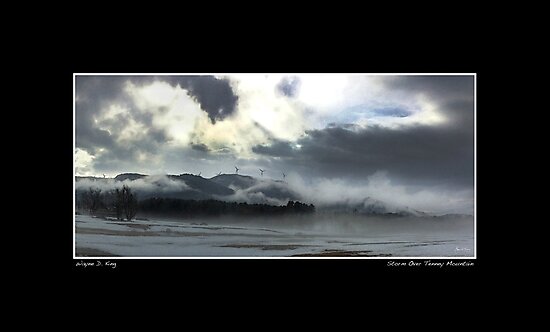
Storm Over Tenney Mountain

Asquamchumaukee - Place of Mountain Waters

A photographic ramble through the Baker River Valley of New Hampshire

This book and the images from it are available in a number of different formats including a large landscape hardcover, signed and numbered, limited edition art book; an open edition in hardcover, softcover and eBook formats as well as other related products including calendars, clocks, mugs, cards, posters and prints.

Signed, Numbered Limited Edition, Large Format $165.00
This book requires the artist to sign and number the books, it can ONLY be ordered directly from me at this secure address:
Asquamchumaukee Cover
http://bit.ly/OrderAsquam

Purchase the signed limited edition and receive your choice of two complimentary posters


Open Edition (unsigned) - Large Format $98.76
Available through Amazon.com
Large Landscape Hardcover 13” x 11” 
42 Pages printed on standard paper


Open Edition Small Hardcover (unsigned) - 8"x10" Format $59.35
Available through Amazon.com
Standard Landscape Hardcover 8” x 10” 
42 Pages printed on standard paper
Hardcover with Dust Jacket: 


Softcover "Keepsake Version"  8"x10": $39.58
Plus shipping & handling

eBook from Blurb
42 Pages
$4.99

Detailed information about Calendars, cards, clocks and other gifts can be found here.

Asquamchumaukee Facebook Page
https://www.facebook.com/pages/Asquamchumaukee-Baker-River-Valley/189924584514401?ref=hl

http://bit.ly/Asquam_FB


Dedication: This book is dedicated to the "Ladies of Got Lunch! Rumney" who saw a need and selflessly stepped forward to help and the millions of heroic people who volunteer in their communities, small and large in the quiet of anonymity and the glow of the hope they create through their actions.


ebook
http://store.blurb.com/ebooks/491117-asquamchumaukee-place-of-mountain-waters-open-edition


http://blur.by/1EISj5I

50% of the net  proceeds from sales of this book will benefit the local "Got Lunch!" programs in the Valley. 


Thursday, November 9, 2017

The Need for an Alternative Vision on Tax Reform

The Democrats have missed a golden opportunity in not offering up a competing vision on Tax Reform, even if they cannot do any more than introduce it in a news conference - and by the way its time to reform the rules that allow the majority party to completely ignore proposals from the minority party in the Congress.
I have made it clear that I favor the radical centrist position of eliminating the business tax entirely and shifting all the taxation on income to the progressive income tax.
Most people don't know that currently all those people who have benefitted from the dramatic increase in the stock market pay less in taxes on the sale of stock or their dividends than Americans who earn their income by the "sweat of their brows".
Let me say that again: Work your ass off every day and pay a higher tax rate than the guy (or gal) who doesn't do anything more than move money around.
In other words, passive income is taxed at a lower rate than what is earned by someone with a traditional job. We could eliminate the business tax entirely and bring in MORE tax revenues if we simply asked those who earned passive income to pay taxes at the same rate as other Americans. We could generate substantially more revenues if we also instituted a small tax on stock trades, thus allowing us to lower taxes on middle income Americans in other ways or we could enhance coverage of things that will serve as a public good and reduce cost of living expenses, thus creating the same effect for middle income and working class families.
Can you imagine how the people who are trying to sell the public on the bill currently masquerading as tax reform in the Congress would have to scurry if the Democrats offer a proposal that eliminated the Business Tax, gave all those companies reason to repatriate their money and really lowered taxes for middle income families? Even if the proposal did not shame the majority party into action it would establish a real position that demonstrated genuine concern for working class families and middle income families.
I'm sure to get flack from some folks about this but I'm going to keep saying it until someone listens.


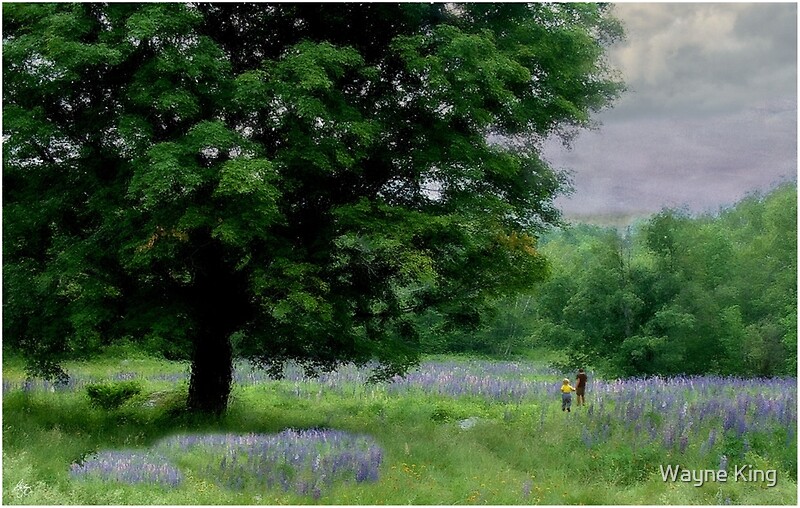
A Childs Walk Thru Lupine

Saturday, October 28, 2017

Sumac Tea or Sumac-Ade

Sumac Tea or Sumac-Ade
Easy Pickings for a Seasonal Treat


Whether it is the dry summer or the more ominous signs of a changing climate the autumn colors have passed without fanfare.

Nevertheless there is one treat that I always look forward to in the fall that is almost assured irrespective of the weather, Sumac tea or served up ice cold as sumac-ade.


No doubt you've seen them before. Sumac is a plant that grows wild all over New Hampshire. It will grow in places where it seems inhospitable to almost any plant. And it makes a great tea or “lemon”ade from late fall right on through spring when the old clusters dry out and are replaced with new ones that will be tasteless until the end of summer. They are best in the late fall because it takes fewer of the flowerheads to make a robust drink.


There are several species of sumac but you want the Staghorn or Smooth Sumac variety for your tea. Its upright cluster of red seeds are easily spotted.  The Staghorn has a distinctive velvety feel on the newer growth, like a deer’s antlers in early spring, a sure sign that you are using the correct sumac.


If you are nervous about this because you may have heard of Poison Sumac, don't be. Poison Sumac is actually much more rare in New Hampshire and has white berries that droop. It is impossible to mistake for the more common Sumac varieties.


Making Sumac-ade is quite easy. Gather a grocery size bag of the clusters. Take a large pot and fill it with fresh water and put the clusters right into the water. Wash your hands and then rinse them well to be sure you’ve gotten all the soap off, crush the clusters until they break apart in the water and allow them to steep for an hour or two. Drain the liquid through cheesecloth or some other clean, disposable cloth, toss the clusters in your compost pile, add sweetener to taste (for lemonade) and voila!.


If you’d prefer it as tea, you can do all the above and then heat the liquid though you need not go through the process above but can steep a hand full of the seeds in hot water for just a few minutes and sweeten as you like it. You can also hang the pods to dry and store them for later.


It’s a very nice change from all of the commercially available drinks and a refreshing fall favorite in our home.


Wayne King's regular column, "The View from Rattlesnake Ridge" is a reflection of the meanderings and musings of the artist, author and activist.


Sumac Moon

Wayne King's regular column, "The View from Rattlesnake Ridge" is a reflection of the meanderings and musings of the artist, author and activist.

Friday, October 27, 2017

Sacred Trust Overview

“The Monkey Wrench Gang Meets the Third Industrial Revolution!”

In the coming “Age of Electricity” the principal battleground will be over who controls the production and distribution of power. All across America today the battle lines are being drawn and the two sides are rushing to create advantages for themselves. Already more than 10 trans-national power transmission projects are proposed from Maine to Washington State and the Canadian Electricity Association projects a tripling of that demand in the next ten years. In most instances these transmission projects are being proposed by utility companies or consortiums that include a local utility company.

Utility companies represent one front in this battle over competing visions of our energy future. These utility companies, already in an existential battle for survival, seek to maintain control of the revenues generated by the flow of electricity. With a few rare exceptions, they are pitted against those advocates of a new distributed energy paradigm where small, renewable power production replaces the large electricity generators of today.  

Most Americans notice that things are changing with respect to energy production and transmission but they have yet to put together the full picture of what will be a sea change in life for every American this presages.

“Sacred Trust” is intended to tell that story in the context of a novel about a group of citizens that have joined together to stop the construction of one, especially egregious powerline, proposed in the small state of New Hampshire where tourism is the second most important industry and the people deeply cherish their beautiful mountains, clean air and pristine waterways.

The power company behind the transmission line, Polaris Electric, proposes to put most of the line above ground with massive 150 foot towers and intends to export 100% of the power right on through the state - like a giant extension cord - with no benefit to the people of the state. In short, like the oligarchs of a previous age, they intend to reap 100% of the benefits and to pass off a large portion of their costs through the generations-long visual pollution of the public commons, to say nothing of the decline in property values and the unknown scientific consequences of high voltage transmission lines on citizens living in their path.

The citizens of the state who stand to lose most from the destruction of real estate values and cherished viewscape are dead set against the project but the political winds are against them with a Governor in the pocket of the utility company and an approval process that seems to be rigged against them, eight unlikely compatriots from across the political spectrum come together to take on the consortium proposing the “Granite Skyway” Transmission line.

While the compatriots, who call themselves The Trust, engage in creative civil disobedience intending to stop the project, or at the very least to literally drive it underground, a group of writers and activists, presenting themselves in the style of the writers of the Federalist Papers produce a series of essays in opposition to Granite Skyway, making the intellectual case, justifying the actions of The Trust.  One business writer, in search of a pulitzer, takes on the task of describing the tableau in which all of this takes place beginning with the 1972 election of Jimmy Carter and the drafting of the National Energy Policy Act and the Public Utilities Regulatory Policy Act into which one lone New Hampshire Senator, John Durkin, inserted two lines that changed history and ushered in the renewable energy revolution.Through the device of a series of articles scattered through the novel, business editor James Kitchen leads his readers through a virtual primer of the battle for a new post-carbon energy paradigm.

"Sacred Trust" is a vicarious, high voltage adventure to stop a private electric transmission powerline that leads the reader through not only the hijinks of The Trust, but also through the series of choices with which we all are currently confronting, or will be, in this new “Age of Electricity”.

Described by one reader as "The Monkey Wrench Gang Meets the Third Industrial Revolution" the book follows these unlikely compatriots as they dodge both the law and a cabal of recruits doing the dirty work of the Consortium.

In part one of the book Sasha Brandt, an Iroquois woman from Canada who travels with her companion, a wolf named Cochise, meets Daniel Roy, a guide and outdoorsman while hiking the Mahoosuc Range on the Appalachian Trail. After a unique first encounter the two - three with Cochise - continue their hike together. A few days later, while paddling on Lake Umbagog, they find themselves unexpectedly camping together with an unusual assortment of people including a former Olympic paddler, a very conservative deer farmer, a real estate broker, a retired spook who was the first US victim of Lyme disease and an iconoclast named Thomas (just Thomas) who is also a former Army Ranger now living as a recluse in multiple backwoods abodes in the Great North Woods area of New Hampshire. Thomas is also unique in that his primary mode of transportation is a moose named Metallak, who pulls a cart when traveling with Thomas’ five dogs or wears a saddle when Thomas rides him solo.

The group quickly discovers that they have one very important thing in common - a deep concern about the Granite Skyway proposal to transport electricity from Canada to the toney suburbs of Boston, New York, Connecticut, Philadelphia and Washington D.C.. Their concerns range from the effect it will have on the habitat of newly re-established Raptor populations; to the clear cutting necessary to construct the line; and, the impact of 150 foot towers on the landscape of their beloved state.

The threat to the environment and the scenic beauty are only the tip of an iceberg that includes the value of homes, farms and businesses built by generations of men and women in this hardscrabble land. Rumors alone are already affecting life for many caught up in whisper campaign around this proposed transmission line. All agree, Granite Skyway poses an existential threat to an entire way of life.

Determined to do more than shuffle papers and employ lawyers, the compatriots form a band of brothers and sisters - along with Cochise and Metallak - calling themselves "The Trust". Armed with only their wits and a lot of heart they embark on a rolicking campaign of civil disobedience that would make Thoreau, Alinsky and Dr. King proud.

While the book is a work of fiction, teachers and professors may find it a book that would add a new dimension to classroom discussions and an interesting touch for classes on sustainability, renewable energy or the American tradition of protest.

Throughout their adventure the members of "The Trust" examine many of the most important questions of our time including how America can continue to make an honored space for free speech and civil disobedience in an era of terror; how social media can help create accountability in an increasingly corporatized mega-media landscape; and, how citizens can challenge the corporate oligarchies that often threaten our planet's future.

"Sacred Trust" is written by Wayne King a former State Senator, Democratic nominee for Governor of NH, and most recently CEO of environmental cleanup company MOP Environmental Solutions. Not coincidentally, King worked his way through college as a Mountain Guide in New Hampshire’s White Mountain which explains his detailed knowledge of the setting for the novel. The book is filled with political and environmental stories that will have you laughing and gasping and wondering what is true and what is fiction.

"Sacred Trust' is a vicarious, high voltage campaign to stop the Granite Skyway power transmission project and its short-sighted and in some cases greedy corporate sponsors, intent on using political muscle and money to lock up the region's energy production and distribution, short circuiting efforts to bring about an energy future based on sustainable, and renewable energy deployed through micro-grids, smart-grids and a competitive environment that makes energy more - not less - affordable.

http://bit.ly/STrust

From "Screen Door" to "String Too Short to Keep"

  From "Screen Door" to "String Too Short to Keep"  A poetic journey across time and space in New Hampshire with Poet El...