Monday, March 8, 2021

A Prophesy Wrapped in an Opportunity - Haaland Nomination Could be a Turning Point


Our Time Comes


A Prophesy Wrapped in an Opportunity

Haaland Nomination Could be a Turning Point


“Come dance with the west wind and touch on the mountain tops

Sail over the canyons and up to the stars

And reach for the heavens and hope for the future

And all that we can be and not what we are.”  ~ John Denver


March . . . the month that some native cultures refer to as the Sore Eyes Moon or the Squint Eye moon. You may have noticed that a mid-day walk on a sunny day requires sunglasses or squinting to avoid the glare that can actually bring tears to your eyes. 


Mornings feel different as well. 


With all the seasons I have lived here in the Northcountry I have become attuned to subtle cues that herald the changes of the seasons. In the coldest part of winter the sound symphony of morning includes the crows, jays, an occasional raven, following the booming basso profundo of the barred owls calling through the night, “who, who cooks - who cooks for you?” 


Then this week, still two weeks ahead of the vernal equinox with which we humans officially welcome spring, the sweet - and varied - melodies of the chickadees have joined the chorus. It’s as if they are excited children unable to constrain themselves in the face of evidence of the coming spring. Eager to lounge in the sun, run through the fields, jump in the puddles of a spring shower. 


Not that the tiny boreal banditos weren’t around all along, it’s just that they were less vocal, conserving themselves in virtual puffballs of feathers and air, marshaling their energy. Suddenly now, all that conserved energy is rushing to the surface. Even the red squirrels and the bluejays can’t help but alter their melodies and join in.  


These changes - the sudden symphony of hope - has its own parallels, in ways seen and unseen, across the landscapes of our lives. 


Today, as I wander in the midst of that symphony, my thoughts turn to my father, my grandfather, my great-grandfather. Three generations of Native Americans who lived their lives hidden from their Iroquois roots. Great grandfather who was, perhaps saved, but certainly wrested from his heritage by the orphanage that severed his tribal identity from those who would follow him. The mystery of whether he was Mohawk or Oneida or Seneca will likely never be revealed. But what we do know is that his ancestors birthed Democracy in this land. Midwived by the Peacemaker and Hiawatha and entrusted to the leadership of the strong and capable women of the Haudenosaunee people, the backbone of the Iroquois Confederacy. Yet, even though much is shrouded from their past, somehow I know that they too experienced the euphoria of this vernal moment, this symphony of hope and it ties me to them . . . gives me hope.


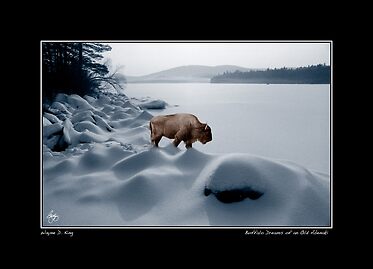
There is an oft-told prophecy among the Lakota (Sioux), who began their North American journey not far from the lands of the Haudenosaunee, in the Great Lakes Region, but migrated to the plains in the 1700s to become people of the horse. It is a prophecy about the White Buffalo Calf Woman, their most Sacred symbol who - in a time of terrible famine - brought to them their Sacred Pipe and Bundle that for 19 generations has been a talisman to the Lakota. Hundreds of years ago she told them that the White Buffalo would return as both a symbol of opportunity and a warning of crisis; A symbol of the opportunity for the unity of all humanity and the planet and a warning of the dangers ahead if we fail to adapt to the needs of the planet.  


The White Buffalo Calf Woman, and a host of other similar prophesies from other Indian nations tell of a great spiritual springtime that would emerge to unite the entire human family but it will be wrapped in a challenge to all humanity. For the Lakota, that time would be presaged by the appearance of a white buffalo calf. 


25 years ago the first documented white buffalo calf was born on a farm in Wisconsin and for almost 25 years now a white buffalo has walked on this earth. 


It would have been easy for Native American people to see this as an opportunity to parochially declare this as the season of their own rebirth. Through generations of pain and genocide, they would have the right to direct their focus inward.  But today their message embraces all of humanity and the need to heal the planet. As John Denver put it in his short but prophetic song “The Eagle and the Hawk” - to “reach for the heavens and hope for the future and all that we can be and not what we are.” 


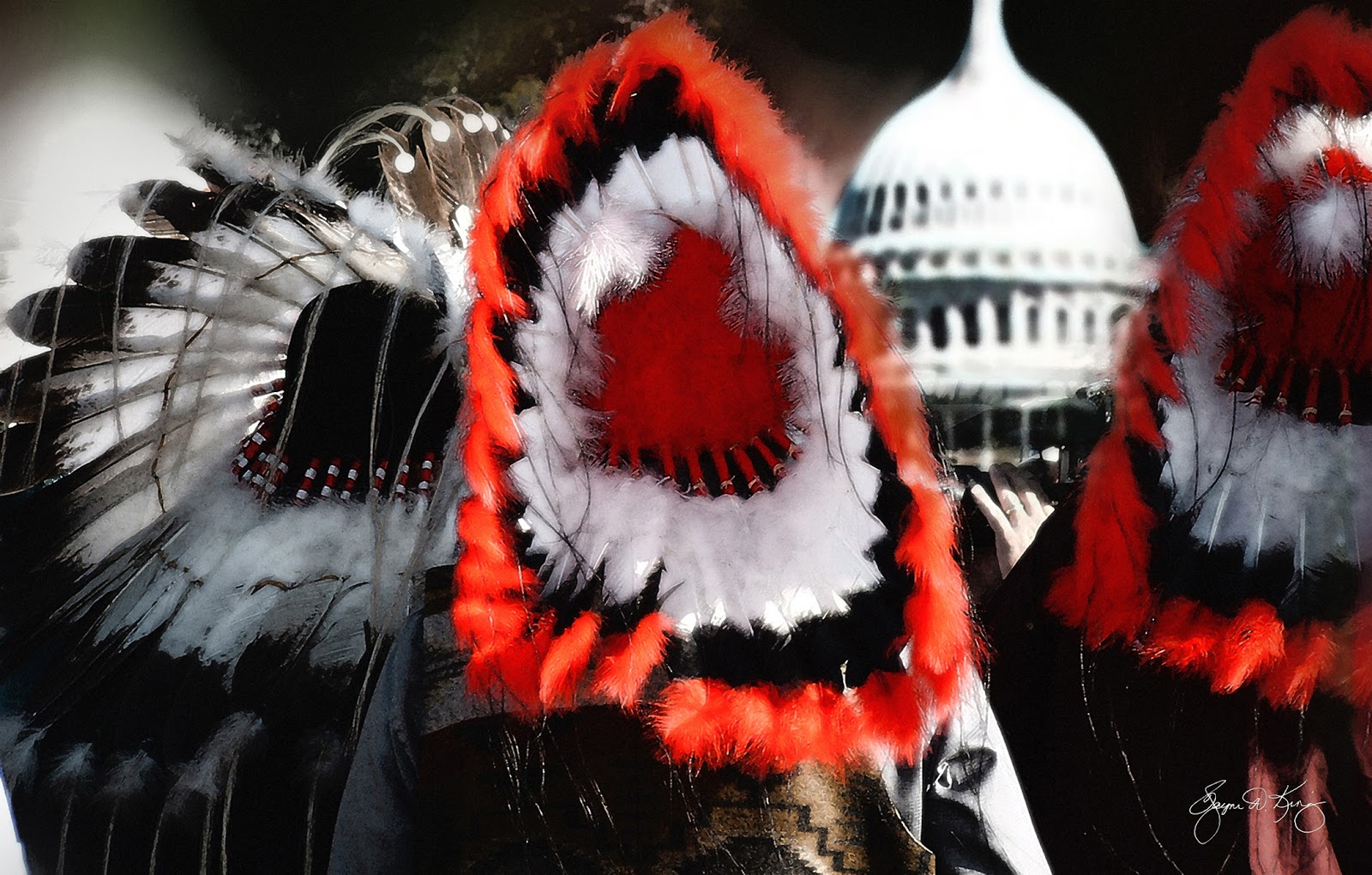
The nomination of Congresswoman Debra Haaland, the first Native American woman to be nominated for a cabinet-level position - Secretary of the Interior - may be the next step in fulfilling the hopes of all those who long for a just and sustainable future. 


Haaland is a bridge-builder: Fearless and empathic, charitable and wise. All of the things we need to run one of the largest and far-reaching agencies in American government encompassing everything from our National Park system to grazing rights for farmers on public lands; from the Bureau of Indian Affairs to the US Geological Survey and the US Fish and Wildlife Service. She has, over the years, developed a reputation for reaching across the aisle, even during this most partisan of times, to create consensus between competing interests. Haaland’s confirmation would be a game-changer. Not because she would usher in radical change but because she would bring measured change with a vision and a future. 


Her nomination process has been, thankfully, without controversy regarding her heritage but the seeds of contention have largely been sown along the lines of those who see their primary role as protecting the interests of the fossil fuel industries in the face of ongoing pressure over climate change. Ironically, many of the companies - with the notable exception of ExxonMobil - that these elected officials believe themselves to be representing are already well on their way to embracing a new era of sustainable energy tied to a smart grid. Many of the big oil companies have begun the process of divesting of their fossil fuel dependence toward a greener, more sustainable energy economy. Secretary Haaland would be just the person to help them with the path along the way to this transition. In those rare cases where a company fails to see the future, I believe she would hold them to account, relying on the evidence of cooperation among the more thoughtful companies. 


The world is changing and those companies that fail to recognize and respond to the existential threat imposed by climate change are doomed to suffer the consequences. If for no other reason than the fact that 70% of young people under 35 feel that Global Climate Change is an existential threat to their future, any company that fails to see the sword of Damocles hovering above its head must have it buried in the tar sands.  


Representative Haaland has the rare opportunity to help lead this evolution. It will be a powerful economic force that will gain strength as the jobs of the future replace the fossil fools of the past. In her capable hands we will have a leader who understands that we may try to ignore the need to heal our planet, but we must never forget that the earth has the power to bring us into submission if we continue to ignore the natural laws that provide balance to life. 


Wayne King is an author, artist, activist and recovering politician. A three-term State Senator, he was the 1994 Democratic nominee for Governor and most recently the CEO of MOP Environmental Solutions Inc., a public company in the environmental cleanup space. His art (WayneDKing.com) is exhibited nationally in galleries and he has published three books of his images with another, "New Hampshire - a Love Story", on the way. His most recent novel "Sacred Trust" a vicarious, high voltage adventure to stop a private powerline is available on Amazon.com. He lives in Thornton, between Rattlesnake Ridge and the Waterville Range. He proudly flies both the American and Iroquois Flags. His website is: http://bit.ly/WayneDKing


Links to further reading and listening:


The White Buffalo Prophecy

https://www.youtube.com/watch?v=M8QrNBPqo3g


Chief Arvol Looking Horse Speaks of White Buffalo Prophecy

https://www.youtube.com/watch?v=PHqVdZmpRgI


2007 Sol Kanee Lecture - Chief Oren Lyons

https://www.youtube.com/watch?v=HiA4_e4YwZE

Chief Oren Lyons delivered the 5th Annual Sol Kanee Lecture "The Politics of Human Beings: The Nature of Global Warming", presented by the Arthur V. Mauro Centre for Peace and Justice at St. Paul's College.


Chief Arvol Looking Horse: Prophecies, World Peace, and Global Healing

https://www.youtube.com/watch?v=2J-iikPRtnw
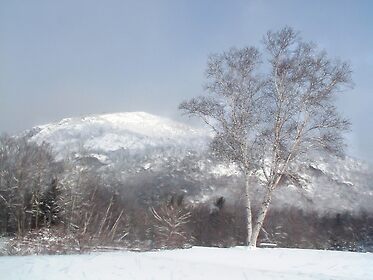


The Birch at Rattlesnake


Sunday, January 10, 2021

Reflections on American Democracy from West Africa


Reflections on American Democracy from West Africa

Two Decades, Two Elections, a World Apart


Today, on my daily hike, I walked into the past while reflecting on the recent attack on Democracy in our nation’s capital.


In 1997 I had the privilege of being asked by the Ford Foundation to put together a team of people to introduce the Internet to the Civil Society community in West Africa. Until we brought several thousand computers and training to the region even most students taking computer training classes had not laid hands on a keyboard. What flowed from that Ford grant was far more than just hardware, software and training for the NGOs in West Africa but also ten life-altering years for us. Years that gave us insights into the revolutionary possibilities of the net as well as the importance of the example that we in the USA set for the rest of the world.


Nigeria was particularly instructive in this process. In 1997 Nigeria was a study in authoritarian repression, under the thumb of a dictator named Sanny Abacha. The warnings of the US State Department were enough to scare off most of the people I invited to be on the team initially, but eventually, I was able to put together a team that included an extraordinary Nigerian-born American citizen, Dr. Chidi Nwachukwu, and a fearless friend from college Philip “Kip” Bates III who was a tech guru for the University of California in Santa Barbara. It was our task to help pro-democracy, healthcare, environmental and economic development organizations be more effective; to expand their reach through digital communication, providing computers, training and support for their efforts. Four other Nigerians, two men and two women played critical roles in the work we were to do. In the interest of their own safety right now I hesitate to name them for reasons that will become clear.  


The flight into Lagos, Nigeria aboard British Airways was to be the beginning of a surreal experience. Nothing on the trip to that point would hint at the experience that lay ahead. It was only when we deplaned into Lagos on a gangway that was completely dark, forcing us to feel our way into the terminal where only 1 in 4 lights were functional that we began to realize that we were, as Kip put it: “not in Kansas anymore.”  Almost nothing else that defines a well-run airport was working - people movers and escalators were motionless, arrival and departure boards void and unlit, 


Within 24 hours we were subject to numerous shakedowns by uniformed officers, saw a headless corpse along the freeway (“It takes a few days to pick those up” -  our driver remarked.). 

A few days later we were arrested on the streets of Lagos when our cabbie stopped to ask for directions. Only the most rudimentary maps existed of the city of 13 million and GPS was et to come.  My entire team was held at gunpoint by military and police officers, pointing semi-automatic rifles, for more than 6 hours - demanding to know what our “mission” was. Eventually, we were released. 


Years later, from the safety of home, we would speculate that we were arrested because we were helping pro-democracy NGOs, but it is just as likely that it was pure paranoia by police and military infected by the tentacles of authoritarianism.


I relate this beginning to a decade of work mostly because it gave us a glimpse into what happens when a government runs roughshod over its people and the rule of law is a far off dream to the millions of people living in the grip of authoritarian rule. 


Within a year of that first trip to West Africa Abacha had died - under mysterious circumstances - and Nigerian leadership had been taken over by General Abubakar, who replaced Abacha, but who was determined to return Nigeria to democratic rule. In 1999 the Nigerian people elected Olusegun Obasinga president of a Democratic Nigeria.  


Obasinga was far from perfect as a leader but a focus on ending official corruption began to lift the spirits of the Nigerian people and by the time we made a trip in November 2000 it was clear that Nigeria was moving in the right direction and hope was beginning to blossom. Suddenly, if a uniformed officer tried to shake us down for money all we had to do was ask them - very publicly - to speak up and they would immediately back off. 


The US election of 2000 occurred right in the middle of our trip. The recount in Florida, the hanging chads, the protests, the judicial decisions. In every moment of the drama I had a hoard of “students” eager to understand what was going on, full of questions, awestruck that an election this close did not result in soldiers and tanks in the streets. 


Despite my intense disappointment over the results and the final decision by the Supreme court, I watched Vice President Gore make what was the most wrenching speech of his life, a concession in spite of winning a majority of votes. It was heartbreaking and yet I have never been so proud of my country and our dedication to the rule of law and the democratic process. I shared that with all of the Nigerian people who watched and listened to me in rapt attention. They had a front-row seat not only to history but to the power of an idea. 


On Thursday the 7th of January 2021 I wept as I watched a few thousand people attack OUR capital in an attempt to overturn a valid election. My sadness was not only because all of those people, young and old, with whom I had stood in Nigeria some twenty years ago had watched that idea betrayed, but also because they are living with a president of their own who has taken a lead from our president to drag Nigeria into their own corrupt hell. 


For nearly ten years Nigeria was on a path toward a more perfect union and in the last 4 years everything they had gained has been lost. 


It’s quite likely that you never even knew this. Even in normal times Nigeria is not really on the radar of most Americans, though it has the potential to be the economic powerhouse of Africa. Over the past four years we have all been drinking daily from the firehose of Donald Trump’s narcissism, there has barely been any bandwidth for most of what has truly mattered.


While America has looked the other way President Muhammadu Buhari has looted his country and betrayed his people. 


Donald Trump has done more than just coddle the dictators and strongmen we know, he has done violence to the idea of Democracy all over the world and it is in the quiet recesses of human endeavor that he may have done the greatest violence of all.


Now it falls to us, we the people, to wrest our democracy back from the precipice and to send a message to tyrants near and far, including our own, that we may have lost sight of the dream briefly but we will not squander the lessons we have learned. It will not be easy, it will not be fast, and it will not be without sacrifice - but let us begin.


To my friends in Nigeria and in the hundreds of countries where men and women yearn for freedom, equality and opportunity, do not despair, the dream lives on.


Wayne King is an author, artist, activist and recovering politician. A three-term State Senator, he was the 1994 Democratic nominee for Governor and most recently the CEO of MOP Environmental Solutions Inc., a public company in the environmental cleanup space. His art  (WayneDKing.com) is exhibited nationally in galleries and he has published three books of his images with another, "New Hampshire - a Love Story", on the way. His most recent novel "Sacred Trust" a vicarious, high voltage adventure to stop a private powerline is available on Amazon.com. He lives in Thornton, between Rattlesnake Ridge and the Waterville Range. He proudly flies both the American and Iroquois Flags. His website is: http://bit.ly/WayneDKing


Monday, October 12, 2020

The Sorkin Solution - The View From Rattlesnake Ridge


The View From Rattlesnake Ridge

Ruminations from an Unabashed Optimist, an Environmental Patriot and a Radical Centrist


The Sorkin Solution 

A “West Wing style” Unity Slate for Supreme Court might begin to heal the wounds and restore the Court’s standing


This past spring, in the throes of the early days of the pandemic I went for my twice-daily walk along the path to the Welch Mountain trailhead, stopping by the beaver pond along Orris road. I sat by the pond quietly watching for the pair of beaver that I had greeted almost every day before the ice formed in late fall and realized after an hour that something was wrong. How many days had my dog, Boof, and I visited that pond in the past year and seen our erstwhile pals every day? How many times had the loud “SLAP” of their tails served as both greeting and warning of our intrusion into their peaceful world? They were gone. 


A month later when I had the opportunity to interview legendary mid-wife and author Carol Leonard, guardian of about 400 beaver on Bad Beaver Farm in Maine - and author of “Tales from Bad Beaver Farm” - she suggested that they may have run out of softwood - a staple of their diet. They may also have just decided to move on for any of a half dozen other reasons, or, they could have been “trapped out” during the winter. In any case, they were gone and I was denied the joy of their company on my daily pilgrimage to the pond. I’ve had my fair share of mourning over the last year and a half but it still felt a bit like an added dose in the midst of a pandemic. 


In addition to this, I’ve been mourning for my country. Yearning - not for bygone days - but for what seems like a loss of shared values that allow us to reach beyond differences of opinions toward that mythic “more perfect union”. We have made so much progress in the last 60 years, yet it seems, in these past four, that we’ve all simply stopped listening to one another. With this lack of communication and community has come a decaying of the institutions that have been the vanguard of our progress, among them the US Supreme Court. 


I expect this idea will elicit slings and arrows from plenty of people from all around the political universe, but hear me out.


We all know that the divisions between Americans over the Supreme Court have grown increasingly poisonous since Mitch McConnell spent more than a year bottling up the nominations of hundreds of judges during the Presidency of Barack Obama, culminating with the blocking of the nomination of Merrick Garland as Associate Justice of the US Supreme Court. 


A solid majority of American citizens believe that we should wait until the next President is inaugurated before choosing a replacement for Justice Ruth Bader Ginsberg. This is understandable. Despite the verbal gymnastics of McConnell, Lindsay Graham and other Senators who pledged to follow the “McConnell rule” established to prevent Merrick Garland from being seated. A majority of Americans are justifiably disturbed by the hypocrisy that has the Senate barrelling toward confirmation of Judge Barrett contrary to those promises. The American people are clearly moved by a sense of fairness and justice. They are clearly also concerned about what is likely to happen to the Affordable Care Act and the Roe Decision in the wake of a Barrett confirmation.


The Winter Warrior
If cooler heads don’t prevail, and right now that looks almost impossible, we are headed down the road toward all-out political warfare over the Supreme Court and the possibility that a generation, or more, of decisions made by the Court, will be made under a cloud of illegitimacy and suspicion.  


Sadly, just as Judge Garland was caught up in the political warfare of the 2016 election, so too is Judge Barrett in the 2020 election. Let’s face it, if Judges Garland or Barrett had been nominated in the more collegial days that Justice Ginsberg was (RBG was confirmed by a near-unanimous vote), both would have been confirmed without question. Unlike many of the nominees of Donald Trump - who have been panned by their peers as unfit - Both Judge Garland and Barrett have broad support from their peers of all political persuasions. Both are individuals of honor and integrity, both are hailed for their hard work, their understanding of the law and their ability to work with peers. 


We can’t go back to the days of civility easily and without some form of redress for the excesses of this partisan era. If we try, we will be caught in an ever-widening and increasingly vicious cycle of recrimination, reprisal, and its accompanying bending and breaking of democratic norms.


Without a game-changing idea we are doomed to suffer through perhaps decades of all-out political warfare over the Supreme Court, with each swing of the political pendulum initiating the abandonment of more and more of the norms and democratic guardrails that encourage comity and civility at the core of vigorous debate. 


We need to find our way back to a place where our shared American values take precedence over our differences. Where we see our opponents as the loyal opposition not the enemy. This was the example of Justice Ginsberg. It was also the example of her good friend on the court, Justice Scalia. Each stood strongly for their ideals. Each stood up to one another on the judicial “battlefield”; but each saw the humanity, integrity, and commitment to the rule of law in the other and drew first from that well of goodwill.  


I suggest that Joe Biden propose an American Unity slate for the Supreme Court. To be confirmed following the election by the next congress. Ideally, both Presidential candidates would commit to the idea but like JFK’s nuclear test ban challenge issued to the Soviets in the early 60s, Biden’s leadership can set the course of the debate.


In exchange for holding off on the appointment of Amy Coney Barrett until after the inauguration of the next president, Joe Biden should propose and pledge to honor the creation of a national unity slate for the Supreme Court, specifically intended to heal the divisions within the country and to balance the Supreme Court, to include Barrett, Garland and one Justice to be named by Biden from his own list of candidates. 


While this proposal - loosely inspired by an episode of “The West Wing” by Aaron Sorkin - would increase the size of the court by two justices, the National Unity benefits far outweigh the fears expressed about court-packing and do justice to both Judge Garland and Barrett. There is no reason why it should be seen as anything but an effort to correct the wrongs inflicted by the McConnell Senate and a forthright effort to restore balance to the court, without an all-out arms race - to continue the JFK metaphor.


 It is true that the court would still maintain a slightly conservative-leaning but Justice Robert’s has demonstrated that he cares more about the institution than ideology. His hero, Justice John Marshall, was - arguably - the greatest Chief Justice in American history and I have come to believe that Marshall’s example is an important touchstone for Roberts and presents the opportunity for Roberts to burnish his legacy as the Chief Justice who restored the Court’s standing. 


Through no fault of their own, the reputation of the Supreme Court has been tarnished in the last few years. Yet, faith in our highest court is of paramount importance in these times of maximum danger to the Republic. 


Restoring faith in the court and our judicial system is worthy of serious consideration - after all there is no constitutional provision that dictates the number of justices on the court and the reasoning behind a national unity slate is solid and presents legitimate arguments against a future expansion for purely political purposes. 


There is a runaway train speeding down the tracks of the American judicial system. A national unity slate may be the last chance to control it before we all end up tied to the rails.


About Wayne D. King: Wayne King is an author, artist, activist and recovering politician. A three-term State Senator, 1994 Democratic nominee for Governor; he is  the former publisher of Heart of New Hampshire Magazine and CEO of MOP Environmental Solutions Inc., and now a columnist for the New Hampshire Center for Public Interest Journalism (inDepthNH.org) where he writes “The View from Rattlesnake Ridge” and hosts two Podcasts: The Radical Centrist (www.theradicalcentrist.us) and NH Secrets, Legends and Lore (www.nhsecrets.blogspot.com). His art (www.waynedking.com) is exhibited nationally in galleries and he has published three books of his images and a novel "Sacred Trust"  a vicarious, high voltage adventure to stop a private powerline - all available on Amazon.com. His art website is: www.waynedking.com , and his writing site:  http://bit.ly/WayneDKing . He lives in Thornton, New Hampshire at the base of Welch Mountain where he proudly flies both the American and Iroquois Flags. 


Friday, October 2, 2020

Joe Biden’s Bobby Kennedy Moment . . . and Ours


Red Squirrel Chaos


The View from Rattlesnake Ridge

Joe Biden’s Bobby Kennedy Moment . . . and Ours
Lessons on Common Humanity from A Radical Centrist

Common Humanity Must Be Our Calling


"Whenever any American's life is taken by another American unnecessarily - whether it is done in the name of the law or in the defiance of law, by one man or a gang, in cold blood or in passion, in an attack of violence or in response to violence - whenever we tear at the fabric of life which another man has painfully and clumsily woven for himself and his children, the whole nation is degraded.”

~ Robert F. Kennedy


Sleep cycles in the midst of a pandemic can be pretty crazy things. I’ve always been an early riser but 

lately 4am is usually my new wake-up hour. At 5 I head out for a walk. 

Usually, I begin on the trails behind my home through white pine forest, meandering to the Welch Mountain trailhead before heading back along Orris Road. 

The early start has introduced me to a wholly new phenomenon - the Red Squirrel bombardment. 

Beginning in late July and continuing into September for 2 or 3 hours each morning - beginning at about 5am - the army of Red Squirrels who inhabit these woods are ensconced at the top of the forests canopy, freeing pine cones from the trees, resulting in a hail of debris. Then, almost as if by design, by 7 or 8 am the straffing has stopped completely and peace once again reigns. It makes walking through the woods at this time a bit of a challenge but something of an adventure as well. Picking my way through the woods as the pine cones rain down is something akin to trying to find my way through the flood of tweets and Facebook posts emails and Instagram posts that will greet me when I return to my studio with coffee in hand. 

Will I be able to navigate the digital forest without being clipped by flying debris or being dragged down into a rabbit hole of some wacky conspiracy? Is the storm of detritus in my inbox ever going to subside? How many times will candidate x, y or z cry wolf before I stop paying attention? 

Yet, like those Red Squirrels, I keep coming back. Because our survival as a nation depends on navigating the storm. 

Let me be clear about this - if I have not already been - I believe that Donald Trump has been a train wreck for our nation and our constitution. Four more years with him as President will likely permanently relegate the United States to second-rate nation status. Yet there is still a chance that he will be able to win by capturing the Electoral College or by “stealing” the election. Just as worrisome is the mischief he is likely to do even if he loses, and the possibility that he will foment violence. All of this has been further exacerbated by the result of the first presidential debate: his refusal to condemn white nationalists and his interruptions that made it impossible for Joe Biden to deliver a clear and concise response.

In the past months, the nation’s divisions over racial issues have been deepened by the President’s efforts to pit one American against another, supported unashamedly by his Attorney General. What began as a strongly supported series of protests around the murder of George Floyd, Breonna Taylor, and others, has morphed into a deep division driven by small contingents of violent individuals motivated not by a yearning for justice but by their own selfish and violent intentions; far outnumbered by the peaceful demonstrators, but still creating discomfort among Americans of all colors, races, and religions.

Joe Biden has handled the task of speaking out on racism and justice admirably, but there is more that he can do - both now and especially after the election - and each of us can play our part as well. 

Biden can begin by delivering a series of brief and cogent responses on the major issues where Donald Trump monopolized the moment and denied Biden the ability to clearly articulate his vision. In doing this he can also draw attention to the unhinged behavior of Donald Trump that made the debate a horrific experience for any thinking American.

I began this column intending to speak about one of this nation’s great Radical Centrists, Bobby Kennedy, and then the loss of John Lewis, followed closely by Justice Ruth Bader Ginsberg seemed to call out for their inclusion as well, since I see them both in that same light. All of them drew inspiration from the great feminist and spiritual leader Rev Pauli Murray who said “when others try to exclude me, I draw my circles wider to include them.” While I focus on Bobby - he was, for me, the person who inspired my own deep thirst for a just world - I hope you will see the examples of John Lewis and Justice Ginsberg in both the pauses, the words and the spirit.

Why does it matter that I view them as “Radical Centrists”?
A Radical Centrist is not an individual who embraces the “mushy middle”. Rather, it is a man or a woman who believes in the healing power of civility and dialogue and is “radically” committed to a set of moral and ethical principles, superceeding ideology or party, that guide them throughout their lives. A commitment to radical inclusion, innovation, and progressive ideals. 

In June of 1968 Bobby Kennedy’s funeral train made its way from New York to Washington DC. All along the route Americans of every color, age, religion and social status lined the tracks to say goodbye. Likewise, this week we watched as more than 100 of Justice Ginsburg’s former clerks and Americans of all political viewpoints gathered to see her off. The outpouring of grief and gratitude from Americans as they celebrated the life of John Lewis speaks for itself.

On the night Martin Luther King Jr. was assassinated Bobby Kennedy was scheduled to speak at a street gathering in Indianapolis - in what was then referred to as the “most dangerous neighborhood (read black) of the city. “ The Mayor and most of the city officials, even some of his own advisers - urged him to cancel his appearance. There was sure to be violence they said and they could not guarantee his safety. But Bobby was determined.

News traveled much slower in 1968. Most of those who would attend the event - at which Kennedy would speak from the back of a flatbed truck - had not yet heard about the assassination. RFK would be the bearer of devastating news. . . Never a good position for a political leader. 

He began his impromptu remarks saying that he would only speak for a few minutes - that he had sad news. 

When he announced the death of Dr. King an audible gasp rose from the crowd. He spoke without prepared remarks - from the heart. Paying tribute to the work of Dr. King and the things for which he had dedicated, and given, his life. His voice quavering, hesitant, soft, he expressed not only his empathy for the pain the crowd felt but the pain that was in his own heart.

“Martin Luther King dedicated his life to love and to justice for his fellow human beings, and he died because of that effort.

In this difficult day, in this difficult time for the United States, it is perhaps well to ask what kind of a nation we are and what direction we want to move in. For those of you who are black--considering that the evidence is that there were white people who were responsible--you can be filled with bitterness, with hatred, and a desire for revenge. We can move in that direction as a country, in great polarization--black people amongst black, white people amongst white, filled with hatred toward one another.

Or we can make an effort, as Martin Luther King did, to understand and to comprehend, and to replace that violence, that stain of bloodshed that has spread across our land, with an effort to understand with compassion and love.”

“What we need in the United States is not division; what we need in the United States is not hatred; what we need in the United States is not violence or lawlessness; but love and wisdom, and compassion toward one another, and a feeling of justice toward those who still suffer within our country, whether they be white or they be black.

So I shall ask you tonight to return home, to say a prayer for the family of Martin Luther King, that's true, but more importantly to say a prayer for our own country, which all of us love --a prayer for understanding and that compassion of which I spoke.

.. the vast majority of white people and the vast majority of black people in this country want to live together, want to improve the quality of our life, and want justice for all human beings who abide in our land.

Let us dedicate ourselves to what the Greeks wrote so many years ago: to tame the savageness of man and make gentle the life of this world.

Let us dedicate ourselves to that, and say a prayer for our country and for our people.”


That night, as cities burned all across America, Indianapolis was spared. Such is the power of words that heal and call us to a higher purpose.

On the day that followed, Bobby Kennedy kept only one speaking engagement- at the Cleveland City Club. In what historians consider to be one of the most powerful speeches in American history, He spoke only 10 minutes but his words echo down through the years to remind us of the common humanity we share and the path we must find to build a future together.

Cleveland Club Speech

“It is not the concern of any one race. The victims of the violence are black and white, rich and poor, young and old, famous and unknown. They are, most important of all, human beings whom other human beings loved and needed. No one - no matter where he lives or what he does - can be certain who will suffer from some senseless act of bloodshed. And yet it goes on and on.

Why? What has violence ever accomplished? What has it ever created? No martyr's cause has ever been stilled by his assassin's bullet.

No wrongs have ever been righted by riots and civil disorders. A sniper is only a coward, not a hero; and an uncontrolled, uncontrollable mob is only the voice of madness, not the voice of the people.

Whenever any American's life is taken by another American unnecessarily - whether it is done in the name of the law or in the defiance of law, by one man or a gang, in cold blood or in passion, in an attack of violence or in response to violence - whenever we tear at the fabric of life which another man has painfully and clumsily woven for himself and his children, the whole nation is degraded.”

“For there is another kind of violence, slower but just as deadly, destructive as the shot or the bomb in the night. This is the violence of institutions; indifference and inaction and slow decay. This is the violence that afflicts the poor, that poisons relations between men because their skin has different colors. This is a slow destruction of a child by hunger, and schools without books and homes without heat in the winter.

This is the breaking of a man's spirit by denying him the chance to stand as a father and as a man among other men. And this too afflicts us all. I have not come here to propose a set of specific remedies nor is there a single set. For a broad and adequate outline we know what must be done. When you teach a man to hate and fear his brother, when you teach that he is a lesser man because of his color or his beliefs or the policies he pursues, when you teach that those who differ from you threaten your freedom or your job or your family, then you also learn to confront others not as fellow citizens but as enemies - to be met not with cooperation but with conquest, to be subjugated and mastered.

We learn, at the last, to look at our brothers as aliens, men with whom we share a city, but not a community, men bound to us in common dwelling, but not in common effort. We learn to share only a common fear - only a common desire to retreat from each other - only a common impulse to meet disagreement with force. For all this there are no final answers.

Yet we know what we must do. It is to achieve true justice among our fellow citizens. The question is not what programs we should seek to enact. The question is whether we can find in our own midst and in our own hearts that leadership of humane purpose that will recognize the terrible truths of our existence.

We must admit the vanity of our false distinctions among men and learn to find our own advancement in the search for the advancement of all. We must admit in ourselves that our own children's future cannot be built on the misfortunes of others. We must recognize that this short life can neither be ennobled or enriched by hatred or revenge.”


As I have said before . . . “a storm is coming”. I hope that all of us will embrace our common humanity as we face it.


Links


Kennedy Library Archives - Robert Kennedy Speeches

https://www.jfklibrary.org/learn/about-jfk/the-kennedy-family/robert-f-kennedy/robert-f-kennedy-speeches

Robert F. Kennedy's speech on the assassination of Martin Luther King Jr.

https://www.jfklibrary.org/learn/about-jfk/the-kennedy-family/robert-f-kennedy/robert-f-kennedy-speeches/statement-on-assassination-of-martin-luther-king-jr-indianapolis-indiana-april-4-1968


On the Mindless Menace of Violence - Remarks to the Cleveland City Club

https://www.jfklibrary.org/learn/about-jfk/the-kennedy-family/robert-f-kennedy/robert-f-kennedy-speeches/remarks-to-the-cleveland-city-club-april-5-1968


Rev. Pauli Murray

https://en.wikipedia.org/wiki/Pauli_Murray

About Wayne D. King: Wayne King is an author, artist, activist and recovering politician. A three-term State Senator, 1994 Democratic nominee for Governor, now a registered Independent; he is  the former publisher of Heart of New Hampshire Magazine and CEO of MOP Environmental Solutions Inc., and now the host of two Podcasts - The Radical Centrist (www.theradicalcentrist.us) and NH Secrets, Legends and Lore (www.nhsecrets.blogspot.com). His art (www.waynedking.com) is exhibited nationally in galleries and he has published three books of his images and a novel "Sacred Trust"  a vicarious, high voltage adventure to stop a private powerline all available on Amazon.com. He now lives in Thornton, New Hampshire at the base of Welch Mountain where he proudly flies both the American and Iroquois Flags. His website is: http://bit.ly/WayneDKing . You can help spread the word by following and supporting him at www.Patreon.com/TheRadicalCentrist .

The Winter Warrior

From "Screen Door" to "String Too Short to Keep"

  From "Screen Door" to "String Too Short to Keep"  A poetic journey across time and space in New Hampshire with Poet El...