Friday, May 6, 2022

Tom Wessels and Wayne King, noted environmentalists, speak out for “Scenic” Protection of Lake Tarleton Watershed


News Release
For Immediate Release
For more information: 603-530-4460


Tom Wessels and Wayne King, noted environmentalists, speak out for “Scenic” Protection of Lake Tarleton Watershed

In Mid-2000, after years of fundraising work, a gathering of political leaders, community leaders, environmental activists, and citizens came together to celebrate what they believed was the final step in protecting Lake Tarleton and its surrounding watershed from threatened development and logging. Together they had raised more than 7.5 million dollars to protect more than 5000 acres in perpetuity. Today they find themselves fighting to protect that public investment once again.

Lake Tarleton is the largest and purest lake in the White Mountain National Forest. It is one of a very few lakes that local activists have succeeded in protecting from the scourge of aquatic invasive species such as Eurasian Milfoil. Its largely-forested watershed is also a rich cultural resource containing an early colonial settlement, Charleston, and two other unnamed settlement areas as well as evidence of active and regular Abenaki presence dating back thousands of years - most of which still remains shrouded in mystery because it has yet to undergo any serious study.

Tom Wessels, an internationally celebrated environmental educator, terrestrial ecologist and author of 6 ecology books, whose ability to read the natural landscape is legendary, has joined together with former White Mountain guide, State Senator and Gubernatorial nominee, author and columnist, Wayne King who represented the area that includes Tarleton in the Senate.

Wessels is a long-time professor, now emeritus, at Antioch University New England in the Department of Environmental Studies, where he founded their Master's program in conservation biology. He is often compared with such national environmental leaders as John Muir, and Edward Abbey. King, who has Abenaki and Iroquois roots, has written extensively on environmental issues and is considered a leader in the Climate Emergency movement.

Both concur that the Lake Tarleton watershed deserves special status as a Scenic Area, providing it with additional protective measures that recognize the early colonial and indigenous cultural history as well as the particularly pristine natural environment of Tarleton and its sister lakes in the area.

Wessels and King urge interested citizens to make their voices heard by contacting Pemigewasset District Brooke Brown at the address below before the May 11 deadline of adding their names to the letter and sending it to Ms Brooke Brown Pemigewasset District Ranger before a May 11 deadline..

More information can be found at the website of the Lake Tarleton Coalition:

https://www.laketarletoncoalition.org/


Brooke M. Brown
Pemigewasset District Ranger
71 White Mountain Drive Campton, NH 03223
brooke.brown@usda.gov

RE: Tarleton Integrated Resource Project
56394


Tom Wessels is an acclaimed American terrestrial ecologist, now emeritus professor at Antioch University New England in the Department of Environmental Studies. He founded the Master's program in conservation biology. He is the author of five books and is an active environmentalist.

Wayne King was District 2 Senator in NH which includes the Lake Tarleton area. He was the 1994 Democratic nominee for Governor of New Hampshire. King was a guide in the White Mountains as a young man and today is an author, columnist, podcaster, artist, and active environmentalist.


Professor Emeritus Tom Wessels
The Honorable Wayne D. King


To: 
Brooke M. Brown
Pemigewasset District Ranger
71 White Mountain Drive Campton, NH 03223
brooke.brown@usda.gov

RE: Tarleton Integrated Resource Project
56394

Dear Ms. Brown:

We write this letter to express our concern over the Pemigewasset District’s recommendations for the Lake Tarleton region.

We fully understand the general multi-use mission of the White Mountain National Forest and the National Forest generally. Furthermore, while we are in agreement with the recent Presidential Executive order calling for a more accurate inventory of “Old Growth” forests to help address the Climate Emergency, we are not opposed to responsible and carefully managed logging within the national forest generally.

However, there is a well-established tradition within the National Forest of identifying certain areas that have significant cultural and environmental value and protecting them with a higher level “Scenic Area” status. We believe that the area around Lakes Tarleton, Armington, Katherine stretching along the Appalachian Trail corridor north to Webster Slide, and Wachipauka Pond warrant such treatment. Furthermore, any logging in this region may pose a threat to important, and still unexamined, cultural resources including Abenaki hunting villages and the early colonial settlement of the now-extinct town of Charleston, as well as the unspoiled and pristine nature of its lakes.

In keeping with the intent of the original land acquisition, the White Mountain National Forest should remove this and all future threats to Lake Tarleton’s surrounding forest by amending the 2005 White Mountain National Forest Plan and designating a Scenic Area in the landscape surrounding Lake Tarleton, Lake Katherine, Lake Armington, and stretching along the Appalachian Trail corridor north to Webster Slide, and Wachipauka Pond. This contiguous landscape is among the most scenic in the Granite State. And yet, despite designating nine (9) unique Scenic Areas in the eastern portion of the WMNF, the White Mountain National Forest has not designated any Scenic Areas west of I-93. For the benefit of the local tourism and recreation economy, and for the integrity of this treasured landscape, including Abenaki and early colonial historical resources, it would be both environmentally and culturally short-sighted to allow logging in these areas - which only constitute a very small portion of the western WMNF and less than ¼ of the land protected through the millions of dollars invested in the Tarleton watershed area in 2000. We respectfully request that you amend the White Mountain National Forest management plan and designate this area a Scenic Area to permanently remove the threat of logging and development.

This designation would satisfy the concerns of the donors who helped purchase the land and those who have been advocating for its protection and avoid the need for a costly Environmental Impact Assessment that, arguably, should be engaged if the current plan is to move forward.

Given the environmental and cultural uniqueness of the Lake Tarleton watershed, issuing a DRAFT “Finding of No Significant Impact“ (FONSI) may avoid the need to do a full EIS but leaves the communities who contributed more than 7.5 million dollars to preserve the land feeling that their investment expectations have been ignored. It may also open the WMNF to litigation over the DRAFT FONSI finding in favor of a full-blown Environmental Impact Analysis.

All this could be avoided with a Scenic Designation allowing for better protection of the cultural resources and conservative management of the apple orchards and areas where invasive species require control without logging and clearcutting in the immediate Lake Tarleton Watershed. We urge you to take this route.


Sincerely,


Tom Wessels

Wayne King


CC

Derek Ibarguen

Forest Supervisor

Pemigewasset District Ranger Station

71 White Mountain Drive Campton, NH 03223

Derek.Ibarguen@usda.gov


Honorable Jeanne Shaheen

506 Hart Senate Office Bldg, Washington, DC 20510


Honorable Maggie Hassan- United States Senator

330 Hart Senate Office Building, Washington, DC


Honorable Ann McLane Kuster - United States Congresswoman

320 Cannon HOB

Washington, DC 20515

Phone: (202) 225-5206


Honorable Chris Pappas

319 Cannon HOB

Washington, DC 20515

Phone: (202) 225-5456


Chief of the Forest Service: Randy Moore

1400 Independence Ave., SW

Washington, D.C.

20250-0003 (202) 205-8439


Honorable Thomas Vilsack


Secretary of Agriculture

Sunday, April 17, 2022

Checking our Democracy - The Lunatics Have Overtaken the Asylum


“ The New Hampshire legislature has been captured by the voluntary crazies, the tribal, the entitled, the aggrieved. None of whom can muster a coalition that represents the best interests and will of the people of New Hampshire. In short, the lunatics have taken over the asylum.”


The View from Rattlesnake Ridge

Checking our Democracy - The Lunatics Have Overtaken the Asylum


We are finally getting the first signs of spring here in the north country. Morning brings the sounds of the chickadees, the jays, and the red squirrels - preceded by the haunting sounds of the various owls that inhabit our woods. 


Kodi and I wander along on our walks. Daily lately, we have been walking up to the beaver pond on Orris Road, checking to see if we have ice out yet. Expecting to see Bucky and Beatrice as I have unimaginatively named the most recent pair of beavers to inhabit the pond. The ice this year has been stubborn about melting. There is a small open water area where the main stream enters the pond but the beavers are clearly waiting until there is smoother sailing.


Kodi and I wander, stopping regularly at a shrub or a rock outcrop to pee. For him it's about his nature, for me it's age. The net result seems about the same, except there’s no sniffing involved on my end. 


When my boy Zach was young and he wandered with Boof and me,  he would delightedly say that Boof was checking and sending his p-mail. I don’t know which of us came up with that silly idea - probably him -  but it still brings a smile to my face when I remember.


Those walks with Zach were a great bonding opportunity. Sometimes he’d ask me about government or politics but just as often we would try to identify every interesting tree or plant we came across, pick fiddleheads, or dig Indian Cucumber and wild leeks for the evening's dinner. 


It wasn’t so hard in those days to explain the behavior of one party or the other because they were well within the range of rational behavior. At risk of sounding like an old man romanticizing the past, it's fair to say that those were sweeter times politically. Democrats and Republicans saw one another as the loyal opposition - not as the enemy or the evil empire. Today the picture is quite different.  


Often I write in this space about national issues but the divisions that have affected the national body politic have bled down to the state and local levels in the past few years and this is very troubling. 


Tom Robbins, in his decidedly un-PC book “Even Cowgirls Get the Blues” wrote:


“There are two kinds of crazy people. There are those whose primitive instincts, sexual and aggressive, have been misdirected, blunted, confused, or shattered at an early age by environmental and/or biological factors beyond their control. Not many of these people can completely regain that balance we call sanity, but many can to the degree that they can adjust to meet most social requirements without painful difficulty. 


But there are other people, people who choose to be crazy in order to cope with what they regard as a crazy world. They have adopted craziness as a lifestyle. The only way you can get them to give up their craziness is to convince them that the world is actually sane. I have found such a conviction almost impossible to support.”


In past columns, I’ve speculated on how all this began with Newt Gingrich in 1994. Midas Newt, thinking he was spinning political gold instead spun our sweet but fragile democracy into a vile witch's brew of antagonism and recrimination. Yet, how it happened is only instructive to us if we have the wisdom to see it when it is repeated in the future. Right now we need to find ways to overcome what is: an infection of our democracy that has festered and spread from the national to the regional to the states.


If you think that this creeping pathogen has infected only one party, disabuse yourself of the fantasy. Like any pathogen, it has threaded its way into the hearts and minds of others, particularly those who feel most aggrieved.  


With very few exceptions on the state level, the elected Republicans have already taken the train to crazy town; years of gerrymandering and tampering with voting rights have created a system where citizens no longer choose their representatives but instead, legislators manipulate the electoral system and its boundaries so that they may choose their district and the citizens get what they get . . . screwed. 


Among the Democrats, well, they have their own special brand of crazy too. Sensing the opportunity, the aggrieved crowd competes with one another to prove their PC credentials and tribalism replaces communitarian values.  


Lest you think this is a column advocating for the mushy middle, stop right there. I’m a radical centrist, this is a plea for innovation, democratic values, inclusion, nuance and most of all for listening to one another.


My old friend Bob Crowley, late of Plymouth, was a dyed-in-the-wool Democrat. Back when we Democrats were a rare breed in the north country Bob had an answering machine for his home and business with a message that began “you’ve reached Bob Crowley - still proud to be a Democrat.”  


Bob was a cherished mentor and just about the finest human being I have ever known. When any of our communities faced a challenge from fire and flood to human tragedy, Bob Crowley’s name was the first on our lips when we sought out help from those we could always count on. None would have ever dared to ask about politics, race, gender, sexual preference. When a fellow human being needed help, Crowley Moving and Storage was the first to show up, with Alex Ray and the Common Man family and Ray Burton right behind. 


Bob gave me a piece of advice early on in my years of elected service. He had a particular disdain for certain members of his own party and he wanted to make sure that I didn’t go down that particular rabbit hole. He would describe certain individuals as the sort of person who “would do anything for the working stiff except sit down and have dinner with them.” Even then he was aware that there were those among the Democrats who would talk a good game about working folks but silo them in a place where they were easy to ignore.


The New Hampshire legislature has been captured by the voluntary crazies, the tribal, the entitled, the aggrieved. None of whom can muster a coalition that represents the best interests and will of the people of New Hampshire. In short, the lunatics have taken over the asylum.


It’s time for the people of New Hampshire to take back their government with a healthy dose of direct democracy. We can’t completely wrest the process from the crazies but we can take on 

the most egregious cases.  We can start with a movement for initiative petition and referendum. Allowing the people themselves to place legislative initiatives on the ballot and repeal stupid laws passed by the legislature by referendum. There is not a state in these (dis) United States that would not benefit from allowing the people to propose and dispose of some of the crazy stuff that is coming out of our state legislatures. 


It may be that some swing of the pendulum will return us to a semblance of normalcy but we can’t count on that. We can, however, set a course for normalcy by moving to ranked choice voting. 


In our current broken system people can be elected with far less than a majority of votes. Ranked choice permits the voter to rank the candidates in order of preference. When no candidate receives a majority the votes are tallied using the ranking system until someone achieves a majority. You can easily imagine where candidates who have conducted a campaign based on hate, mudslinging and unproven allegations would rank in a voters choices.  Ranked Choice Voting assures that a simple majority becomes the rule. It would also put the crazies on notice that if they intend to run a campaign of mudslinging and fake news they will pay with their seat because experience shows us that voters do not favor candidates who fight dirty.


Our experience with Ranked Choice Voting, where it has been employed, is that candidates who see the world as most normal folks do, with nuance and hope, have a distinct advantage and the outcomes of elections are far more normalized. 


While we are at it, let’s add term limits to the mix - at every level of government. 


I realize that this is an about face for me. For years I was convinced that knowledge and experience were a paramount virtue when electing our representatives. I was wrong. During my elected years it was self interest, then it was self righteousness. Both were pure hubris. 


Finally, the gravest danger to our democracy can be found in the demise and the siloing of news. Unfortunately, for this there are no easy answers, but we damn well better find them and soon. According to Dan Kennedy, professor at Northeastern University’s School of Journalism in Boston in the last 15 years 2100 newspapers have closed and 6,000 journalists have sought work elsewhere. Just as “food deserts” threaten the health of marginalized communities,”news deserts” are emerging threatening the fabric of our democracy, especially at the local level. It’s already a lot easier for local officials to act in a corrupt manner because there are fewer gatekeepers watching over their activities. News Deserts threaten to make such corruption far easier. 


Wayne King is an author, artist, activist and recovering politician. A three-term State Senator, he was the 1994 Democratic nominee for Governor and a founder of the Electronic Community Project, working in West Africa to enhance the reach and effectiveness of the civil society community. His art (WayneDKing.com) is exhibited nationally in galleries and he has published four books of his images, most recently, "New Hampshire - a Love Story", His novel "Sacred Trust" a vicarious, high voltage adventure to stop a private powerline is available on Amazon.com as are the photographic books. He lives in Thornton, between Rattlesnake Ridge and the Waterville Range. He proudly flies both the American and Iroquois Flags. His website is: http://bit.ly/WayneDKing


Sunday, March 20, 2022

Our Moment


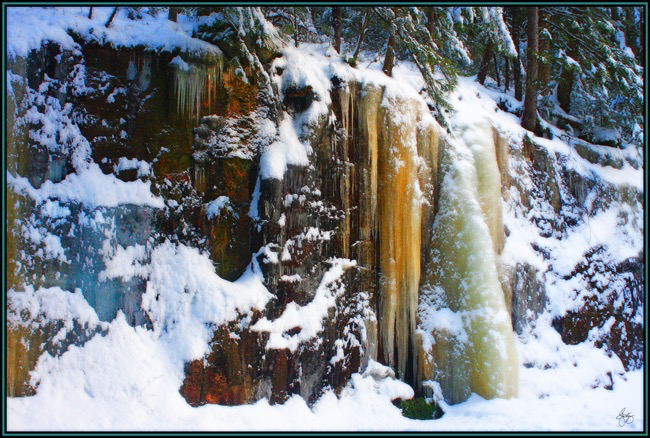
Winter Revelation on Smart's Brook


Our Moment


The dramatic changing weather here in the valley between Rattlesnake Ridge and the Waterville Range has produced days and nights well below zero interspersed with a few calm and pleasant ones. One warmer night seemed to summon forth the Barred Owls with their enchanting calls whoooo, who cooks for youuuu. It was on that night that I donned the headlamp and set off with my new companion Kodi - a white shepherd recently adopted. 


Unlike my late friend Boof, the Siberian Huskey, who could not be trusted to stay close because the wolf in him summoned him constantly toward adventure and the wild, Kodi is velcro dog. He only requires a leash for show alone, because he wants to be friends with every human and dog he encounters along the way. Fortunately, hiking at night doesn’t require even that constraint. I have rarely bumped into a nighttime adventurer on my evening forays, with the exception of the four legs who’s territory I am encroaching on in the dark hours. Kodi stays with me, cheerfully laps at the snow, and stops only occasionally to listen for the Barred Owls. 


On this night we had a very specific mission in addition to enjoying the Barred owl symphony we were destined for the icefalls of Smart’s Brook.   


Blue Iceflow Mindscape


Iceflow Rainbow


If you have ever driven Route 49 toward Waterville Valley in the winter you may have noticed the parking area for the Smart’s Brook Trail chock full of vehicles in even the most challenging weather and even on the most unlikely days. 


The most recent snowfall created a magical journey - despite the turmoil imposed upon us by the world. In the chill of our late night walk even these seemed to fade to grey momentarily.


The parking area was empty, reflective of the hour and we were soon padding up the trail. 


Recalling the full parking area only a few hours earlier I wondered about all of the people - many joined by their own four-legged companions. A more astute observer of culture might have been capable of matching personalities and even ideologies with the cars and their assortment of bumper stickers, parking passes, and telltale clues to the leanings of the hikers but in the end, this was not important. They had all come for the gift of quiet and beauty in the midst of the cascading crises. . . some knowing what awaited them on the trail, others curious or teased along by the rumors they had heard of this magical spot.


Left at the parking lot was the firehose of tragedy, of crisis piled upon crisis: 50 years of growing income disparity, the climate crisis, the pandemic, racism, sexism, and now a war in Ukraine threatening to entangle the entire world.


Left behind, if only for a few moments: Trump and Putin - locked in their “Last Tango in Tyranny”; Josh Hawley, Mike Pompeo, Tucker Carlson, joining arms and dancing around them. The savage cruelty being inflicted on innocent children and men and women who want nothing more than the chance to live their lives with some sense of dignity, security, and freedom. 


For a brief time each, in their own way, would escape the fears that they felt for the future - for their own personal challenges or for the world. 


Irrespective of their ideologies, penchants or prejudices, they would leave behind the stories to which we have become prisoners. 


Every one of us who walks along the brook until they come upon the gorge with mind-blowing colorful iceflows, is left breathless by the beauty of the moment.  


Drawing their range of colors from the minerals in the ground, the ice flows in gold and blue and teal against rock outcroppings of red, black and brown, an amalgam of color worthy of a reflection of the tears of our world. 


Could it be that if the stories we told ourselves about this world blended together with a beauty reflected in these outcroppings that we could recreate a world where the reds, blacks, yellows and whites formed a beautiful tapestry of life, drawing us together in the story instead of apart?


Tonight, as I look back upon that hike only a few nights ago, I pause and hear the unexpected sound of Canada Geese in flight overhead, piercing the night’s quiet. Evening chevaliers, unexpectedly forging their way north despite the hour and against the impending storm.  So too must we.


Wednesday, November 3, 2021

Growing Together Again - Picking Winners and Losers threatens to Further Divide the Nation

 The View From Rattlesnake Ridge

Ruminations from an Unabashed Optimist, an Environmental Patriot and a Radical Centrist


Despite the Climate Emergency wreaking havoc throughout the nation and the world, and the Covid 19 pandemic still plaguing us, autumn here in the valleys between the Rattlesnake Ridge and the Sandwich Range has been just about picture-perfect this year. Welcome periods of warm sunny days, punctuated with mostly gentle soaking rains, beckoning to hikers and climbers and leg-stretchers like Kodi and I. Inviting us to partake of the autumn colors. 


It has also been a banner year for mushrooms and fungi. In fact, I have never in my life seen the forest floor covered by so many mushrooms. Even now as their presence is beginning to wane people are still commenting on the abundance and speculating on the reasons. 


Mushrooms are the gloriously emerging fruiting bodies of a fungus that is growing underground (mostly) from what are called mycelium, nerve-like tendrils that can spread for many miles without ever being seen. 


Now I know just enough about mushrooms to be dangerous, which is why I am very cautious about gathering them to consume. Most of the time I rely on my son Zach who is far more experienced at partaking of wild edible mushrooms. But there are certain mushrooms, like the Morel family, that are quite distinctive and even I can safely gather them for dinner. Problem is, they are usually pretty rare around these parts. But this year I have found them growing in an old abandoned apple orchard that Kodi and I enjoy often on our rambles. 


All these mushrooms aren’t new to the northeast or wherever they can be found; the mycelium has been here underground all along, just waiting for the ideal temperatures and rain we had this summer and fall. In theory they could go for hundreds of years without ever popping their fruiting bodies above ground.


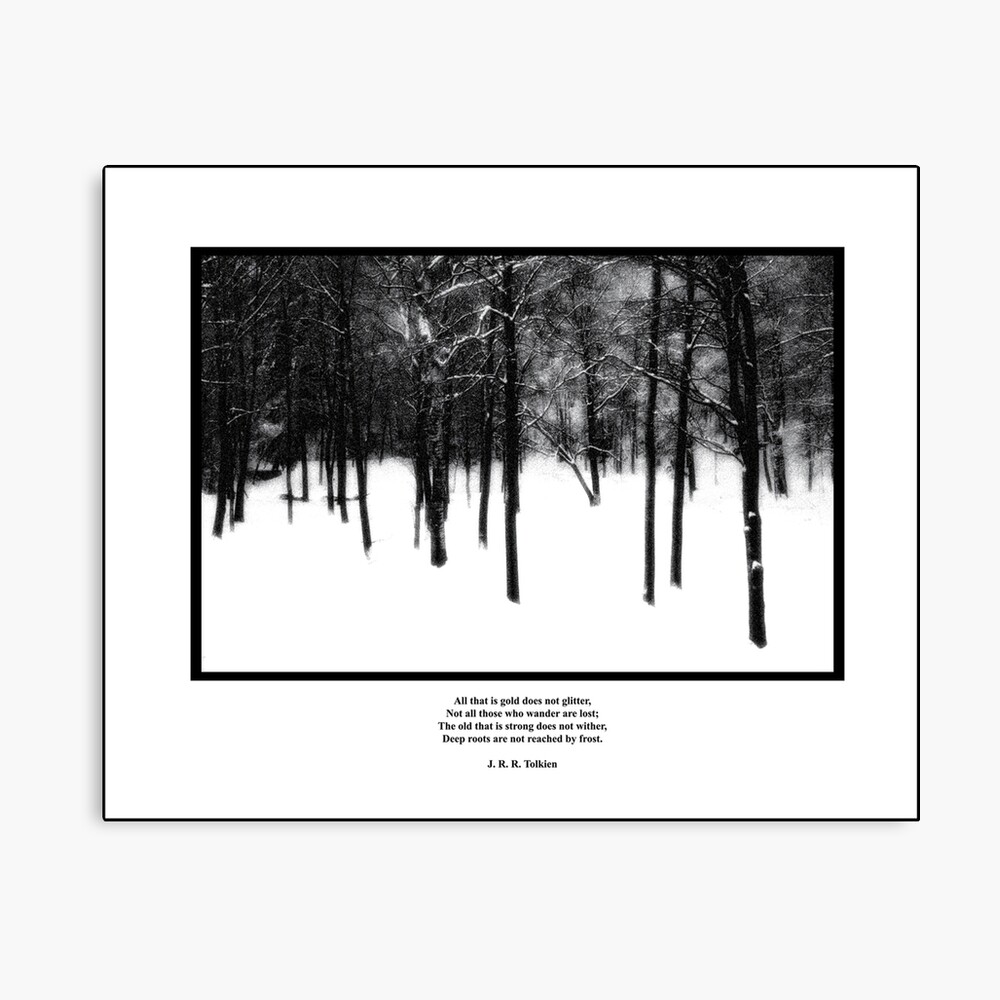
The natural wonder of all this is a balm for the souls of the wanderers, but, to quote Tolkein, “not all those who wander are lost.” For the past 30 years scientists have turned increasingly to the hidden miracles of mycelium and what they have discovered - as well as what they continue to discover - is likely to hold an entire world of revolutionary changes to both our understanding of the natural world and our ability to rebuild our own species into a sustainable cohabitant of the planet.


Deep Roots Poster


When most of us walk through a forest or a park we see only the trees, shrubs, and plants above ground. We know from experience and education that these plants have root systems but what has only recently been discovered is that the entire ecosystem in which we are wandering communicates through the mycelial network below ground in what scientists have come to dub the “Wood-Wide-Web”; weaving in and out and through root systems and creating a biological neural network - sharing information, nutrients, water and carbon across distance, species and ecosystems.


A Fusion of Magic Mushrooms

Moreover, far broader implications are being discovered from the wonders of what is called the ​​mycorrhizal network. According to Scientific American: “​​mycelium can be coaxed to build predictable structures by controlling temperature, CO2, humidity and airflow to influence the growth of tissue. This is a rapid process: the accumulation of fibers becomes a visible speck after a few hours, a visible sheet after a day or two, and an 18-by-2-by-12-inch sheet weighing a couple of pounds within the course of a week.” All powered by simple and relatively inexpensive nutrients like wood waste or sugars. “ 


The possibilities are mind-bending. Mycelium's fast-growing fibers that produce materials used for packaging, clothing, food and construction - again according to SA “everything from leather to plant-based steak to scaffolding for growing organs. Mycelium, when harnessed as a technology, helps replace plastics that are rapidly accumulating in the environment.”


“All these benefits come with little environmental cost: the process of growing mycelium results in limited waste (mostly compostable) and requires minimal energy consumption.” Already bio-degradable packaging is being created in the US and Europe using this technology.


Now you may be wondering, if you read this column now and then, how I am going to turn this all into a discussion of current political and policy questions. 


Painted Fungus

Start with the fact that much of the research being done in this area is under the research umbrella of DARPA; The very same government entity that developed the World Wide Web is doing research - based on the “Wood-wide Web” that will unleash a new massive wave of economic and environmental benefits.  


Unfortunately, if the past is prologue, the billions of dollars of taxpayer money used for research to create this revolution will ultimately accrue to a few select companies and individuals who will capture and patent technologies based on the work of these government research institutes and affiliates. The economic benefits to average taxpayers will be crumbs by comparison. But it need not be that way. 


Shouldn’t the revolution created by this amazing research also lead to a revolution in the public policies by which we employ and enjoy the benefits - sharing the wealth with those who have paid for that research - the American people? 


Congress is currently deadlocked over a 3.5 trillion “human infrastructure” bill which has deteriorated into a food fight over numbers, with very little attention paid to what lies behind the spending. As much as the Democrats have tried to refocus the conversation to the content of the bill, they have been unable to so do. Those opposed, even the Republicans, refuse to specify what they would choose to remove, largely because they know if they pinpoint anything it will affect the outcome of their next election. Face it, people are hurting and 50 years of growing disparity of wealth in America has opened up a hole in the hearts of too many of our fellow Americans. In 2016 Donald Trump walked through that hole and quite nearly destroyed the Republic. 


Flying into a Gathering Storm

It isn’t just the Republicans who willingly and knowingly followed Donald Trump down that rabbit hole who are responsible.


The Democrats, including Joe Manchin and Krysten Sinema, bear some responsibility as well. But Manchin and Sinema are only nominally more responsible than many others who simply see the opportunity to feather the nests of their own pet issues. When faced with the opportunity to really do something different, many of the Democrats fell right back on their old playbook: Picking winners and losers and leaving the status quo essentially unchanged.  In the process, leaving a whole lot of our fellow citizens feeling abandoned in their desperation, and leaving that hole in their hearts equally vulnerable to a second Trump candidacy - or a Trump surrogate - in 2024.


If we really want to bring Americans together again, and it will not be easy,  we need to abandon the status quo; the additive process of increased spending based on winners and losers.  Our focus must be more on change that benefits everyone and - on the other side of the ledger - requires joint sacrifice to confront our most important challenges. 


Aspen Central

Doing this might just cause some of the moderate Republicans, hiding in the tall grass, to show the backbone needed to save their party from oblivion or their country from a descent into totalitarianism.


It might just be, in fact, it is highly likely, if we sincerely reformed the existing system, we could do more with less. A Universal Basic Income for every American citizen, supported by many conservative and progressive economists, would not favor community colleges over great small private or public colleges or quality certification programs in dozens of fields. Those who chose to spend some or all of their UBI on continuing education would be able to make their own personal choice. A UBI would not prioritize care of a dying parent over care of a newborn or vice versa; it would not prioritize dental care over other healthcare needs or personal needs. It would give every American the freedom to choose how their benefit would most effectively enhance their life and the life of their family. It would allow us to take a serious look at the massive social service bureaucracy that we have built over the years in the name of protecting citizens from themselves or punishing those we felt were less deserving for whatever reason. Unleashing real freedom of choice for low-income and working and middle-class Americans.


Exempt from Public Haunt

While a UBI would be the most effective and revolutionary change it would not be without it’s notable advocates. First proposed by Thomas Paine it was also supported by Richard Nixon who successfully shepherded it through the U.S.House only to have it killed in the Senate by Democrats and Nixon’s own personal failings. Supporting Nixon’s UBI back then was the conservative Economist Milton Freidman to whom Republicans, even today, continue to pledge fealty. 2020 Presidential candidate Andrew Yang is even now indicating that he expects to create a third political party with a UBI as a central tenet. If you think this represents an existential threat to the two-party system, you’re right. But if you think that Trump would be the beneficiary you have missed the reason he won to begin with altogether.  


While we are at it, it's high time we had national service in this country. One or two years of service in either the military or civilian corps would go a long way to bridging the differences that continue to manifest themselves in tribalism among our citizens. It need not be absolutely mandatory. For example we could create an opt-out similar to the conscious objector exception during the Vietnam era, or we could simply tie national service to qualification for the UBI. Interestingly, a good deal of research suggests that a “gap year” (or two) following High School would be dramatically beneficial to post-high school educational performance for most students.


Of course, not every priority requires the same treatment. The Climate Emergency initiatives - or at the very least equivalent effort built on other ideas - will benefit everyone and address our most urgent, existential crisis. The unity required of the effort is built into the nature of the challenge. 


A scientific revolution, brought on by breakthroughs like those chronicled above - perhaps equal to the birth of the Internet, has a power of its own and creates radical change defined by its possibilities, not by status quo politics and self-interested politicians; Limited only by our imagination and dedication to the premise outlined in our constitution: 


"To form a more perfect union, establish justice, insure domestic tranquility, provide for the common defence, promote the general welfare, and secure the blessings of liberty to ourselves and our posterity.”


Democracy is not a static state, nor is capitalism.  They are operating systems, requiring leadership that fearlessly embraces change to achieve its optimum outcome on an ongoing basis . . . that is how we achieve a more perfect union . . . and perhaps how we come together again.


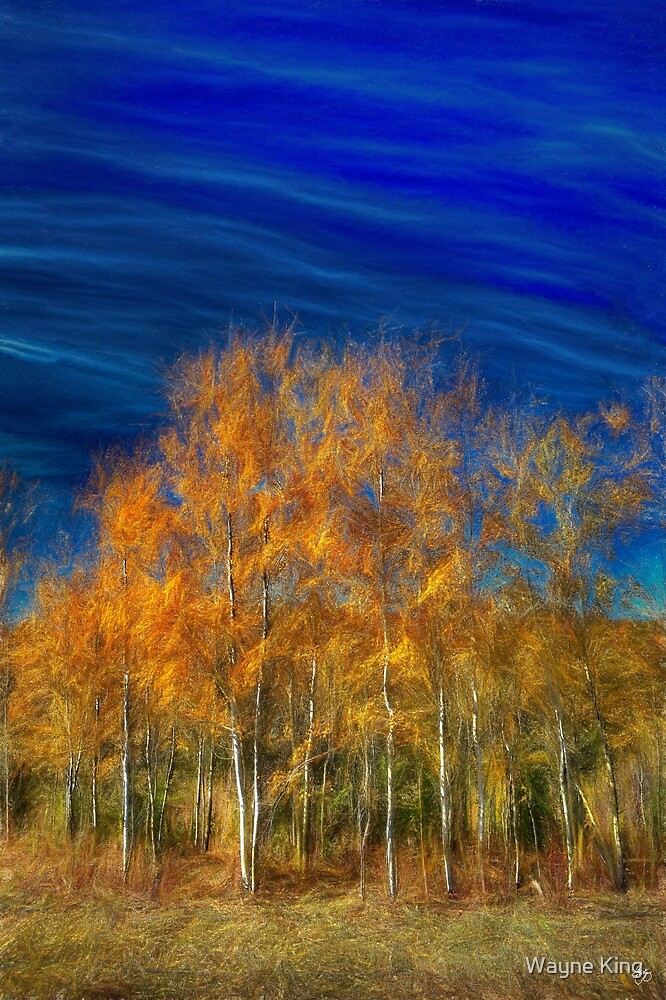
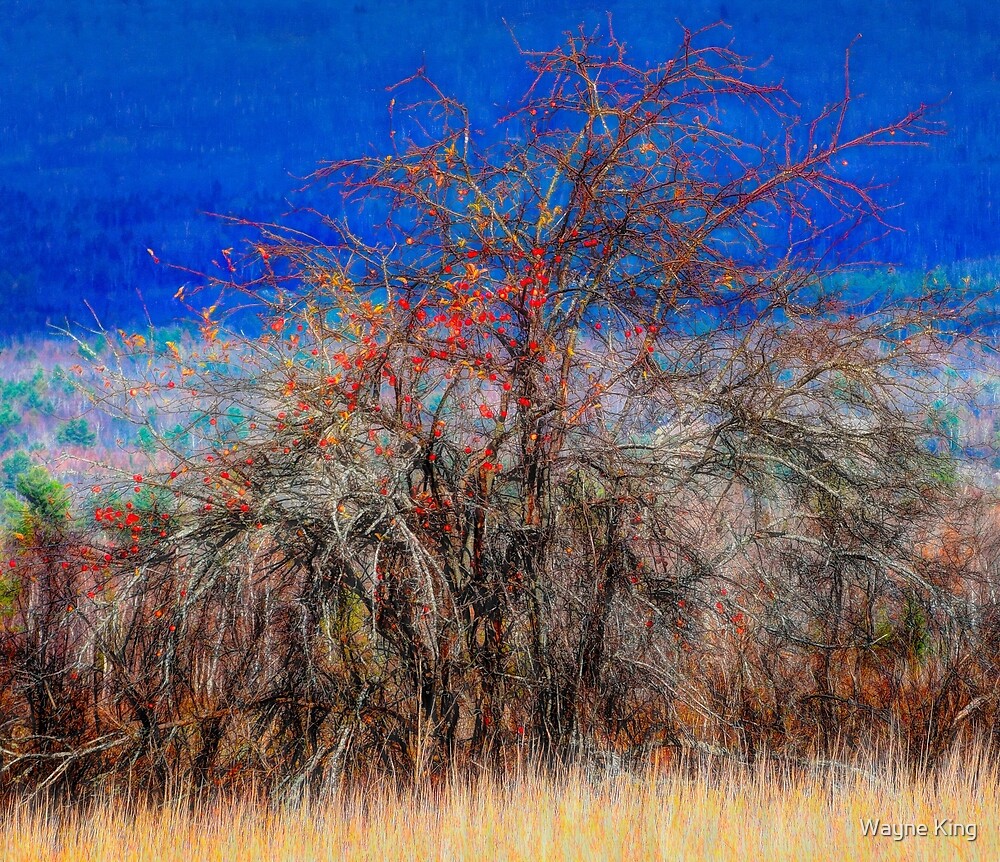
Apples in a Jefferson Wind Row

Links

Scientific American
The Mycelium Revolution Is upon Us

https://blogs.scientificamerican.com/observations/the-mycelium-revolution-is-upon-us/


The National Forest Foundation

Underground Networking: The Amazing Connections Beneath Your Feet

https://www.nationalforests.org/blog/underground-mycorrhizal-network


About Wayne D. King: Wayne King is an author, artist, activist and recovering politician. A three-term State Senator, 1994 Democratic nominee for Governor; he is  the former publisher of Heart of New Hampshire Magazine and CEO of MOP Environmental Solutions Inc., and now a columnist for the New Hampshire Center for Public Interest Journalism (inDepthNH.org) where he writes “The View from Rattlesnake Ridge” and hosts two Podcasts: The Radical Centrist (www.theradicalcentrist.us) and NH Secrets, Legends and Lore (www.nhsecrets.blogspot.com). His art (www.waynedking.com) is exhibited nationally in galleries and he has published four books of his images and a novel "Sacred Trust"  a vicarious, high voltage adventure to stop a private powerline - all available on Amazon.com. His art website is: www.waynedking.com , and his writing site:  http://bit.ly/WayneDKing . He lives in Thornton, New Hampshire at the base of Welch Mountain where he proudly flies both the American and Iroquois Flags.


Sunday, August 1, 2021

Toward A Fairer Distribution of Wealth


Toward A Fairer Distribution of Wealth
After 50 Years of Backsliding, the Opportunity for Americans to Share the Wealth of our Economy Lies within Reach.

Some days as I ramble the fields and hills of the White Mountains I find myself pondering all the mistakes we have made as a nation in what we have always hoped would be the path to a “more perfect union”. It can be a most discouraging exercise. Slavery, genocide, religious intolerance and exclusion, all of these tragedies, and more, have made the path to the Founder’s dreams of a land where talent, ambition and ideas allow any citizen to rise - to succeed - more daunting.

Let’s face it, we can never truly make up for the wrongs that have been done monetarily.

Two thirds or more of the landmass of the United States alone was in the “possession” of Native American people for millennia before and during the 200 years following Columbus’ wrong turn. That’s a lot of real estate.

We can never fully atone for the grievous wrongs against African Americans perpetrated by Slave Traders and internecine kidnapping by warring tribes and factions on the African continent or the years of slavery that followed as well as the Jim Crow era, and the overt and institutional racism that has characterized the years since.

The mistreatment of generations of immigrants, the Irish of course, but particularly those from outside of Northern Europe, set back their advancement within the American Dreamscape by decades, if not centuries.

The treatment of Japanese Americans during the second world war and the confiscation of much of their existing wealth as well as ongoing racism that impacts those of asian descent.

The marginalization of women since the beginning of it all.

All of these and more original - and ongoing sins - of the Republic amount to far more money than we could possibly account for - no less tax for or pay out.

Add to all this the - now fifty year - downward spiral of incomes of the majority of Americans and you have a problem so daunting that no one quite believes we can truly address it.

But we can begin and, at least as a start, we could do so relatively painlessly with some real and sustainable benefits to all our citizens.

First the why…

1973. That is the year that many economists and historians point to as the turning point of the (modern) wealth disparity in this nation. In 1900 the gilded age of robber barons, was beginning to pass. Reforms by Republican Teddy Roosevelt’s administration began to reverse an earlier wealth disparity. The Progressive era brought more reforms driven by a golden age of journalism that helped expose the dark underbelly of the previous wealth disparity brought on largely by the Railroad interests, the oil and timber interests and other industrial age monopolies that had dominated the economic landscape of the country in the latter half of the 19th century.

With the obvious exception of the Great Depression, much of the 20th century - and especially the mid-century - was a time when the great middle class began to flourish. Even the wages and wealth of the sub-middle classes (sometimes referred to today as the “Precariat”) saw gains.

But in 1973 those gains hit a wall.

It was the first year when American wages declined in what would become a long pattern of decline; fifty years long as of today.

Until that time many of the reforms of the New Deal including tax policy and changes in the law to encourage the growth of labor unions had kept wages for the middle class, the working class and poor on an upward trajectory. In other words, their percentage of the wealth generated in the country was growing.

1973 was also the beginning of another phenomenon that is rarely noticed or mentioned by economists and historians and certainly not by politicians at any place on the political spectrum . . . a declining personal and economic freedom among these very same people.

As declining wealth and growing disparity began their slow rending of the American fabric, efforts were made to plug the holes in the dike of American prosperity. Put simplistically, these efforts were intended to deal with social and economic problems created by the growing disparity of wealth. These problems were widely acknowledged. Eisenhower, a moderate by today’s standards, acknowledged that the welfare system was “necessary to reconcile the masses with the capitalist system.” But there were wildly different interpretations of the solutions that created an uncomfortable alliance between those who would prefer to ignore the problems, or, worse, punish those who were lower income Americans, and those who saw their role as “protecting” them. That alliance came in the form of more and more onerous restrictions on those who received any form of “welfare” transfer payments. This made the “protectors” complicit in the denial of freedoms, particularly economic freedoms. It was during these years that America saw the construction of the welfare bureaucracy.

There were - in fact - plenty of transfer payments to the wealthy and the upper middle class that were not accompanied by such punitive action - for example the mortgage tax deduction and the deductibility of real estate taxes from the Federal income tax. Capital gains are taxed at a lower rate than income derived from work, a completely absurd notion. But few politicians batted an eye when it came to those transfers of wealth.

Later critics would, cynically, refer to this as the “welfare state” or, more derogatorily, the “nanny state” where every low income family found themselves being micromanaged by both the right and the left. The irony of course is that these same critics were equally complicit in creating this state.

So for fifty years not only have incomes diminished as well as the share of wealth within the overall economy, but personal and economic freedoms have diminished as well. A single mother might take a second job but often she would run headlong into a provision in the law that required another payment to be decreased because of her added income, creating not only an economic disincentive to improve her economic standing but effectively diminishing that standing. Ironically, this “welfare” system not only treated those among the Precariate classes as second class citizens with respect to their personal and economic freedoms, it also became a bureaucratic monster consuming vast amounts of wealth to “police” the punitive restrictions on the economic gains of lower income Americans.

Efforts made to try and correct the inequities were subject to a “wrinkle in the rug” reality in this new welfare system. Addressing one wrinkle would simply create a new one that popped up in response to the onerous penalties assessed on the Precariat classes for the mere act of attempting to improve their economic condition.

The sad fact was, and remains, that those earning the most were encouraged and rewarded for seeking ways to enhance their prosperity while those earning the least were punished and disincentivized for doing the very same thing. Over time the gap has widened and today even the vaunted middle class is shrinking, sliding inexorably into the precariat at its lower margins.

Aside from the obvious moral and ethical reasons we should be concerned about this there is a very practical, political reason that lies at the heart of our current political woes. The strength and stability of a democratic political system - we have learned over time - is tied to the strength and vibrancy of its middle class. When Americans (or any people) are invested in their future - when they see their place in that future and feel that they can count on the system to give them a fair shake - they will support, defend, and sustain it. When they begin to doubt that system all bets are off.

Additionally, from an economic point of view, the real engine of economic growth was being choked off. Despite the dogma of the right that businesses create jobs and wealth, the fact is that people, and specifically consumers, create jobs and wealth. As middle class and precariate consumers see their income dwindle they are able to spend less of their wealth on anything except necessities.

For 50 years now we have seen the glue holding us together slowly dissolve. To the ranks of the already-marginalized we have added untold millions of Americans of every color, creed, religion. From coal miners to pensioners who have seen their retirement disappear in a blue haze of bankruptcies, mergers and acquisitions; from homeowners caught up in Wall Street’s sub-prime mortgage fiasco to families bankrupted by crippling healthcare costs; each with a different story, each subject to their own unique sadness and vulnerable to the swirling miasma of finger-pointing, retribution, blame, and conspiracy theories. Caught up in the same general whirlpool we have divided into a tribal morass, each with its own boogiemen and culprits further dividing us at the very moment when we should be coming together.

I have to admit to being totally caught off-guard by the QAnon conspiracy theories. After all, they are so nutty as to completely strain credulity but they are a sure measure of how far we have fallen. Only the Salem witch trials provide some historical context but even now we realize how insane they were.

The How

Over the course of our history Americans have paid taxes that have created and maintained our roads, bridges, air and seaports. We have funded the cost of education - producing a ready made workforce. We have funded research that has produced untold innovations and staggering wealth. The US Department of Defense spends more annually on R&D than any other entity on the planet.

Every time you open your smartphone you see examples of the fruits of that research. Many of those applications represent companies that have turned that government-funded research into billions of dollars of private wealth, all thanks to the research efforts funded by EVERY AMERICAN.

In effect making the American people the large investors in their success. Yet when the dividends are paid out John and Jane Q Public are not among the shareholders receiving a check.

Instead we watch as politicians play divide and conquer over meager tax revenues. Will we fund paid family leave or tax credits? Will we fund affordable day care or tuition assistance? Will we fund . . . The list goes on and on. Many of these programs are terrific ideas that would certainly serve to improve the quality of life for American citizens but often they benefit only a segment of the population. A system for allowing Americans to share in the wealth of an expanding economy while having the freedom to decide how their piece of the pie was used would make far more sense, especially if, at the same time, we were able to deconstruct the welfare bureaucracy and add those funds to offset its costs.

Call it what you want: A Freedom Dividend, a Sovereign Wealth Fund, an American Dividend. A mechanism for sharing the wealth of our economic growth is within our reach. It is not a lack of wealth that holds us back, it is a lack of will and imagination. Furthermore, it is an ideal that has currency across the political spectrum. Richard Nixon, for all his many faults, proposed just such a system during his presidency, conservative economists like Milton Friedman supported the idea. Many of America’s billionaires, recognizing the value of the R&D investments that undergird their company’s success, and fully cognizant of the dangers of the growing disparity of wealth, have expressed support and a willingness to see both taxes and research proceeds used to help fund such a system.

A Painless and Progressive Start

It is unlikely that this shift to some kind of Universal Basic Income could happen quickly. Developing the political will and the public support will take time and a concerted effort to educate the American people - helping them to understand that such a change would not represent a handout but the natural evolution of capitalism to reward every citizen for the economic growth in the American economy derived from the investments made by each of them.

Now is the ideal time to begin that process for several compelling reasons.

A serious body of research is now available and developing rapidly to determine how such a dividend might be calculated and paid for. This includes some ground-breaking research on using blockchain technology that might allow a UBI provided completely outside of any government bureaucracy.

Several current legislative initiatives present a way to test-drive both the idea of dividends as well as linking benefits of the economy from research and development to the distribution of wealth in our society.

The Carbon Fee and Dividend Act, (now the Energy Innovation and Carbon Dividend Act of 2021 HR 2307) initially proposed by Republican statesmen James Baker and George Schultz, and now supported by a broad coalition of Republican and Democratic legislators as well as environmental, and business leaders and their organizations and companies with the Citizen’s Climate Lobby leading the effort. HR 2307 holds the promise of lowering carbon levels and putting the revenues generated by the fees imposed directly into the pockets of all citizens. While this measure only addresses revenues from a fee on carbon it would provide a working model of such a dividend to the American people and at the same time help us to bring our economy into a net-zero carbon future by 2050.

President Biden has proposed more than 350 billion dollars in new research and development in the rescue and infrastructure packages. These research projects are sure to generate huge economic spinoffs. Biden should appoint a special commission to study potential spinoffs and ways in which those spinoffs might be shared with the American people who are - in fact - funding them. Research and development are essential components of sustaining a growing economy. If the United States is to maintain its economic dominance, and present a viable alternative to the efforts of China to dominate the world’s economic infrastructure. What better way could there be to build public support for ongoing investments in R&D and Infrastructure than to make the American people shareholders in the wealth that they generate?

Finally, there is a growing call for reigning in America’s “Tech Sector” from all points along the political spectrum. Recognizing that mechanisms for making every American citizen an “investor” in these tech sector businesses opens up a whole new set of possibilities for new ideas that allow us to address the issues that concern Americans while adding some nuance into the process. In other words, it adds a series of options that permit the problems to be addressed with a scalpel instead of the traditional all-or-nothing approaches that we have taken in the past. When the question facing us is more than simply “do we break up Google or Facebook or Amazon?” or whatever new mega-company emerges in the future; but, rather, how do we make changes that invest our citizens in the future of our economic growth and encourage entrepreneurial opportunities in a dynamic and competitive economy? The options for innovative ideas are endless, as are the opportunities for finding common ground between people of widely different viewpoints.

We could use a bit of common ground these days.


Links:


Welfare Programs Promote Bureaucracy Rather Than Self-Sufficiency
Damon Dunn: Pacific Research Institute.
https://www.pacificresearch.org/welfare-programs-promote-bureaucracy-rather-than-self-sufficiency


From "Screen Door" to "String Too Short to Keep"

  From "Screen Door" to "String Too Short to Keep"  A poetic journey across time and space in New Hampshire with Poet El...