Tuesday, April 18, 2023

Time to Tell a Different Story on Inflation & Debt? Modern Monetary Theory offers an alternative but Politicians and Policy Makers Are Ignoring it.


Butternut Mist Originals        Open edition Prints


 Time to Tell a Different Story on Inflation & Debt? 

Modern Monetary Theory offers an alternative but Politicians and Policy Makers Are Ignoring it.


Most of the snow has finally melted here along the banks of the Connecticut River. Soon the leaves of skunk cabbage, false hellebore and wild leeks will begin poking through the leaves. Dried grasses and dead stalks of bamboo that occupy the interstices between the oaks, the silver maple, and the other hardwoods of the floodplain forest.  The Bald Eagles are yet to begin their daily flights along the river byway, but the Canada geese have descended in droves into the valley, their sights and sounds occupying most of the airspace on the floodplains and marshes as Kodi and I take our daily walk.


Crimson Spring

These waters, the Connecticut River running north to south and the Ammonoosuc flowing in from the east have stories to tell dating back millennia, even before my Abenaki ancestors and then later the Voyageurs plied their ways. There were, of course, footpaths that followed the rivers and joined them, but the main form of transport for those long-ago indigenous people and the French Canadian immigrants the rivers were the most effective route for transporting goods.


The pre-contact population of Abenaki (also called Wabanaki) is estimated in the range of 80,000 - 145,000, spread through the area, then known as N’dakinna and now including parts of Maine, New Hampshire, Vermont, and Quebec. A series of plagues in the early 1600s, unmaliciously introduced by European traders and settlers, who simply spread their own diseases into a population that had no natural immunities began a process that decimated the population. Later, disease as an instrument of war would add insult to injury; human-induced with malice and aforethought. Lord Jeffrey Amherst, for whom the Massachusetts College is named, sent wagonloads of smallpox-infected blankets to Abenaki Villages in an effort to finally exterminate the remnants of the Abenaki after years of other European plagues had already weakened Native tribes all over the country. 


But Amherst was telling himself the wrong story about the Abenaki and their neighbors in the Iroquois Confederacy. The story he, and most of his contemporaries, told was of a primitive race of savages gathered in villages like Saint Francis, Quebec. Despite the fact that both nations had been forming confederacies, governments, and traditions far longer than the British or the French. 


He also deluded himself into believing that he could wipe out the Abenaki by focusing on a few villages in Quebec where many - but by no means all - of the Abenaki people had fled from the colonists as they ravaged their way north from Massachusetts and Portsmouth. 


That story, that the Abenaki people had all fled to Quebec has been revealed to be a wishful myth because today we know that a large portion of the Abenaki simply melted into the background all over northern New England. 

Like my grandfather, whose father Simeon Gideon Roi was Iroquois and his mother, Emelia Bedard Roi, a full-blood Abenaki, they hid in plain sight. During a long life, Emelia gave birth to 24 children as they moved quietly back and forth between Saint Francis, Quebec and Whitefield, New Hampshire. 19 of those children lived to adulthood and as they became adults they too quietly established their own lives, some with the surname King, others Roy and perhaps even a few maintaining the Roi moniker. 


Though I don’t know more than I was told by my own father and one living son of Simeon and Emelia - my uncle Joe, who died 20 years ago - I have these two sources that confirmed that Simeon and Amelia warned them to cling to their heritage but to keep it a secret, in order to fit in. 


On the Wings of Eagles


Today, the descendants of the Abenaki who wove their complicated lives into the American fabric, while still clinging to their heritage are fighting for recognition in Vermont and New Hampshire. Their success in assimilating, ironically the very thing that colonists and political leaders had espoused as their goal for native people, has created a barrier to their recognition as an official indigenous nation. Yet, still they persist. No amount of government intransigence will prevent the Abenaki from asserting their culture and traditions, whether or not they are recognized “officially”. 


The changing nature of the narrative - the stories we tell - about our Native American brothers and sisters have evolved over the years and today we proudly point to the Iroquois Confederacy as a source of the wisdom that helped lead our founders to a constitutional government (if we can keep it!*) and established the environmental ethos of all Native people as an existential imperative in the age of climate change.  


The great physicist Stephen Hawking, in a 1999 speech celebrating the new Millennium at the White House said this: "The greatest enemy of knowledge is not ignorance, it is the illusion of knowledge. . . . As scientists, we believe that any theory is provisional; that it must be constantly tested against observations; that we must revise it or abandon it when the observations demand it. But non-scientists believe that many theories are certain: the theory of evolution, the Big Bang theory, and so on. Unfortunately, common sense is just another name for the prejudices that we have acquired by the age of eighteen."


Mark Twain is said to have put it a bit more simply: "It ain't what you don't know that gets you into trouble. It's what you know for sure that just ain't so."


We humans live our lives bound by a casually woven fabric of narrative. These stories that we tell ourselves are both a source of stability and a prison of imaginary infallibility. They provide structure to our lives, yet, at the same time, to paraphrase Twain, sometimes they just ain’t so. 


Right now we have hundreds of politicians running around like Chicken Little bemoaning the problem of inflation. 


Without a doubt, inflation - occurring worldwide - is a serious problem. The day-to-day difficulty that families face, particularly middle and lower-income families, are a very real economic threat to the stability of families. 


How we confront inflation is another of those stories that we have been telling ourselves for nearly 50 years. The ham-handed and seemingly dull instrument of interest rates has become the commonly accepted methodology for taming inflation. But is this simply another story we have been telling ourselves that, to quote George and Ira Gershwin, “ain’t necessarily so”? 


After all, nearly 50 years of Nobel-winning work in economics has come and gone with little to no appreciable change in the way the Fed approaches the challenges of inflation. 


The Federal Reserve, also known as the Fed, began using interest rates as a tool to control inflation in the early 1980s. At that time, inflation in the United States was high, reaching double digits in some years, and the Fed decided to take action to bring it down.


In October 1979, Paul Volcker became the chairman of the Federal Reserve, and he implemented a policy of raising interest rates to combat inflation. The Fed raised interest rates sharply, which made borrowing more expensive and slowed down economic activity. This policy, which became known as "monetarism" or "tight money policy," was aimed at reducing the money supply and curbing inflation.


Borne on a Beam

By the mid-1980s, inflation had come down, and the Fed began to lower interest rates again. But at least half a decade of economic pain was required, with no real evidence that it had been the tight-fisted policies that had caused inflation to decline.  


Since then, the Fed has continued to use interest rates as a “tool” to manage inflation and other aspects of the economy, such as unemployment and economic growth. Yet, most economists will tell you that the way that the Fed approaches using interest rates to tame inflation is little more than the manifestation of a hunch, a coin flip, masked in a torrent of economic jargon designed to make us think that they are in possession of the secret keys to the kingdom of inflationland. 


Is there another story that we should be telling ourselves about taming inflation? 


Indeed there is. It is a school of economic thought called Modern Monetary Theory, also known as MMT. It’s been around for thirty years now but may finally be on the verge of getting its day in the sun.


Unlike the monetarist policies of the Fed, MMT does not rely on a single dull instrument to tackle the problems associate with Inflation. In fact, it is a far more nuanced and comprehensive set of theories that involve a more holistic view of our economy and the various factors contributing to inflation. 


Ironically, addressing inflation using the tenets of MMT is also potentially far less painful - particularly for middle-income Americans and the poor. 


Yet it faces pushback from both of the major political parties. Not because it is any less credible than Monetarist theory but because each party - in their own perverse way - see it as a threat to their electability, particularly their ability to motivate their respective bases.


In fact, a cynic might say that both parties have long embraced the idea that deficits are not necessarily bad, they just keep it a closely guarded secret from the public. At least publicly, they have bought into a 50-year-old story that just isn’t so and, from their perspective, it seems to be working for them. 


Unfortunately, for the vast majority of us not only is it not working, it works against us, benefiting the well-heeled and harming those at the bottom of the economic ladder.


The foundation on which MMT rests is a fascinating one: that in a national economy - unlike a household budget - deficits are only important as one component of the broader economic picture, particularly in an economy that has a “fiat currency”. A fiat currency is one that is controlled and printed exclusively by its own country. 


Furthermore a “deficit” reflects only one side of an economic equation and for every deficit there is an accompanying “investment” or “surplus”. Yet we rarely take that side of the economic equation into account. For example, Eisenhower’s Interstate Highway system was built with deficit spending, yet the economic gains from it accounted for far more than was spent to build our modern highway system. 


One of the most comprehensive cost-benefit analyses of the system was conducted by the Federal Highway Administration (FHWA) in 1997. The study found that the benefits of the Interstate Highway System far outweighed its costs. The benefits included reduced travel time, improved safety, increased economic productivity, and greater mobility for people and goods.

The FHWA study estimated that the system had generated $6 in benefits for every $1 spent on construction and maintenance. The study also found that the Interstate Highway System had contributed significantly to the growth of the U.S. economy, with estimates suggesting that it had increased national productivity by between 0.5% and 1% per year.


Every introductory economics course, for the last 50 years, lays the lion’s share of the blame on the specter of inflation attributed to the federal deficit. Yet, in all but 2 of those 50 years deficit spending has been the rule. The few periods of high inflation are more closely tied to the cost of energy and, recently,to disruptions of the supply chain during the Covid-19 epidemic. 


For nearly 50 years, two economic realities have dominated our lives. The first is a growing, and now savage, inequity of wealth; and the second is consistent deficit spending. These two realities should cause us to question the story behind the story. 
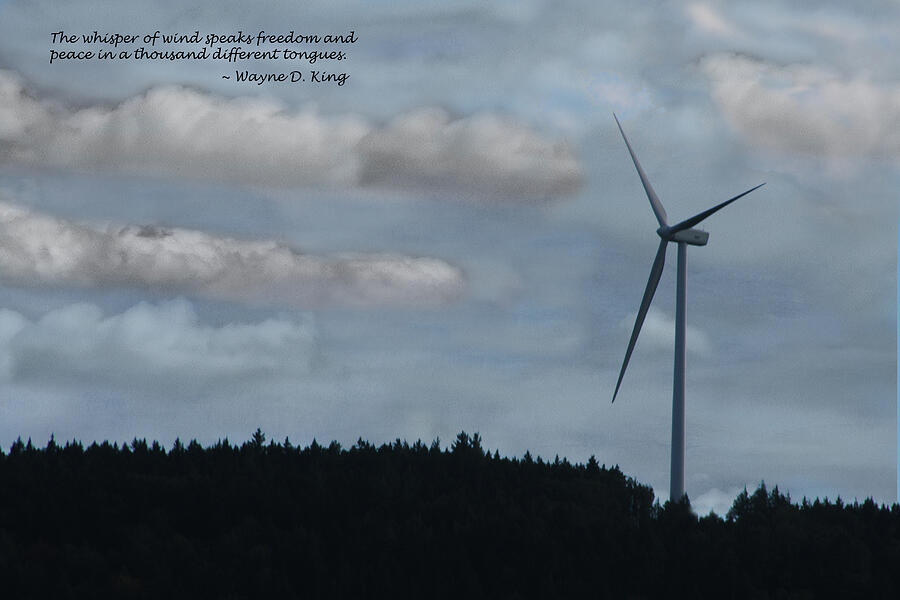

The Whisper of Wind
Open Edition

So why has it taken so long for MMT to be considered serious economic policy? 


The problem is not only the story we have been telling ourselves about debt, deficits, and inflation. It is also the political rhetoric from both the left and the right that has infected our national dialog. Every time the Republicans pass a tax cut, or increase military spending without regard to the deficit, the Democrats jump on it like a duck on a june bug; claiming that we’re stealing from our children’s future. When Democrats pass legislation, like the recent Inflation Reduction Act, the Republicans cry foul and leap to the conclusion that we now need to re-examine every entitlement program to make up the deficit. These things may be great for riling up the base but the only deficit that matters in this is a policy deficit. . . a statesmanship deficit. 


We all grew up with Presidents, and politicians of all kinds mouthing the myth that government budgeting should be run like a family budget. But the federal budget is nothing like a family budget. Costs can be spread out over generations, benefits can quickly accrue that outweigh the investment.  Families can’t just print money if things get tight but the Federal Government has no such problem.  


There is nothing fundamentally wrong with government running a deficit. What matters is whether deficit spending enhances our economy and our quality of life. 


It’s time to tell a different story. 


Notes & Links

Stephanie Kelton: The big myth of government deficits

https://www.youtube.com/watch?v=FATQ0Yf0Fhc

How do we pay for it? with Stephanie Kelton & Fadhel Kaboub

https://www.youtube.com/watch?v=owDZYFpeOI0&t=2460s


More spending, on the right targets, is a solution to Inflation.

https://www.youtube.com/watch?v=U5EIq_FrzEU


About Wayne D. King: Author, podcaster, artist, activist, social entrepreneur and recovering politician. A three-term State Senator, 1994 Democratic nominee for Governor. His art (WayneDKing.com) is exhibited nationally in galleries and he has published four books of his images, most recently, "New Hampshire - a Love Story”. His novel "Sacred Trust" a vicarious, high voltage adventure to stop a private powerline as well as the photographic books are available at most local bookstores or on Amazon. He lives on the “Narrows” in Bath, NH at the confluence of the Connecticut and Ammonoosuc Rivers and proudly flies the American, Iroquois and Abenaki Flags. His website is: Anamaki.com

Monday, February 6, 2023

The Two Party System Has Failed Us: Calling the Coalition of the Decent

 The View From Rattlesnake Ridge

Ruminations from an Unabashed Optimist, an Environmental Patriot and a Radical Centrist


The Two Party System Has Failed Us

Calling the Coalition of the Decent


Truth is mysterious, elusive, always to be conquered. Liberty is dangerous, as hard to live with as it is elating. We must march toward these two goals, painfully but resolutely, certain in advance of our failings on so long a road.

~ Albert Camus


Walking along the Ammonoosuc River here with Kodi, I contemplate the peaks and valleys of my days recently, reflecting on just the past few months. 


For a short time after the mid-term election I was feeling hopeful. The coalition of the decent had managed to hold off the onslaught of totalitarianism’s most recent wave, but just as quickly my hopes began to ebb.


It began with the election process of newly-elected Speaker of the House Kevin McCarthy. McCarthy had to undergo a grueling 15 round fight for the speakership. So weak in his support that, in order to achieve his election he was forced to make more and more concessions to the far right. Each vote drove his party farther and farther to the right, yeilding more and more power to the most authoritarian members of his party. 


The Democrats, for their part, crowed about their unanimity in opposition to McCarthy. Yet, what did they do besides remaining unanimous? 


When it was all over, the result was even worse than most of us feared. 


The Democrats were still crowing about unanimity but then they compounded their own complicity by smugly pointing at the number of nutcases that had been promoted to positions of authority in the McCarthy administration in order to secure the vote for McCarthy. People who will surely do great harm to our democratic system over the next two years and push us closer to the edge of Constitutional disaster. 


What might have happened if the Democrats had used their unanimity to peel away enough Republicans of good will to elect a responsible Speaker of the House - Liz Cheney or Adam Kinsinger for example - Could they have elected a Speaker who would stand up for core American values?  Perhaps even the NH House Democracts would have taken a page from their example as well. After all, they have an even closer number of members and yet, they too, sat on their thumbs as Republicans installed a Speaker that represents the fringes of the party.


What Republicans promised was going to be a Republican Tsunami in the mid-term election, turned out to be a near-draw with only ten votes separating the parties in The US House.  


Neither party should take any comfort from the results. Independent voters, and those Republicans and Democrats of good will, demonstrated that their disaffection with the parties does not color their understanding of the threat to democracy posed by Donald Trump and the majority of Republicans. They came out in droves to save the Republic from the crazies in the Republican Party, not to save the Democrats, for whom they harbor ill-disguised contempt as well. 


Now let me be clear about what I am saying. I do not in any way want to convey an equivalency between the threats to our Democracy from the current Republican party and the feckless Democrats. 


I do, on the other hand, mean to convey an equivalency between the parties when it comes to doing any more than putting band-aids on gaping wounds in our country. If we don’t find real solutions to the growing disparity of wealth and the warming of the planet, and soon, none of the silly engagements between Democrats and Republicans will mean anything. 


The Republican Party may, at this point, be in its early-stage death throes. If the saner voices within the party can’t wrest control from the MAGA-maniacs in the next two years there may be no coming back for them. Too many elected Republicans have lost sight of their duty to their constituents and to their constitutional oath of office. They have become victims of the Republican party’s panicked descent into despotism, remaining silent in the face of voter suppression, gerrymandering, and ongoing efforts to turn Americans against one another in the name of winning the next election.


There’s only a limited amount of time for them to regrow a backbone.


Both political parties have much to answer for. Neither seems to really want to solve the problems associated with immigration because the fight keeps their bases fired up and like the Republicans, the Democrats have become blindly focused on winning at all costs and keeping the money machines that feed their coffers cranking. To hell with the best interests of the American people. To hell with healing the wounds of our divisions, to hell with finding common ground.  Winning at all costs is the only thing that matters, no matter what price the American people pay for their malfeasance.  


The existing political parties and their leaders exhibit a profound lack of imagination when it comes to addressing the existing and future challenges we face. 


The two-party system, created out of whole cloth and without any constitutional franchise to even exist, has cost us plenty and failed us . . . miserably.


One only needs to look at the phenomenal growth of the Forward Party since it was announced less than two years ago. Already the third largest political party in the country and with an agenda that is looking to the future, unafraid to propose bold ideas and determined to repair the fabric of our society. 


Any elected member of the Republican and Democratic parties that is the least bit self-reflective has to be scared witless by this. . . Good. 


We must rebuild social capital in a way that reconnects the threads of the American tapestry. We’ve done it before and it works. Social Security and Medicare are the most enduring and fiercely guarded aspects of the American social contract, precisely because they do not differentiate between Americans of different races, religions, or backgrounds. 


It’s time for us to build a multi-party system where coalitions of interest overcome the blind fealty of our existing system.


About Wayne D. King: Author, podcaster, artist, activist, social entrepreneur and recovering politician. A three-term State Senator, 1994 Democratic nominee for Governor. His art (WayneDKing.com) is exhibited nationally in galleries and he has published four books of his images, most recently, "New Hampshire - a Love Story”. His novel "Sacred Trust" a vicarious, high voltage adventure to stop a private powerline as well as the photographic books are available at most local bookstores or on Amazon. He lives on the “Narrows” in Bath, NH at the confluence of the Connecticut and Ammonoosuc Rivers and proudly flies the American, Iroquois and Abenaki Flags. His website is: Anamaki.com




Friday, November 11, 2022

Autumn is So Bittersweet . . .But today there are Ripples of Hope

 Autumn is So Bittersweet . . .

But today there are Ripples of Hope

“The thing about hope is that it can travel through space and it can travel through time. It’s contagious. Sometimes it just looks like it's splashing against the rocks and not making a difference but, over time, slowly, it starts breaking down those rocks. If we do our best, others will take heart from our example. They will find their own strength and summon others to hope and that strength and hope will course through their children and grandchildren and all the children yet to come.”  

~ Barack Obama, Robert F. Kennedy Ripple of Hope Award Speech 2018

Autumn is sooo bittersweet. It has always been this way for me. 

From my earliest memories as a young adult, autumn has always been a bittersweet time. In the fall of 1976 I can recall stopping the car at the side of the road in the midst of the first winter's snowfall at the peak of foliage season. I jumped out, tears streaming down my face, and ran to catch a snowflake on my tongue, as the swirling colors of the autumn storm were brushed into my soul from a pallet in the hands of grandmother earth.

There, at the confluence of pure exhuberance, splashing color, and immense sadness, I found a place of profound peace. 

It probably had something to do with the fact that I was in love, really in love, for the first time. Her name was Bobbie, and still - to this day - I rejoice in the moments like this one we shared together, though I have not heard of - or spoken with her - in more than 50 years. 

But Tuesday, as I cast my first vote in my new hometown of Bath, NH, these memories flood back in a swirling confluence of hope, and determination, braided into a miasma of trepidation about the state of our country. 

Back in my car, I hit the button for my Audible account. Listening to Jon Avlon’s extraordinary new book “Lincoln and the Fight for Peace” provides me with equal measures of those same inter-woven emotions. My heart breaks for what was lost, even today, with the events at Ford Theatre that Good Friday.  Yet, Avlon’s book also gives me a measure of comfort. Particularly today, a few days after I cast my ballot. Though there are still elections outstanding, votes still being counted, victories undeclared and denials still pending (Kari Lake election remains un-called), it’s looking like what Steve Schmidt called “The Coalition of the Decent” has thrown itself into the breach and held back the wave of authoritarianism that was staring us down as we approached the election.

Republicans are making excuses, Democrats are crowing, even as they wipe their brows, but neither have conducted themselves with much distinction. It was not they who have given breathing room to our democracy, it was Americans who believe that our song still matters. Many of whom no longer believe in either of the two major parties, with good reason. Yet they do believe in the American idea, as flawed as it has been over the years. They believe in the hope of the American dream and they know that Freedom isn’t free. 

Noone knows better that this is so than the American Indian, who volunteers in greater percentages for the US military, despite a history of genocide and ongoing prejudice and mistreatment. At every one of the many Pow Wows I have attended, my brothers and sisters who are veterans carry the US flag proudly - and first - into the pavilion during the Grand March; 

What real patriot, African American or not, did not wipe back their tears, when Doc Rivers asked, “Why we keep loving this country, when it doesn’t love us back?” Yet, still hope abides in the black community and they march on. 

But it is not just men and women of color for whom hope is a refuge, every woman who felt betrayed by the highest court in the land with the Dobbs decision has reason to despair, yet they persist. 

It was not just the members of the LGBTQ community, who have fought for equal treatment and marriage equality, who felt the chill of authoritarianism these last four years. It is also the sons and daughters of farmers and coal miners; who watched as a callous administration patronized their families while averting it’s eyes to their pain and addiction; It is the immigrant family that came here to build a better life only to be demonized as the other, yet continues to teach their children that they are a proud part of the American story.

Our children know all too well that we are passing along a world on the brink of disaster yet they still love us. Despite it all, when they have every reason to resent what we have done to the earth, they are fighting to save us all from the ravages of climate change.

We have so much work to do, so much road still to travel on the road to a more perfect union and we can only do it if we are all pulling in the same direction. Of course there will always be the Tories among us, who sow hatred and dissension, but they are small in number when we are big at heart. 

If my native brothers and sisters can teach us one lesson from their Pow Wow parade it is this: We must carry the flag high, we must take pride in what our country can still be, despite all the pain of our checkered past. The American flag belongs to those of us who are willing to sing the American song together. At Lexington and Concord they called it the “Shot heard round the world” 

It is high time, my friends, for us to unleash the song heard round the world. Let us sing it loud and proud. Let us be heard around the world. Let freedom ring.

Notes & Links

Barack Obama Receives the Robert Kennedy “Ripple of Hope Award”

Wayne King is an author, podcaster, artist, activist and recovering politician. A three-term State Senator, he was the 1994 Democratic nominee for Governor and the CEO of MOP Environmental Solutions Inc., a public company in the environmental cleanup space. His art (WayneDKing.com) is exhibited nationally in galleries and he has published four books of his images, most recently, "New Hampshire - a Love Story”. His novel "Sacred Trust" a vicarious, high-voltage adventure to stop a private powerline - as well as the photographic books - are available at most local bookstores or on Amazon. He lives on the “Narrows” in Bath, NH at the confluence of the Connecticut and Ammonoosuc Rivers and proudly flies the American, Iroquois and Abenaki Flags. His website is: Anamaki.com

Thursday, September 29, 2022

Time to Rip Off the Bandage: Prosecuting a Former President for Crimes is Painful but Necessary to Halt Our Authoritarian Slide


Time to Rip Off the Bandage

Prosecuting a Former President for Crimes is Painful but Necessary to Halt Our Authoritarian Slide


There is nothing quite like the stirring sight of a mature bald eagle flying directly overhead to focus the mind. That is just what Kodi and I saw on our walk along the Connecticut River recently. We watched, enraptured, as the eagle soared almost endlessly without ever needing to flap it’s wings. It simply rode the air currents. 


Historically it seems, it was almost harder for Congress to agree on the American Bald Eagle as our national symbol than it was to later adopt the Bill of Rights and the Constitution. That may be because Congress was not in charge of adopting the Constitution or the Bill of Rights. They did, however, have a veto on the official seal of the United States. Thus giving new meaning to the oft-repeated quip that “congress is the opposite of progress”. Over the course of a few years, they rejected three different versions of the seal, beginning with an effort by Franklin, Jefferson, and Adams who took the first shot, followed by two other committees. The Bald Eagle was a bit of an afterthought, not appearing until the third committee’s submission at the suggestion of Pennsylvania lawyer William Barton. 


By the way, Ben Franklin did NOT suggest the turkey as America’s national symbol. Apparently, over the years that has become a commonly cited bit of “fake news”. He did however consider the turkey to be a bird of higher moral character than the bald eagle, according to a letter written to his daughter, Sarah, mostly because the bald eagle was often a thief of fish caught by other birds of higher standing in Franklin’s eyes. 


It’s hard to argue that the beautiful sight of a bald eagle soaring overhead is a less stirring sight than a group of turkeys taking flight long enough to go from the ground to a nearby tree limb, while gobbling excitedly. But it’s not hard to argue that Congress, both parties, are more akin to the gobbling turkeys than eagles.

These thoughts jarred me back to more current events in our country. 


Thinking back over the last few years since the 2016 elections brought Donald Trump into the White House, feels like a constant exercise in drinking from a firehose of cruelty, with a growing totalitarian shadow falling over the American idea.  


Back in 2017 I wrote this in my column:


“For most Americans, watching the President, and the government that he has crafted, is like watching a car crash in slow motion. We know that it’s coming. We just don’t know when the point of impact will be. More important, we don’t know whether it will be a firey pileup or one car plowing into the Tree of Liberty and decency; a tree that has been painfully and lovingly nurtured; nourished with the blood, sweat and tears of patriots, as it grew and expanded for more than 200 years.”


Now we know. . . Donald Trump with the active and passive collusion and collaboration of the majority of elected Republican officials has turned what might have been a single car crash into a firey national pileup.    


I believe that I am correct when I say that the vast majority of Americans would agree with me that putting a former President on trial - irrespective of the outcome - is a terrible idea. Until recently I would have probably argued against such an idea, figuring that once defeated in an election we would be able to move beyond the tragedy of the last few years, but no more.


It’s not simply the crimes of which our former president has been recently accused. It is the authoritarian storm troops who have lined up behind him, virtually assuring that this madness will continue unless we draw a line in the sand. 


It’s not just shocking that the Governors of Texas and Florida would effectively kidnap refugees who have walked thousands of miles to legally apply for sanctuary in our country. Neither is it simply puzzling that Ted Cruz and Marco Rubio, self-styled Constitutional conservatives, would sanction such behavior. It is not just weird to have this top tier list of Republican Presidential hopefuls referring to the theft of hundreds of classified documents as a “storage question”. It is downright authoritarian and, dare I say it - Unamerican. 


Unamerican . . . under any other circumstances, I would be horrified to speak that word. As a first amendment purist, I recognize that democracy is a messy and noisy business. The more we can remain open to one another’s ideas, the better and stronger our democracy will be. However, when others reject the guideposts that define the very meaning of democracy, we are at a crisis point.  60% of Americans live in a state where at least one “election denier” is on the ballot. This is the ultimate rejection of those guideposts. 


We can muddle along for another two decades or more and hope that our Republic survives the trauma of the Trump presidency and its consequences, or we can rip off the bandage and let the fresh air at the national wound and hope that the line of acolytes behind Donald Trump will be dissuaded.  As difficult as it will be to prosecute Donald Trump, whether or not he is convicted, he, and his minions must be made an example for generations to come that the rule of law means something here in America. 


Notes and links:


Frontline: Retired Judge J. Michael Luttig, legal advisor to VP Pence

Lies, Politics and Democracy: Frontline Interview

https://www.youtube.com/watch?v=t9YrPe2Vr84


Frontline: America’s Great Divide: Steve Schmidt Interview

America's Great Divide: Steve Schmidt Interview | FRONTLINE


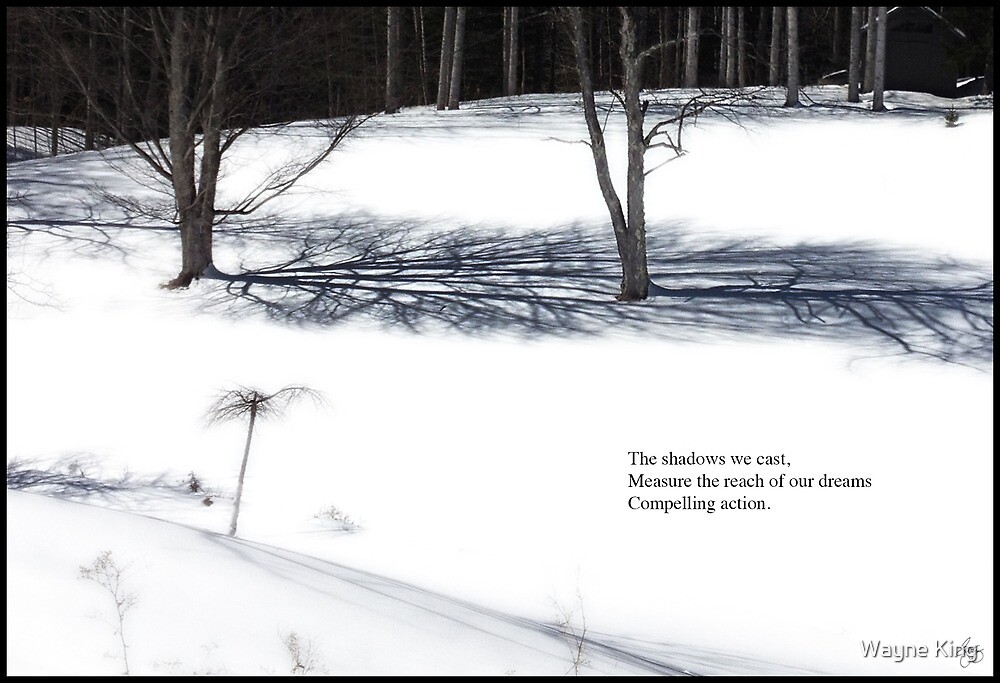
The Whisper of Winter Wood (Redux) Haiku

Mixed media image hand-painted monochrome with Haiku. This image is part of a developing series on climate change.

This image can be purchased in the following forms: 

A signed limited edition original with a certificate of authenticity. Edition of 25 prints on fine art rag paper with archival inks $495, Click here.

Open Edition print 12"x14 $20.00 Click here

Open Edition print 12"x14 $20.00 

Open Edition print 20"x23" $48.34 Click here

23" x 26" Poster  $34.34 click here


Pointilism in the Cloud


Autumn's Final Gold


From "Screen Door" to "String Too Short to Keep"

  From "Screen Door" to "String Too Short to Keep"  A poetic journey across time and space in New Hampshire with Poet El...