Wednesday, June 28, 2023

Courage to Face the Fire: Rachel Carson and Robert F. Kennedy Jr. in the Face of Public Backlash

 “Who is more humble? The scientist who looks at the universe with an open mind and accepts whatever the universe has to teach us, or somebody who says everything in this book must be considered the literal truth and never mind the fallibility of all the human beings involved?”

― Carl Sagan


Lupine Wind in a Bird's Paradise
 Signed Original    Open Edition Prints


Courage to Face the Fire

Rachel Carson and Robert F. Kennedy Jr. in the Face of Public Backlash


One of the consistent images invoked in this column is of our periodic encounters with American Bald Eagles that Kodi and I are privileged to experience on our regular meanderings here along the Connecticut River.

Although it’s quite likely that my Abenaki and Iroquois ancestors saw many more than we are fortunate to see these days, we see them today thanks, in large part, to a slight, bespectacled marine biologist named Rachel Carson who in 1962, while secretly in the final stages of cancer, wrote a love letter to the planet titled “Silent Spring”.


Beyond the Hedge at Ms Rumphius' House
Signed Originals      Open Edition Prints


Rachel Carson's groundbreaking book, brought attention to the harmful effects of pesticides and sparked the modern environmental movement. Carson faced significant challenges, including industry backlash and personal attacks, in response to her work. Similarly, Robert F. Kennedy Jr., a prominent environmental activist and advocate for vaccine safety, has encountered similar difficulties as he raises concerns regarding vaccinations and COVID-19. This column explores the challenges they have both faced, highlighting the striking parallels between their experiences and emphasizing the importance of dissenting voices in shaping public opinion and discourse, consistent with free expression and what writer Jonathan Rauch has called the “Constitution of Knowledge” in his eponymously named best-selling book.

"Silent Spring" confronted the indiscriminate use of pesticides, particularly DDT, and its impact on the environment and human health and set off a firestorm of controversy and backlash from powerful pesticide industries and government officials with vested interests. 

Immediately and vehemently, Carson's credibility was questioned by industry representatives who sought to discredit her findings. They accused her of being an alarmist, unqualified to speak on the subject, and undermining scientific progress. The chemical industry, including Monsanto, Dow Chemical, Dupont and others launched a well-funded campaign to disparage her work, attempting to suppress the information in order to maintain the status quo.


Carson also faced personal attacks that aimed to undermine her legitimacy as a scientist and her character. Critics attacked her as an emotional, sentimental woman, dismissing her scientific arguments. She was regularly labeled as a “spinster” - a thinly veiled reference to her sexuality. Rather than engaging with the substantive issues she raised, sexist remarks were made, and other attempts were made to tarnish her reputation, discrediting her as a hysterical woman.


Unfortunately, these attacks came not only from industry and its affiliated associations but Carson also faced challenges from government agencies, particularly the U.S. Department of Agriculture, which had close ties to the pesticide industry. These agencies sought to suppress her work and limit her impact, further hindering her ability to address the issues at hand.

Robert F. Kennedy Jr., an environmental activist and attorney, and now a candidate for President, has faced challenges reminiscent of those encountered by Carson. While he has advocated for vaccine safety and questioned the potential risks associated with COVID-19, he has encountered significant opposition from these same quarters.
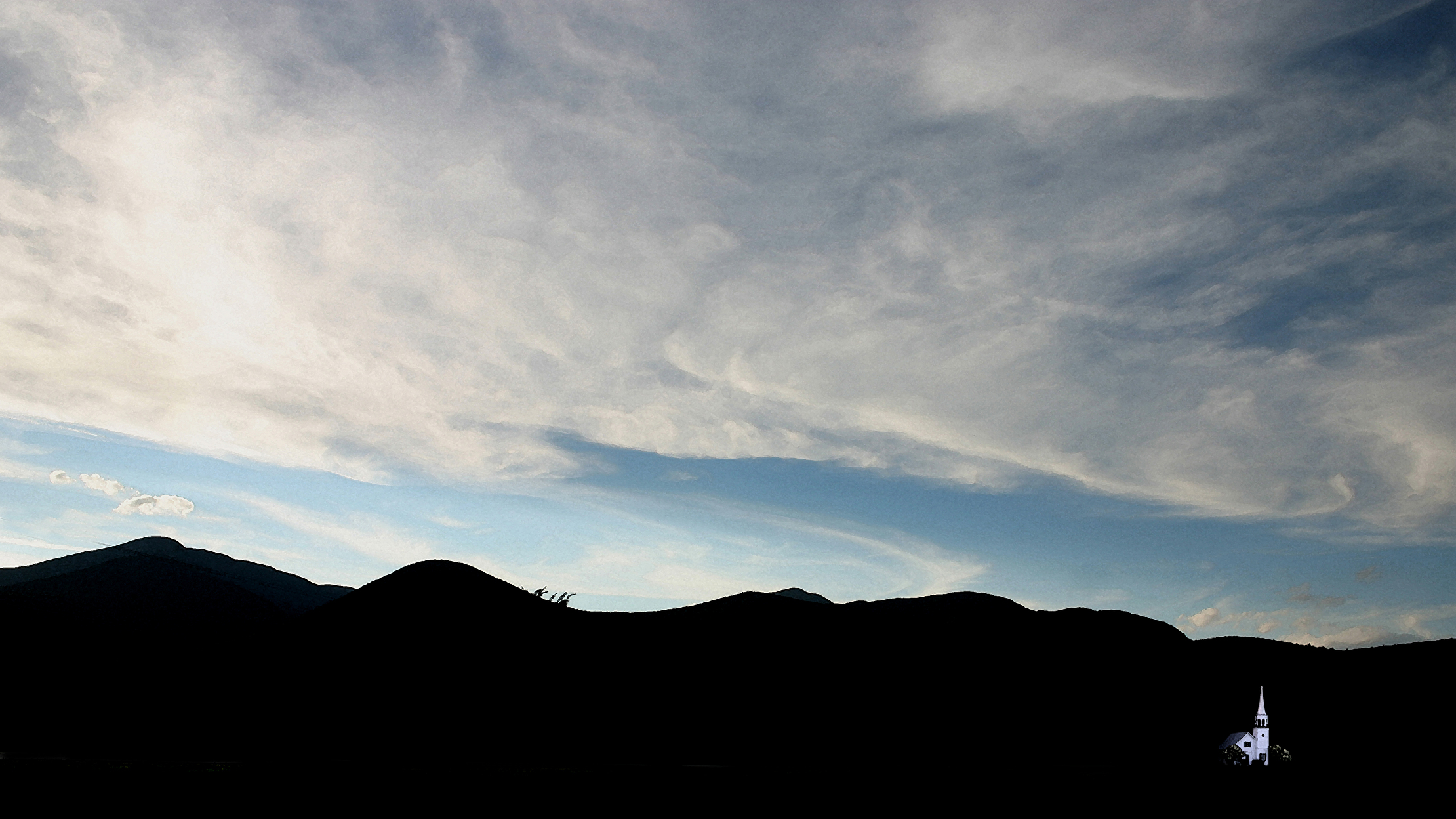
Wonalancet Mindscape
Signed Originals      Open Edition Prints

Kennedy's concerns regarding vaccines have drawn criticism from the medical and scientific communities. While his arguments often center on the need for further research and improved safety measures, his opponents have portrayed him as an anti-vaccine activist. This oversimplification of his position has served to discredit his broader message and hinder meaningful discussion.


Similar to Carson, Kennedy has also faced personal attacks aimed at undermining his credibility and character. Critics have resorted to ad hominem attacks, dismissing his concerns as conspiracy theories and questioning his motives. This tactic seeks to delegitimize his arguments without engaging with the substance of the issues he raises.  Ironically, his campaign for President seems to have forced the debate back into the public arena. 


Additionally, Kennedy has encountered resistance from powerful pharmaceutical companies and their allies. The vested interests of these industries create a significant barrier to engaging in an open and honest debate about the potential risks and benefits associated with vaccines and COVID-19 mitigation measures. Consequently, Kennedy's concerns struggle to gain traction and often face outright dismissal. 

The challenges faced by both Carson and Kennedy highlight the power dynamics at play when established interests are threatened by dissenting voices. The efforts to suppress their messages and discredit their work underscore the potential repercussions of challenging “mainstream” narratives.

The parallels between Carson and Kennedy's experiences indicate that individuals who raise concerns about public health and environmental issues often face systematic attacks intended to silence them. These challenges hinder constructive dialogue and impede the progress of knowledge and societal change.


Moreover, the similarities between these two cases demonstrate the importance of engaging in substantive discussions on complex issues. Instead of resorting to character assassinations or dismissing dissenting voices outright, it is essential to foster an environment that encourages critical thinking, research, and open debate.


The striking parallels between the challenges that Carson encountered and Kennedy continues to encounter, highlight the recurring pattern of opposition faced by those who challenge established interests and narratives. 


The attempts to suppress their work, undermine their credibility, and dismiss their concerns emphasize the need for open and respectful dialogue on complex issues. 
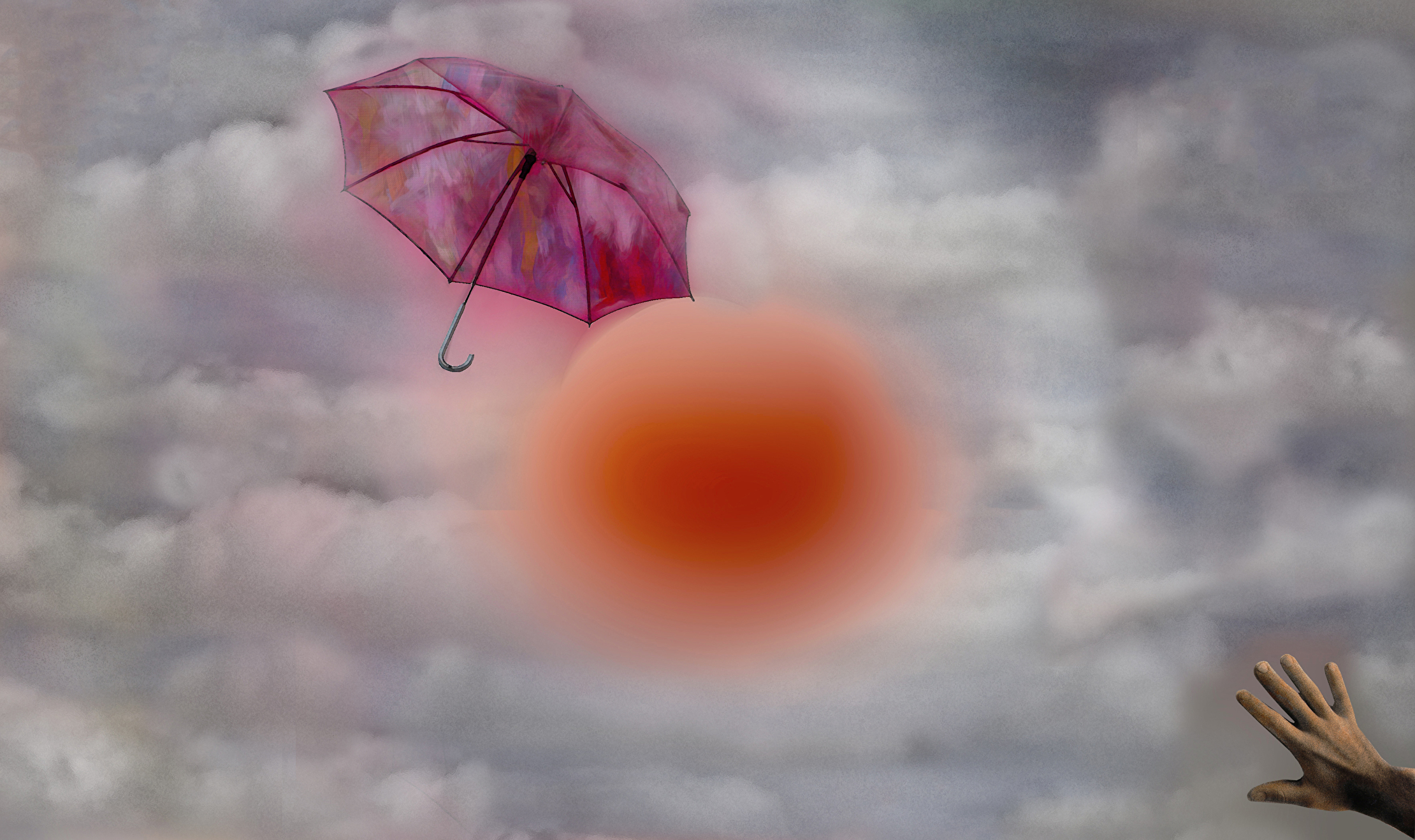


Finding Our Way
Signed Originals      Open Edition Prints


As society confronts new and emerging challenges, such as the environment and public health crises, it is crucial to learn from the experiences of both Carson and Kennedy. By fostering an environment that encourages diverse perspectives and values substantive discussions, we can create a path towards informed decision-making and progress for the benefit of all.


About Wayne D. King: Author, podcaster, artist, activist, social entrepreneur and recovering politician. A three-term State Senator, 1994 Democratic nominee for Governor. His art (WayneDKing.com) is exhibited nationally in galleries and he has published five books of his images, most recently, "New Hampshire - a Love Story”. His novel "Sacred Trust" a vicarious, high voltage adventure to stop a private powerline as well as the photographic books are available at most local bookstores or on Amazon. He lives on the “Narrows” in Bath, NH at the confluence of the Connecticut and Ammonoosuc Rivers and proudly flies the American, Iroquois and Abenaki Flags. His publishing website is: Anamaki.com.


Podcasts are produced at Anamaki Studios in Bath, NH. 

This land lies in N’dakinna, the traditional ancestral homeland of the Abenaki, Sokoki, Koasek, Pemigewasset, Pennacook and Wabanaki Peoples past and present. We acknowledge and honor with gratitude those who have stewarded N’dakinna throughout the generations.
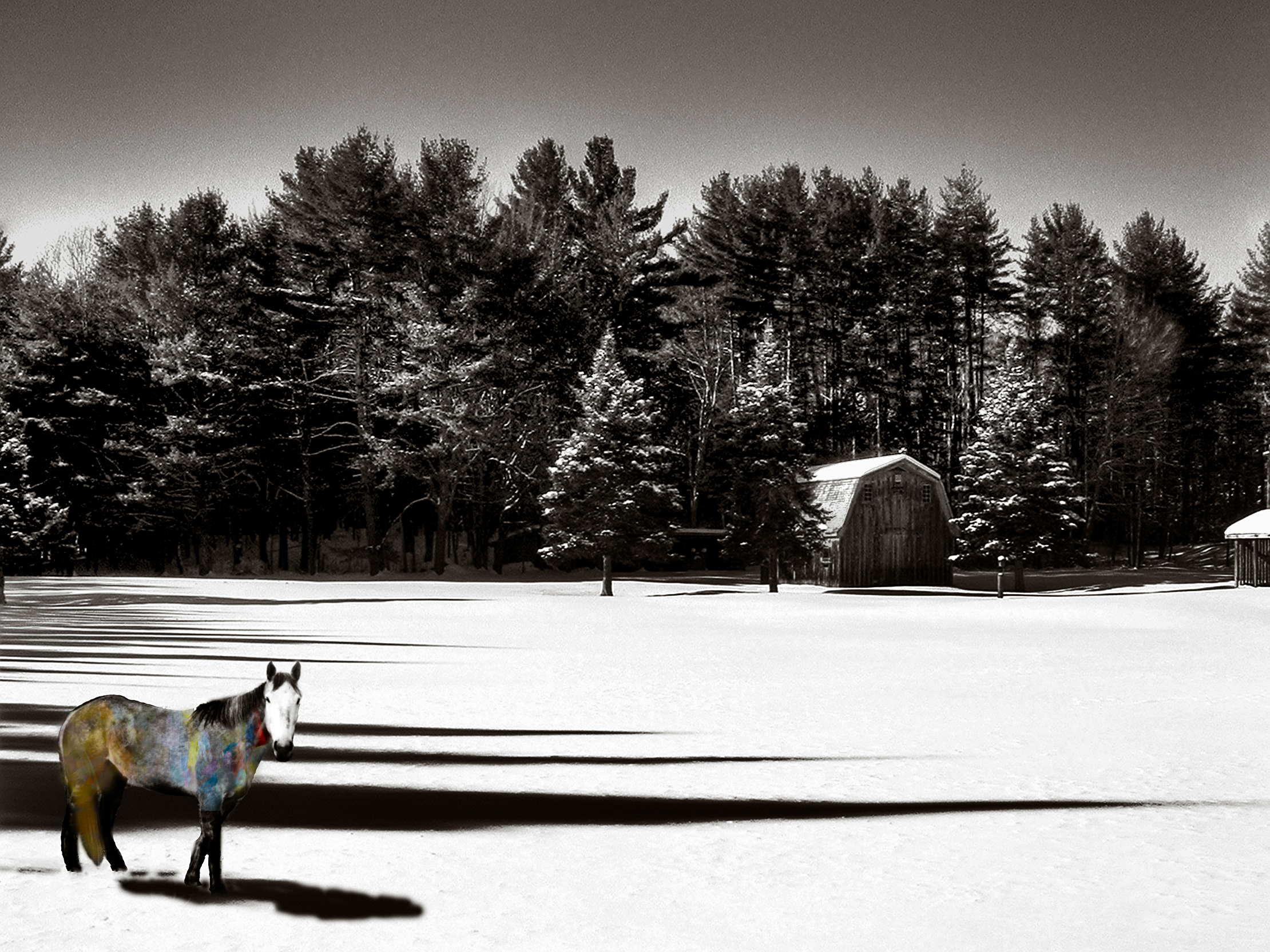




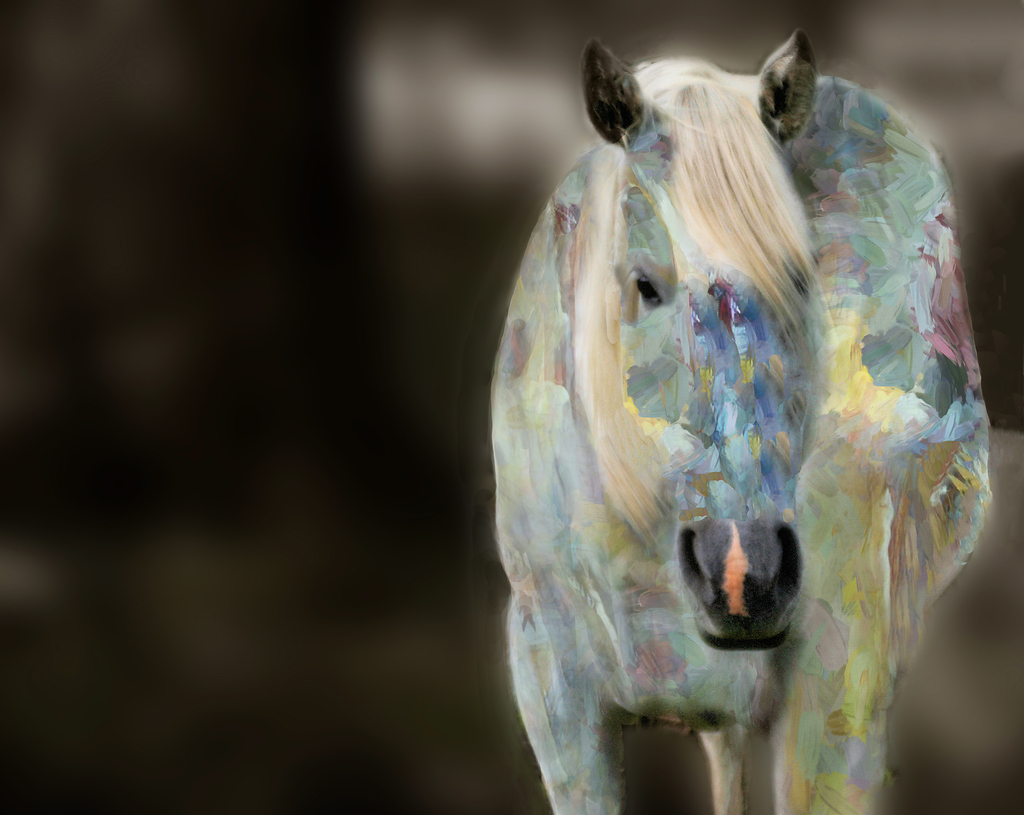
Long Shadows on a Spirit Pony
Signed Original    Open Edition Prints


Highland Storm #1 - Dreams of the Storm
Signed Original Edition of 5
Open edition print - unsigned


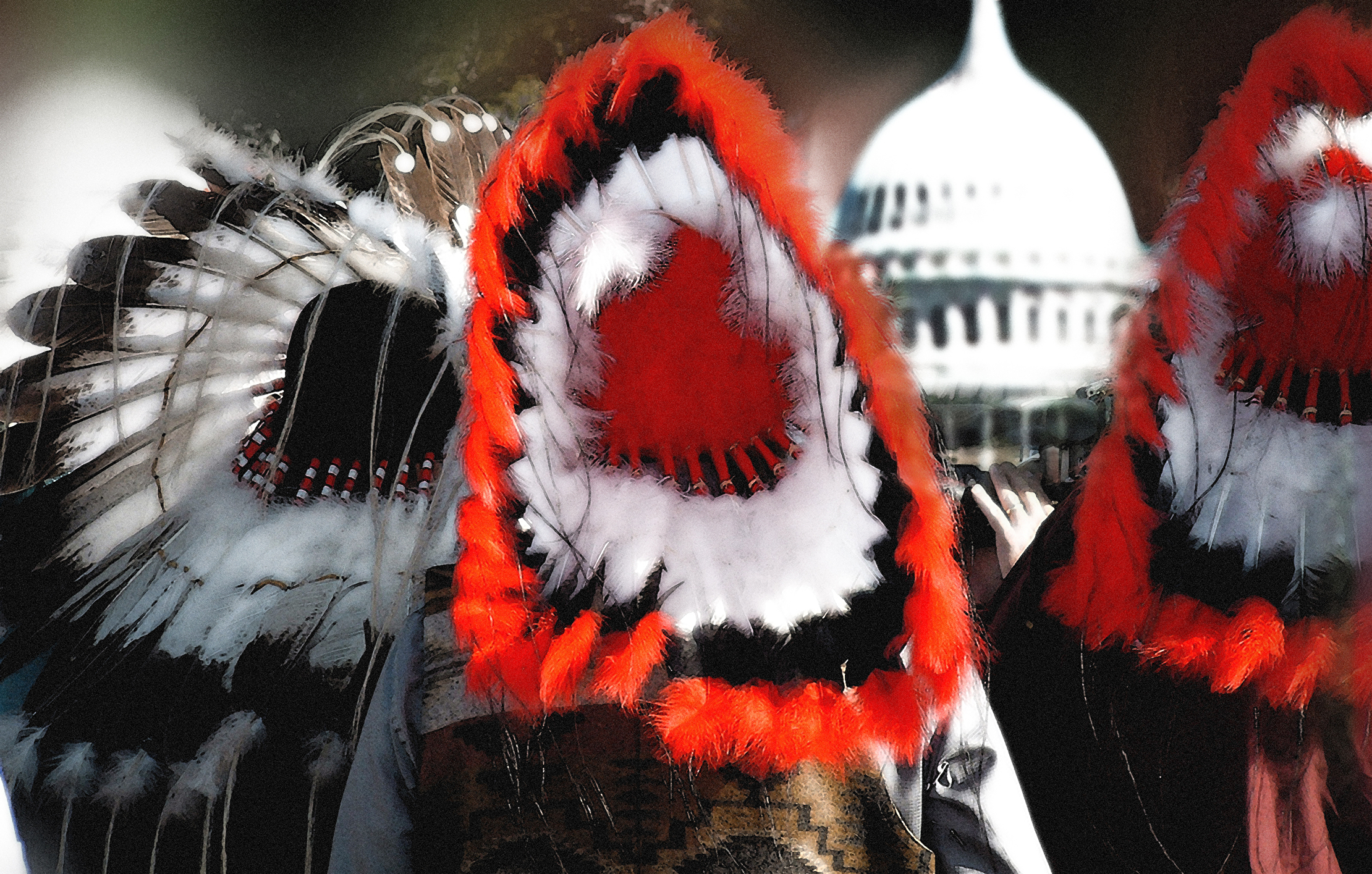
Flowering of Hope at the Pow Wow Originals    Open Edition Prints 


Wednesday, June 21, 2023

What About Democracy? Democrats and Republicans Both Signal their Intentions to Sidestep the Process


Secrets of the Patriot
Signed Original    Open Edition Prints


Democracy is a messy business. We already knew that. 


Even before Newt Gingrich broke the modern-day political process with his 1994 “Contract with America” - waging a contract ON America that has led us in a straight line to the current state of affairs, we’ve had some rocky times. 


During the early years of the Republic, despite the warnings about faction from George Washington and James Madison, the country was quickly drawn into factional conflict and only began to see some level of comity because Dolly Madison made a determined effort to get folks talking with one another again. 


Then in the period leading up to the Civil War when slavery quite nearly broke us. Now today, we are divided between tribal animosities brought on by two political parties more interested in courting the donor class than helping middle-class and working-class Americans.


The principal culprits in this tribal warfare are obviously the Republicans who have gone over the edge and represent a clear and present danger to the Republic. Truth and civility are just not priorities for people like Congressman Jim Jordan, Marjorie Taylor Greene and Lauren Boebert. Unfortunately, the vast majority of elected officials in the Republican Party at the national and state level continue to follow the lead of those who pervert the Constitution and blow through the constitutional norms that are the hallmark of the Democratic system. 


But the Democrats have staged their own assault on the constitutional norms that we rely on as well. The zeal with which they have canceled individuals - like college professors - have turned too many Universities and the public square into a forum for shaming and censoring anyone who disagrees with their perspective on the world. Trading free speech for a culture of trigger warnings, censorship masquerading as public safe space and tribal intolerance.  


For half a century both parties have gradually abandoned the working class and the poor for the comfort and succor of the donor class while the savage disparity of wealth continues to grow. . . an issue that, by the way, none of them has offered a single idea for dealing with. 


The Republicans have contributed to that growing disparity by vilifying the poor and cutting social safety nets while providing tax cuts for the wealthy.  The Democrats have done their part by supporting a welfare bureaucracy that fosters a nanny culture of dependency for a large portion of the population as a means of securing their support as their base. All of this has only deepened the divisions between Americans over race, religion, gender, and culture rather than creating pathways to prosperity, independence, and security that enhance the personal freedom of choice for all of our people, especially marginalized communities. 


Now, with the increasing likelihood that the presidential race will be a rerun of the 2020 election, both parties are raising the drawbridges and creating their individual “cones of silence” intended to short-circuit an open debate about our future. 


The fact is that over 70% of the American public is unhappy with the possibility of a rerun of the 2020 election. Yet both political parties are falling all over themselves to prevent an open and frank debate about our future. 


If the Democrats and the Republicans want to prove their devotion to the American political system and to democracy they can begin by openly debating their opponents.  President Biden and Donald Trump should not hide from the people of New Hampshire and Iowa or any other state by skipping primaries, and refusing to debate, even if their advisors counsel them to do so. 


If our leaders do not have the confidence to engage in open debate on their ideas and policies they do not deserve our votes in either the primary or the general election.  


About Wayne D. King: Author, podcaster, artist, activist, social entrepreneur and recovering politician. A three-term State Senator, 1994 Democratic nominee for Governor. His art (WayneDKing.com) is exhibited nationally in galleries and he has published five books of his images, most recently, "New Hampshire - a Love Story”. His novel "Sacred Trust" a vicarious, high-voltage adventure to stop a private powerline as well as the photographic books are available at most local bookstores or on Amazon. He lives on the “Narrows” in Bath, NH at the confluence of the Connecticut and Ammonoosuc Rivers and proudly flies the American, Iroquois and Abenaki Flags. His publishing website is: Anamaki.com.


Podcasts are produced at Anamaki Studios in Bath, NH. 

This land lies in N’dakinna, the traditional ancestral homeland of the Abenaki, Sokoki, Koasek, Pemigewasset, Pennacook and Wabanaki Peoples past and present. We acknowledge and honor with gratitude those who have stewarded N’dakinna throughout the generations.


Original Signed Art          Open edition


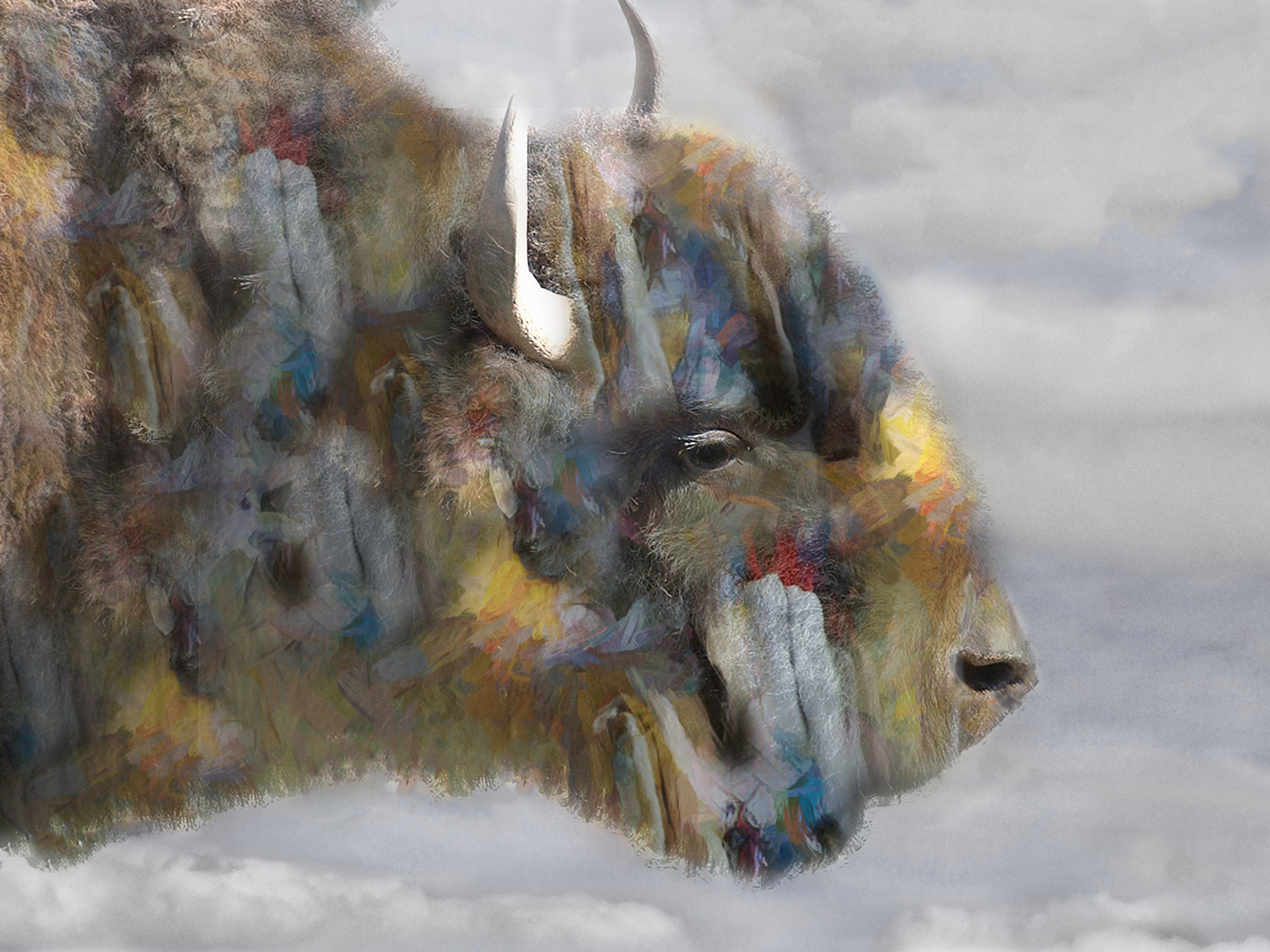
Spirit Buffalo in a Painted Sky Originals    Open Edition Prints


Wonalancet Mindscape
Signed Originals      Open Edition Prints


Our Time Comes
Signed Original 16x24   8x12     Open Edition Prints


I See the Way
Signed Originals      Open Edition Prints


Wind on the Floodplain Forest Floor
Signed Original Prints         Open edition Prints


Spirit Pony in an Old Soul


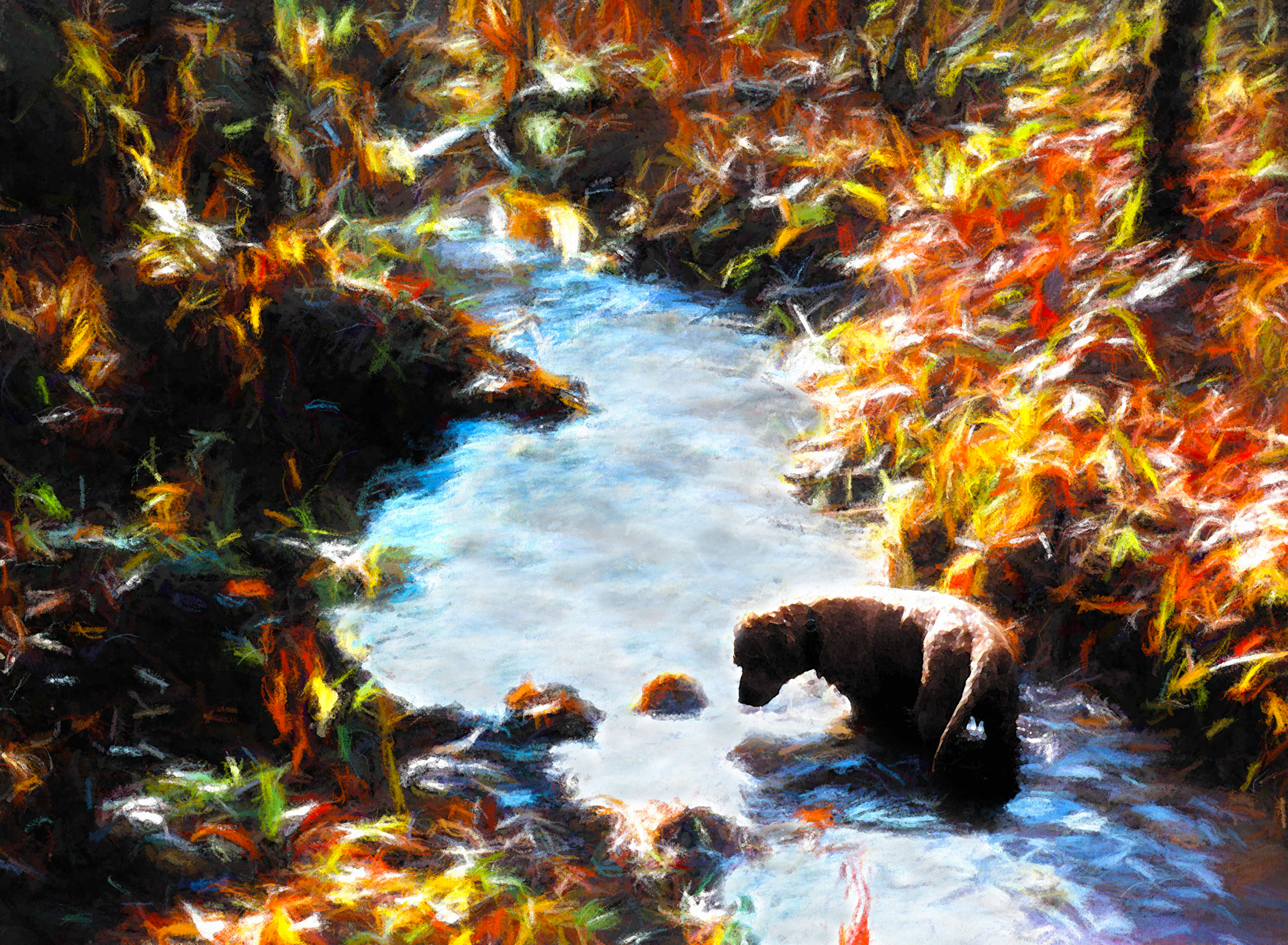
Autumn Aflame
Signed Originals   Open edition prints   


Monday, May 29, 2023

The Aliens Have Landed - Now What? The triple threats of Climate, Inequality and Ai Offer an International Opportunity

 The Aliens Have Landed - Now What?

The triple threats of Climate, Inequality and Ai Offer an International Opportunity


Lately, as Kodi and I ramble along the Connecticut River on our early morning walks I’ve been thinking a lot about Carl Sagan and R. Buckminster Fuller. These two brilliant scientists lived with one foot in the esoteric and cosmic world of science and the other firmly planted here on earth. 


Long before we knew about climate change “Bucky” Fuller was drawing attention to the need for us to live sustainably on our planet. It was Fuller who coined the term “Spaceship Earth”.  


Carl Sagan stressed many of the same things but he was also an activist; a major force in creating the momentum for a nuclear test ban treaty and the ensuing efforts to limit nuclear weapons.   


Carl Sagan was a brilliant astrophysicist, but he was also a novelist. He would be the first person to remind us that the question posed in the title of this piece is the standard plot of nearly every science fiction story or novel ever written about the arrival of aliens on planet earth. 


In the plot, the approach or arrival of alien life has served to create a clarion call for unity among the nations of the world and they rally together to protect what has suddenly become our mutual home. 


Spirit Pony in Smarts Brook Snow Originals 

The Cheyenne, my brothers and sisters from the plains, call her Esheheman . . . grandmother (or Grandmother Earth in the more obvious translation). Every nation of native people have a different name but today - more than ever before -  she is everyone’s grandmother. 


Having lived through a pandemic that claimed the lives of millions of our brothers and sisters, of every color and origin, across the globe over the last few years we have emerged, bent but unbroken, to find a new existential threat added to the climate emergency and the savage wealth inequality that grew worse over the course of the pandemic, creating a triple threat to humanity: Artificial Intelligence. 


The Buffalo Road Originals        Open Edition Prints

Some of us have been trying to raise the profile of AI for a while now, marveling at the possibilities and, at the same time, warning about the dark forces that might also arise from it including the challenges of the gig economy, robotics and some of the other early warning signs that the power of these computer programs may present an existential danger to humanity.  

Until now AI has been seen as a challenge for future generations, but in the past two years, with the advent of Chat GPT and other iterations of similar technology the changes have started to finally capture the attention of both citizens and the media. What right now seems a persistent hum in the cultural background will very rapidly be a virtual roar very soon. 


There are, of course, those who pooh-pooh the concerns expressed about AI, whether the fear is over the loss of jobs, the tendency for technological revolutions to morph into technological arms races, and a rush to the bottom ethical framework attendant to such an arms race. These technophiles claim that every technological leap has required government to follow behind with regulations to clean up the consequences of the change, but AI is different and the dangers are far too great for us to play cleanup in the arena of public policy.


The report that 50% of those who understand the technology best, AI researchers, believe that there is a better than 10% chance that humans will become extinct as a result of our inability to control the effects of AI should give us all pause.  Further, many of the changes to the technological landscape predicted by these same researchers ten years ago are actually occurring up to four times as fast as their original expectations because of the unforeseen impacts created by the cumulative impacts of various dimensions of AI technology that will result in broader and deeper changes at ever increasing speeds. Let me underline that: change occurring 4 times faster than expected is only the beginning. 

You know that a writer is flummoxed when he or she purposely mixes metaphors, but I’m hard-pressed not to say that the snowball of earth-shattering change is rolling downhill and this genie will not be put back in the bottle.

There is no time to waste. It is probably impossible to get ahead of this technology but it is imperative to try.


Every candidate for public office and especially for President should have a detailed plan for how they will lead in the age of AI. 

There will be hundreds of thousands of books, movies, videos, and articles written about the specifics and the nuances of AI. But if we are going to survive there are two things that I believe are essential components to the journey.

First, we must move rapidly to address the challenges of AI on a dual track, nationally within the US but also on a global scale with an International Convention, logically under the umbrella of the United Nations but including a wide range of stakeholders: governments, corporations, researchers, and civil society.


The risks and challenges posed by AI are multifaceted and extend beyond traditional geopolitical boundaries and our approach to helping to chart the future should involve this wide range of stakeholders. 


Organizing such a convention will take time, but in the meantime, we need an "American University" moment to address the most dangerous aspect of AI: Lethal Autonomous Weapons (Robots). 


In 1963 President John F. Kennedy took the bold step of announcing a unilateral nuclear test ban at American University. This speech launched decades of arms control efforts and a developing consensus around the need to step back from the brink of Nuclear oblivion. Today a similar leadership on the subject of Lethal Autonomous Weapons is essential by the President in this area of AI and every candidate should be challenged to answer the question of how he or she would address the challenge. 


If Carl Sagan were still alive he would be urging us to imagine the opportunity of addressing all three of these existential challenges as one, using Ai as the organizing principle for solving the challenges of climate change and wealth disparity. He would smile and say “just think of what we could achieve on this pale blue dot. . .” 


Pumpkins and Wash Original               Open Edition Images


About Wayne D. King: Author, podcaster, artist, activist, social entrepreneur and recovering politician. A three-term State Senator, 1994 Democratic nominee for Governor. His art (WayneDKing.com) is exhibited nationally in galleries, and he has published five books of his images, most recently, "New Hampshire - a Love Story”. His novel "Sacred Trust", a vicarious, high-voltage adventure to stop a private powerline, as well as the photographic books are available at most local bookstores or on Amazon. He lives on the “Narrows” in Bath, NH at the confluence of the Connecticut and Ammonoosuc Rivers and proudly flies the American, Iroquois and Abenaki Flags. His publishing website is: Anamaki.com.


Produced at Anamaki Studios in Bath, NH. 

This land lies in N’dakinna, the traditional ancestral homeland of the Abenaki, Sokoki, Koasek, Pemigewasset, Pennacook and Wabanaki Peoples past and present. We acknowledge and honor with gratitude those who have stewarded N’dakinna throughout the generations.


Notes and Links:


If you wonder about our capacity for addressing this challenge in the current partisan atmosphere in congress you only need to watch the hearing of the Senate Judiciary Committee on the subject of AI held recently to see that this is a matter taken seriously by members of both political parties. Watching this hearing provides a view into how Congress should function.


https://www.youtube.com/watch?v=P_ACcQxJIsg&t=8529s


Friday, May 26, 2023

Don’t Sell Bobby Kennedy Jr. Short - Mainstream media does a great disservice to us all by its censoring of RFK Jr.


Twitter

I know, I know, a lot of my friends and erstwhile supporters are going to have what my grandmother would have termed “a conniption” when they see this headline. The long and short of it is this: I don’t care. As Bob Dylan reminded us "the hour is getting late."


For three decades Bobby Kennedy has fought to clean up our environment, to take on the corporate forces that have given us 50 years of growing income disparity, hollowing out the middle class and seeing lifespans retreat. For three decades he has pushed back against efforts by the fossil fuels industry to continue to deny climate change and to capture government agencies on behalf of their corporate benefactors. 

Flowering of Hope at the Pow Wow Originals    Open Edition Prints 

On the two great existential problems of our times, he has been on the frontlines. Not running for office, not posturing, but rolling up his sleeves and working for a better world, leading a purposeful life and dealing with his own dreams and demons.

He’ll be the first to tell you that he is a flawed human being, but are we not all? Yet his candor is refreshing and much of what he says about the dangers to democracy from our corporate media; an economy defined by socialized risk for the wealthy and savage capitalism for the poor, working and middle classes; and agency capture by corporate interests are issues that are a growing cause for alarm for many of us. 

Spirit Pony in Smarts Brook Snow Originals 
Of course, there is the question of his response to the Covid 19 pandemic and the linkage between vaccines and illnesses like autism. I have to admit to having some concern about all this but let’s face it, US leadership under both Donald Trump and Joe Biden have been no paragon of consistency and virtue  during the pandemic. We were all operating by the seat of our pants.
Most of us knew that Donald Trump was unmoored - every time he opened his mouth that was clear, but he was not alone. When it came to guesswork, the difference between Trump and the Biden Administration was a difference of degrees.  Let's begin the healing process by cutting everyone some slack, including ourselves.  But we should at least start with one verifiable set of facts that almost everyone can concur on: We are 4% of the world’s population yet we have had the highest percentage of deaths (1,163,294 deaths to date); our kids have experienced a massive educational hiccup, and the science has been a moving target, even today . . .  Not a record to hang anyone’s hat on.

Yet, what is even more important - and far-reaching - than individual points of agreement or disagreement on this or any other issue, is the broader question of free speech and our access to differing perspectives.

Justice Louis Brandeis said that “sunshine is the best disinfectant”. . . that the remedy for incorrect, incomplete, or false speech is more speech, not less. 


We create institutions to act as a referee on speech - to exert a moderating influence and to act as a source of a collective “constitution of knowledge” as author Jon Rauch calls it. But in an era where too many institutions have been captured by corporate interests or political ideologies, the default must be more speech - until we have successfully wrested these institutions from their corrupting influences.


For example, time after time I have heard  RFK’s position on vaccines characterized as “vaccine denial” yet a more careful search of the record - which is not easy because he has been silenced so thoroughly -  is not that he opposes them but that we are not taking sufficient steps to ensure their safety and provide alternative pathways to those who object to them. This is hardly a position that qualifies as far outside of the mainstream.


Yet, instead of encouraging a rigorous debate on the entire range of his positions he was effectively shunned by the mainstream media, and banned from twitter and other social media. The result was that the very entities that should have been standing up for free speech were complicit in denying all of us - both those who agree and disagree - the opportunity to participate in a rigorous debate that would be far more likely to lead us to what can be considered “currently accepted truth” in an atmosphere where the ground seemingly changes on a daily basis.  


Now I have to admit my own complicity here. For the past two years I have had a growing sense of discomfort about the ease with which many of us - including myself - have rationalized a lax commitment to the protections of free speech in the face of the pandemic. Even the banning of Donald Trump caused some pangs of conscience in the back of my mind. I regret that I did not stand forcefully enough for free speech, I will not make that same mistake again.


Like a large percentage of Americans, I am now among the 70+% who dread the choice we might face in the upcoming election and the “long-tail” political effects.


Colors Over Franconia Notch

We quite nearly lost our democracy to the slow-motion car crash that was Donald Trump. Joe Biden is a decent man and a skilled politician but are he and Kamela Harris equal to the challenge of leading us forward toward a peaceful revolution, because that is - in fact - what we need to halt this descent into a totalitarian dystopia and climate catastrophe? It’s too late for incrementalists. Millions of Americans went from voting for Barack Obama in 2008 and 2012 to Donald Trump in 2016 and 2020. They are clearly not racist, nor are they unmoored. They are, quite simply, desperate. Desperate for hope and change; desperate to believe again in the American experiment. 


In the Democratic primary process, the only way for the President to demonstrate his vision - and his commitment to it - is for him to compete in the primary process and to debate with Bobby Kennedy and Maryanne Williamson - if she demonstrates sufficient support.


Time is short and of the essence. The existential challenges of climate change and wealth disparity hover over us like the sword of Damocles. Give me a candidate who is not afraid to use the words Love and Peace in a speech, who challenges us to believe in ourselves again, who has the courage to take risks for these things by reaching out to all Americans who long for a leader who will go beyond dogma and lay out a path forward to uniting us. A path that will restore the American promise for us and the American example for the World.   


If Bobby Kennedy Jr. has even a small measure of the compassion and vision of his father, and I think he does, Joe Biden may be in for the fight of his political life.

Throw in a genuine and full-throated committment to free speech and the first amendment and we won’t need to choose between the lesser of evils when we cast our vote for President.

About Wayne D. King: Author, podcaster, artist, activist, social entrepreneur and recovering politician. A three-term State Senator, 1994 Democratic nominee for Governor. His art (WayneDKing.com) is exhibited nationally in galleries and he has published five books of his images, most recently, "New Hampshire - a Love Story”. His novel "Sacred Trust" a vicarious, high-voltage adventure to stop a private powerline as well as the photographic books are available at most local bookstores or on Amazon. He lives on the “Narrows” in Bath, NH at the confluence of the Connecticut and Ammonoosuc Rivers and proudly flies the American, Iroquois and Abenaki Flags. His publishing website is: Anamaki.com.

Produced at Anamaki Studios in Bath, NH. 
This land lies in N’dakinna, the traditional ancestral homeland of the Abenaki, Sokoki, Koasek, Pemigewasset, Pennacook and Wabanaki Peoples past and present. We acknowledge and honor with gratitude those who have stewarded N’dakinna throughout the generations.


Notes & Links

E127: Presidential Candidate Robert F. Kennedy Jr. All In Podcast

348K subscribers


Fact Checking RFK Jr on All In Podcast | I break it down


"Our Environmental Destiny" - Robert F. Kennedy, Jr.


Tuesday, April 18, 2023

Time to Tell a Different Story on Inflation & Debt? Modern Monetary Theory offers an alternative but Politicians and Policy Makers Are Ignoring it.


Butternut Mist Originals        Open edition Prints


 Time to Tell a Different Story on Inflation & Debt? 

Modern Monetary Theory offers an alternative but Politicians and Policy Makers Are Ignoring it.


Most of the snow has finally melted here along the banks of the Connecticut River. Soon the leaves of skunk cabbage, false hellebore and wild leeks will begin poking through the leaves. Dried grasses and dead stalks of bamboo that occupy the interstices between the oaks, the silver maple, and the other hardwoods of the floodplain forest.  The Bald Eagles are yet to begin their daily flights along the river byway, but the Canada geese have descended in droves into the valley, their sights and sounds occupying most of the airspace on the floodplains and marshes as Kodi and I take our daily walk.


Crimson Spring

These waters, the Connecticut River running north to south and the Ammonoosuc flowing in from the east have stories to tell dating back millennia, even before my Abenaki ancestors and then later the Voyageurs plied their ways. There were, of course, footpaths that followed the rivers and joined them, but the main form of transport for those long-ago indigenous people and the French Canadian immigrants the rivers were the most effective route for transporting goods.


The pre-contact population of Abenaki (also called Wabanaki) is estimated in the range of 80,000 - 145,000, spread through the area, then known as N’dakinna and now including parts of Maine, New Hampshire, Vermont, and Quebec. A series of plagues in the early 1600s, unmaliciously introduced by European traders and settlers, who simply spread their own diseases into a population that had no natural immunities began a process that decimated the population. Later, disease as an instrument of war would add insult to injury; human-induced with malice and aforethought. Lord Jeffrey Amherst, for whom the Massachusetts College is named, sent wagonloads of smallpox-infected blankets to Abenaki Villages in an effort to finally exterminate the remnants of the Abenaki after years of other European plagues had already weakened Native tribes all over the country. 


But Amherst was telling himself the wrong story about the Abenaki and their neighbors in the Iroquois Confederacy. The story he, and most of his contemporaries, told was of a primitive race of savages gathered in villages like Saint Francis, Quebec. Despite the fact that both nations had been forming confederacies, governments, and traditions far longer than the British or the French. 


He also deluded himself into believing that he could wipe out the Abenaki by focusing on a few villages in Quebec where many - but by no means all - of the Abenaki people had fled from the colonists as they ravaged their way north from Massachusetts and Portsmouth. 


That story, that the Abenaki people had all fled to Quebec has been revealed to be a wishful myth because today we know that a large portion of the Abenaki simply melted into the background all over northern New England. 

Like my grandfather, whose father Simeon Gideon Roi was Iroquois and his mother, Emelia Bedard Roi, a full-blood Abenaki, they hid in plain sight. During a long life, Emelia gave birth to 24 children as they moved quietly back and forth between Saint Francis, Quebec and Whitefield, New Hampshire. 19 of those children lived to adulthood and as they became adults they too quietly established their own lives, some with the surname King, others Roy and perhaps even a few maintaining the Roi moniker. 


Though I don’t know more than I was told by my own father and one living son of Simeon and Emelia - my uncle Joe, who died 20 years ago - I have these two sources that confirmed that Simeon and Amelia warned them to cling to their heritage but to keep it a secret, in order to fit in. 


On the Wings of Eagles


Today, the descendants of the Abenaki who wove their complicated lives into the American fabric, while still clinging to their heritage are fighting for recognition in Vermont and New Hampshire. Their success in assimilating, ironically the very thing that colonists and political leaders had espoused as their goal for native people, has created a barrier to their recognition as an official indigenous nation. Yet, still they persist. No amount of government intransigence will prevent the Abenaki from asserting their culture and traditions, whether or not they are recognized “officially”. 


The changing nature of the narrative - the stories we tell - about our Native American brothers and sisters have evolved over the years and today we proudly point to the Iroquois Confederacy as a source of the wisdom that helped lead our founders to a constitutional government (if we can keep it!*) and established the environmental ethos of all Native people as an existential imperative in the age of climate change.  


The great physicist Stephen Hawking, in a 1999 speech celebrating the new Millennium at the White House said this: "The greatest enemy of knowledge is not ignorance, it is the illusion of knowledge. . . . As scientists, we believe that any theory is provisional; that it must be constantly tested against observations; that we must revise it or abandon it when the observations demand it. But non-scientists believe that many theories are certain: the theory of evolution, the Big Bang theory, and so on. Unfortunately, common sense is just another name for the prejudices that we have acquired by the age of eighteen."


Mark Twain is said to have put it a bit more simply: "It ain't what you don't know that gets you into trouble. It's what you know for sure that just ain't so."


We humans live our lives bound by a casually woven fabric of narrative. These stories that we tell ourselves are both a source of stability and a prison of imaginary infallibility. They provide structure to our lives, yet, at the same time, to paraphrase Twain, sometimes they just ain’t so. 


Right now we have hundreds of politicians running around like Chicken Little bemoaning the problem of inflation. 


Without a doubt, inflation - occurring worldwide - is a serious problem. The day-to-day difficulty that families face, particularly middle and lower-income families, are a very real economic threat to the stability of families. 


How we confront inflation is another of those stories that we have been telling ourselves for nearly 50 years. The ham-handed and seemingly dull instrument of interest rates has become the commonly accepted methodology for taming inflation. But is this simply another story we have been telling ourselves that, to quote George and Ira Gershwin, “ain’t necessarily so”? 


After all, nearly 50 years of Nobel-winning work in economics has come and gone with little to no appreciable change in the way the Fed approaches the challenges of inflation. 


The Federal Reserve, also known as the Fed, began using interest rates as a tool to control inflation in the early 1980s. At that time, inflation in the United States was high, reaching double digits in some years, and the Fed decided to take action to bring it down.


In October 1979, Paul Volcker became the chairman of the Federal Reserve, and he implemented a policy of raising interest rates to combat inflation. The Fed raised interest rates sharply, which made borrowing more expensive and slowed down economic activity. This policy, which became known as "monetarism" or "tight money policy," was aimed at reducing the money supply and curbing inflation.


Borne on a Beam

By the mid-1980s, inflation had come down, and the Fed began to lower interest rates again. But at least half a decade of economic pain was required, with no real evidence that it had been the tight-fisted policies that had caused inflation to decline.  


Since then, the Fed has continued to use interest rates as a “tool” to manage inflation and other aspects of the economy, such as unemployment and economic growth. Yet, most economists will tell you that the way that the Fed approaches using interest rates to tame inflation is little more than the manifestation of a hunch, a coin flip, masked in a torrent of economic jargon designed to make us think that they are in possession of the secret keys to the kingdom of inflationland. 


Is there another story that we should be telling ourselves about taming inflation? 


Indeed there is. It is a school of economic thought called Modern Monetary Theory, also known as MMT. It’s been around for thirty years now but may finally be on the verge of getting its day in the sun.


Unlike the monetarist policies of the Fed, MMT does not rely on a single dull instrument to tackle the problems associate with Inflation. In fact, it is a far more nuanced and comprehensive set of theories that involve a more holistic view of our economy and the various factors contributing to inflation. 


Ironically, addressing inflation using the tenets of MMT is also potentially far less painful - particularly for middle-income Americans and the poor. 


Yet it faces pushback from both of the major political parties. Not because it is any less credible than Monetarist theory but because each party - in their own perverse way - see it as a threat to their electability, particularly their ability to motivate their respective bases.


In fact, a cynic might say that both parties have long embraced the idea that deficits are not necessarily bad, they just keep it a closely guarded secret from the public. At least publicly, they have bought into a 50-year-old story that just isn’t so and, from their perspective, it seems to be working for them. 


Unfortunately, for the vast majority of us not only is it not working, it works against us, benefiting the well-heeled and harming those at the bottom of the economic ladder.


The foundation on which MMT rests is a fascinating one: that in a national economy - unlike a household budget - deficits are only important as one component of the broader economic picture, particularly in an economy that has a “fiat currency”. A fiat currency is one that is controlled and printed exclusively by its own country. 


Furthermore a “deficit” reflects only one side of an economic equation and for every deficit there is an accompanying “investment” or “surplus”. Yet we rarely take that side of the economic equation into account. For example, Eisenhower’s Interstate Highway system was built with deficit spending, yet the economic gains from it accounted for far more than was spent to build our modern highway system. 


One of the most comprehensive cost-benefit analyses of the system was conducted by the Federal Highway Administration (FHWA) in 1997. The study found that the benefits of the Interstate Highway System far outweighed its costs. The benefits included reduced travel time, improved safety, increased economic productivity, and greater mobility for people and goods.

The FHWA study estimated that the system had generated $6 in benefits for every $1 spent on construction and maintenance. The study also found that the Interstate Highway System had contributed significantly to the growth of the U.S. economy, with estimates suggesting that it had increased national productivity by between 0.5% and 1% per year.


Every introductory economics course, for the last 50 years, lays the lion’s share of the blame on the specter of inflation attributed to the federal deficit. Yet, in all but 2 of those 50 years deficit spending has been the rule. The few periods of high inflation are more closely tied to the cost of energy and, recently,to disruptions of the supply chain during the Covid-19 epidemic. 


For nearly 50 years, two economic realities have dominated our lives. The first is a growing, and now savage, inequity of wealth; and the second is consistent deficit spending. These two realities should cause us to question the story behind the story. 


The Whisper of Wind
Open Edition

So why has it taken so long for MMT to be considered serious economic policy? 


The problem is not only the story we have been telling ourselves about debt, deficits, and inflation. It is also the political rhetoric from both the left and the right that has infected our national dialog. Every time the Republicans pass a tax cut, or increase military spending without regard to the deficit, the Democrats jump on it like a duck on a june bug; claiming that we’re stealing from our children’s future. When Democrats pass legislation, like the recent Inflation Reduction Act, the Republicans cry foul and leap to the conclusion that we now need to re-examine every entitlement program to make up the deficit. These things may be great for riling up the base but the only deficit that matters in this is a policy deficit. . . a statesmanship deficit. 


We all grew up with Presidents, and politicians of all kinds mouthing the myth that government budgeting should be run like a family budget. But the federal budget is nothing like a family budget. Costs can be spread out over generations, benefits can quickly accrue that outweigh the investment.  Families can’t just print money if things get tight but the Federal Government has no such problem.  


There is nothing fundamentally wrong with government running a deficit. What matters is whether deficit spending enhances our economy and our quality of life. 


It’s time to tell a different story. 


Notes & Links

Stephanie Kelton: The big myth of government deficits

https://www.youtube.com/watch?v=FATQ0Yf0Fhc

How do we pay for it? with Stephanie Kelton & Fadhel Kaboub

https://www.youtube.com/watch?v=owDZYFpeOI0&t=2460s


More spending, on the right targets, is a solution to Inflation.

https://www.youtube.com/watch?v=U5EIq_FrzEU


About Wayne D. King: Author, podcaster, artist, activist, social entrepreneur and recovering politician. A three-term State Senator, 1994 Democratic nominee for Governor. His art (WayneDKing.com) is exhibited nationally in galleries and he has published four books of his images, most recently, "New Hampshire - a Love Story”. His novel "Sacred Trust" a vicarious, high voltage adventure to stop a private powerline as well as the photographic books are available at most local bookstores or on Amazon. He lives on the “Narrows” in Bath, NH at the confluence of the Connecticut and Ammonoosuc Rivers and proudly flies the American, Iroquois and Abenaki Flags. His website is: Anamaki.com

From "Screen Door" to "String Too Short to Keep"

  From "Screen Door" to "String Too Short to Keep"  A poetic journey across time and space in New Hampshire with Poet El...