Friday, September 15, 2023

Staying Safe in the Waters of New Hampshire

 Staying Safe in the Waters of New Hampshire

Closely supervise everyone, especially children, and the joys of the outdoors will be your treasured memories for life. 


Wayne D. King


As a guide in the White Mountains in my first life I spent a great deal of time worrying about the safety of my charges. Of course, there are plenty of dangers to be aware of when you are hiking, climbing or paddling in the outdoors but few present the immediate dangers to people more than those associated with water, specifically rivers but also lakes, ponds and oceans.


It may be because I read InDepthNH.org daily, but there seem to have been more than the usual number of accidental drownings this year. 


Perhaps it’s because some of them occurred at places close to my heart, often places where I have been involved, or witnessed, a few close calls myself over the years that I feel compelled to offer some advice and observations to help you stay safe in the waters of New Hampshire.


Although summer is nearly over, it could be said that this shoulder season is the most dangerous of all. The waters are growing colder and cold water leads to exhaustion and panic of swimmers much more quickly than warmer waters. Sunny days may be deceiving as well because we tend to dress (or undress as the case may be) for the day’s temperature not the water temperature and an accidental fall into the water can cause a tragedy for an unexpecting victim. 


The rainy nature of the weather this summer has also led to much higher water levels which is particularly dangerous in swiftwater areas, like Franconia Falls where one death recently occurred. 


My first water rescue, according to my cousin Mark, was at the ripe old age of 7 when I was the first to notice that he was in distress at the Eddy on the Mad River. Mark still claims that I saved him that day, but my actions probably were more a matter of drawing the adults attention to the emergency than anything else. 


Later on, those efforts were more serious. I did a quick count in my head as I was writing this piece and believe that I can safely say that I have been involved in at least ten incidents, at Franconia Falls alone, over the years, where a drowning - and in one case a multiple drowning - was averted because we were prepared for an emergency and were able to respond in a matter of moments to it. 


  1. Learn to Swim


So let’s start with some general advice from our friends at the American Red Cross. No need to reinvent the wheel when it comes to succinctly hitting the high points. The Red Cross has prevented hundreds of thousands of tragedies, perhaps more, over the years through their sound advice and rigorous swimming standards and training programs. 


You may be one of those rare parents who really can teach their children to swim and swim safely but the likelihood that you are substituting ego for good judgment is, alas, quite high. Ahem, especially if you are male. It’s purely anecdotal but I find that the ego issue among the male population is especially high. Sorry, not sorry. I’ve been certified at every level with the American Red Cross and I still would not have tried to train my son, nieces or nephews to swim. Take a quick look at the requirements for the various levels of competency if you still think you can do this yourself.


I recently spoke with Frank Hubbard, who was my swimming instructor as a young boy, about the program he established at Mowglis, School of the Open, a summer camp for boys on Newfound Lake. According to him, Frank followed the ARC program to the letter in those first few years and has never seen reason to change that practice even though he taught swimming at every level, including college, over the years. 


At the very least make sure that the instructor and program you choose to teach you or your children is certified by the Red Cross.


A Home Among the Lupine
Signed Originals.    Unsigned Open Edition Prints


  1. Employ layers of protection. 

This is more a theoretical construct than a fashion statement. 


Begin by having the most advanced swimmer and responder do a preliminary scouting of the water. This scouting of a river or a beach presents a powerful teachable moment as well; allowing the leader to point out hazards and potential responses to them. This is especially important to those who are canoeing or kayaking on swiftwater or swimming in areas like Franconia Falls. 


Employ barriers to prevent access to water where appropriate. Whether you are on the beach or rocks, place adults between children and water and always be clear about which adult is “on watch” at any particular moment. Of course, make it clear to children that approaching the water should only be done with an adult. 


Use life jackets liberally. We all know that life jackets are required in a boat of any kind, even here in the “live free or die state” legislators have had the good sense to require this. But in the ocean and especially in swift water areas they should be a part of the swimming couture for non-swimmers or beginning swimmers. Call it the belt and suspenders approach, accidents are almost always a result of a careless moment gone awry. If a child, or a non-swimming adult has a life jacket on at the very least moments are added to the opportunity for response. 


My good friend and Whitewater Hall of Famer, Charlie Walbridge, taught me that if you capsize a boat in whitewater you get behind the boat, feet first and never try to stand - but ride the rapid out. Abandon the boat if there's any question, your life is more important than your boat.


Employ the use of emergency equipment. I note that I often see the adult “lifeguards” for camps, schools or youth groups, these days, bearing brightly colored life belts that can be thrown to a struggling swimmer. I would invariably pack a lightweight safety rope in my backpack that can also be tossed to a struggling swimmer. In a pinch, I’ve even found a long branch that can extend the length of your reach. All of these things employ the old lifesaving mantra:  “reach, throw, row, go” outlining the hierarchy of emergency response that maximizes safety and minimizes the personal risk of adding yourself to the mix of victims in crisis.



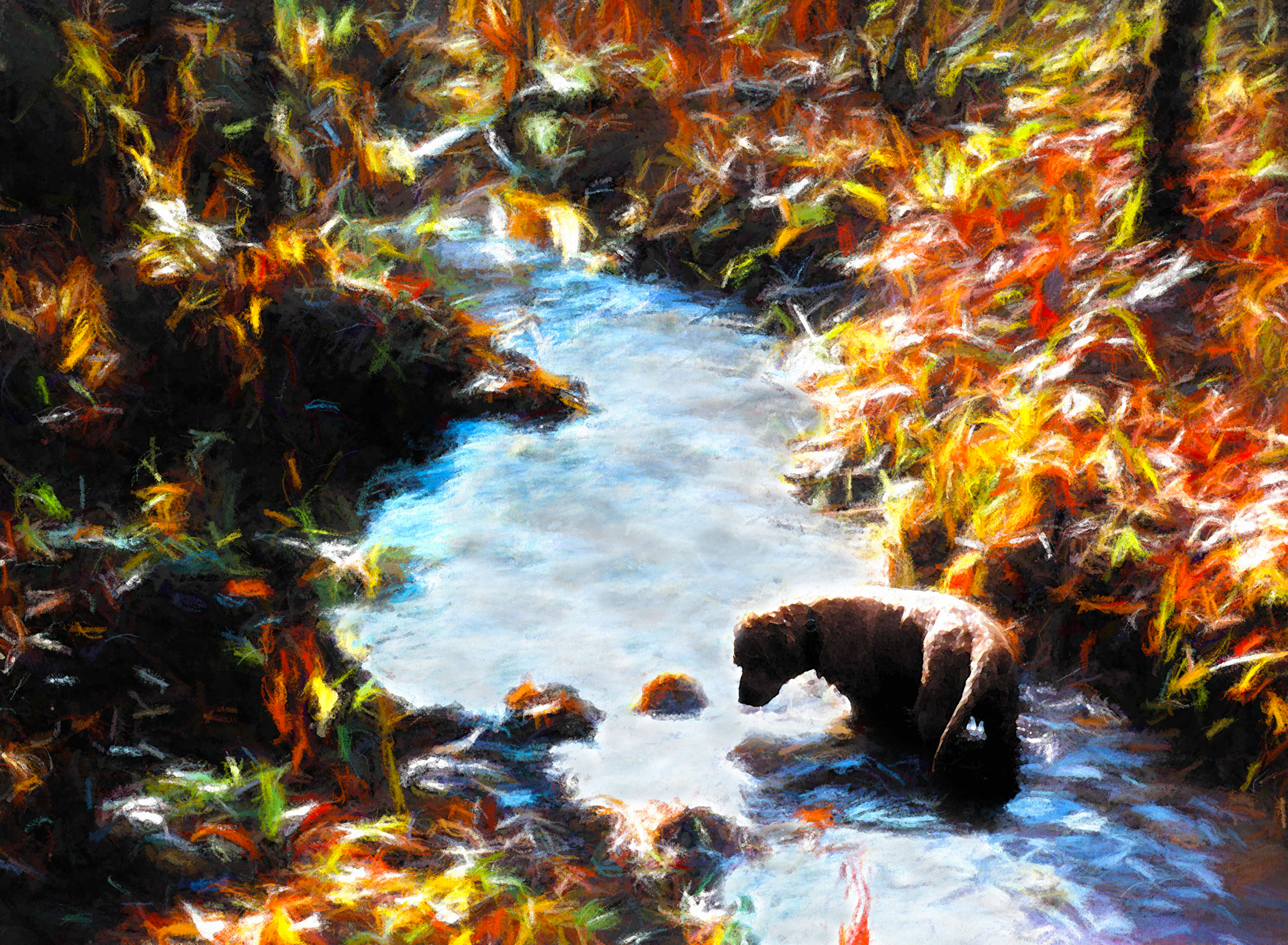
Autumn in a Blue Pool -
Signed Original
.  Unsigned Open Edition Prints


  1. Finally, know what to do in a water emergency – including how to help someone in trouble in the water safely, call for emergency help and CPR. CPR does not take long to learn and every adult should know it. I have used it 5 times in my life and it made the difference between life and death in every case.


Autumn in a Blue Pool -
Signed Original
.  Unsigned Open Edition Prints


Every child should learn to swim and if you are swimming in an area where special conditions exist, like rip tides in the ocean, pay attention to signage and take it seriously. 


There are few things in life more thrilling than swimming in rivers. Riding the water sluice of Franconia Falls over the falls and into the deep pool below is an unforgettable life experience.  Taking a little time to make sure that you are safety conscious will make the difference between a lifelong memory and a tragedy. 


Links:


Find Red Cross Swimming instruction near you.

https://www.redcross.org/get-help/how-to-prepare-for-emergencies/types-of-emergencies/water-safety/water-safety-training-provider.html


About Wayne D. King: Author, podcaster, artist, activist, social entrepreneur and recovering politician. A three-term State Senator, 1994 Democratic nominee for Governor. His art (WayneDKing.com) is exhibited nationally in galleries and he has published five books of his images, most recently, "New Hampshire - a Love Story”. His novel "Sacred Trust" a vicarious, high voltage adventure to stop a private powerline as well as the photographic books are available at most local bookstores or on Amazon. He lives on the “Narrows” in Bath, NH at the confluence of the Connecticut and Ammonoosuc Rivers and proudly flies the American, Iroquois and Abenaki Flags. His publishing website is: Anamaki.com.


Podcasts are produced at Anamaki Studios in Bath, NH. 

This land lies in N’dakinna, the traditional ancestral homeland of the Abenaki, Sokoki, Koasek, Pemigewasset, Pennacook and Wabanaki Peoples past and present. We acknowledge and honor with gratitude those who have stewarded N’dakinna throughout the generations.



Wednesday, June 28, 2023

Courage to Face the Fire: Rachel Carson and Robert F. Kennedy Jr. in the Face of Public Backlash

 “Who is more humble? The scientist who looks at the universe with an open mind and accepts whatever the universe has to teach us, or somebody who says everything in this book must be considered the literal truth and never mind the fallibility of all the human beings involved?”

― Carl Sagan


Lupine Wind in a Bird's Paradise
 Signed Original    Open Edition Prints


Courage to Face the Fire

Rachel Carson and Robert F. Kennedy Jr. in the Face of Public Backlash


One of the consistent images invoked in this column is of our periodic encounters with American Bald Eagles that Kodi and I are privileged to experience on our regular meanderings here along the Connecticut River.

Although it’s quite likely that my Abenaki and Iroquois ancestors saw many more than we are fortunate to see these days, we see them today thanks, in large part, to a slight, bespectacled marine biologist named Rachel Carson who in 1962, while secretly in the final stages of cancer, wrote a love letter to the planet titled “Silent Spring”.


Beyond the Hedge at Ms Rumphius' House
Signed Originals      Open Edition Prints


Rachel Carson's groundbreaking book, brought attention to the harmful effects of pesticides and sparked the modern environmental movement. Carson faced significant challenges, including industry backlash and personal attacks, in response to her work. Similarly, Robert F. Kennedy Jr., a prominent environmental activist and advocate for vaccine safety, has encountered similar difficulties as he raises concerns regarding vaccinations and COVID-19. This column explores the challenges they have both faced, highlighting the striking parallels between their experiences and emphasizing the importance of dissenting voices in shaping public opinion and discourse, consistent with free expression and what writer Jonathan Rauch has called the “Constitution of Knowledge” in his eponymously named best-selling book.

"Silent Spring" confronted the indiscriminate use of pesticides, particularly DDT, and its impact on the environment and human health and set off a firestorm of controversy and backlash from powerful pesticide industries and government officials with vested interests. 

Immediately and vehemently, Carson's credibility was questioned by industry representatives who sought to discredit her findings. They accused her of being an alarmist, unqualified to speak on the subject, and undermining scientific progress. The chemical industry, including Monsanto, Dow Chemical, Dupont and others launched a well-funded campaign to disparage her work, attempting to suppress the information in order to maintain the status quo.


Carson also faced personal attacks that aimed to undermine her legitimacy as a scientist and her character. Critics attacked her as an emotional, sentimental woman, dismissing her scientific arguments. She was regularly labeled as a “spinster” - a thinly veiled reference to her sexuality. Rather than engaging with the substantive issues she raised, sexist remarks were made, and other attempts were made to tarnish her reputation, discrediting her as a hysterical woman.


Unfortunately, these attacks came not only from industry and its affiliated associations but Carson also faced challenges from government agencies, particularly the U.S. Department of Agriculture, which had close ties to the pesticide industry. These agencies sought to suppress her work and limit her impact, further hindering her ability to address the issues at hand.

Robert F. Kennedy Jr., an environmental activist and attorney, and now a candidate for President, has faced challenges reminiscent of those encountered by Carson. While he has advocated for vaccine safety and questioned the potential risks associated with COVID-19, he has encountered significant opposition from these same quarters.

Wonalancet Mindscape
Signed Originals      Open Edition Prints

Kennedy's concerns regarding vaccines have drawn criticism from the medical and scientific communities. While his arguments often center on the need for further research and improved safety measures, his opponents have portrayed him as an anti-vaccine activist. This oversimplification of his position has served to discredit his broader message and hinder meaningful discussion.


Similar to Carson, Kennedy has also faced personal attacks aimed at undermining his credibility and character. Critics have resorted to ad hominem attacks, dismissing his concerns as conspiracy theories and questioning his motives. This tactic seeks to delegitimize his arguments without engaging with the substance of the issues he raises.  Ironically, his campaign for President seems to have forced the debate back into the public arena. 


Additionally, Kennedy has encountered resistance from powerful pharmaceutical companies and their allies. The vested interests of these industries create a significant barrier to engaging in an open and honest debate about the potential risks and benefits associated with vaccines and COVID-19 mitigation measures. Consequently, Kennedy's concerns struggle to gain traction and often face outright dismissal. 

The challenges faced by both Carson and Kennedy highlight the power dynamics at play when established interests are threatened by dissenting voices. The efforts to suppress their messages and discredit their work underscore the potential repercussions of challenging “mainstream” narratives.

The parallels between Carson and Kennedy's experiences indicate that individuals who raise concerns about public health and environmental issues often face systematic attacks intended to silence them. These challenges hinder constructive dialogue and impede the progress of knowledge and societal change.


Moreover, the similarities between these two cases demonstrate the importance of engaging in substantive discussions on complex issues. Instead of resorting to character assassinations or dismissing dissenting voices outright, it is essential to foster an environment that encourages critical thinking, research, and open debate.


The striking parallels between the challenges that Carson encountered and Kennedy continues to encounter, highlight the recurring pattern of opposition faced by those who challenge established interests and narratives. 


The attempts to suppress their work, undermine their credibility, and dismiss their concerns emphasize the need for open and respectful dialogue on complex issues. 


Finding Our Way
Signed Originals      Open Edition Prints


As society confronts new and emerging challenges, such as the environment and public health crises, it is crucial to learn from the experiences of both Carson and Kennedy. By fostering an environment that encourages diverse perspectives and values substantive discussions, we can create a path towards informed decision-making and progress for the benefit of all.


About Wayne D. King: Author, podcaster, artist, activist, social entrepreneur and recovering politician. A three-term State Senator, 1994 Democratic nominee for Governor. His art (WayneDKing.com) is exhibited nationally in galleries and he has published five books of his images, most recently, "New Hampshire - a Love Story”. His novel "Sacred Trust" a vicarious, high voltage adventure to stop a private powerline as well as the photographic books are available at most local bookstores or on Amazon. He lives on the “Narrows” in Bath, NH at the confluence of the Connecticut and Ammonoosuc Rivers and proudly flies the American, Iroquois and Abenaki Flags. His publishing website is: Anamaki.com.


Podcasts are produced at Anamaki Studios in Bath, NH. 

This land lies in N’dakinna, the traditional ancestral homeland of the Abenaki, Sokoki, Koasek, Pemigewasset, Pennacook and Wabanaki Peoples past and present. We acknowledge and honor with gratitude those who have stewarded N’dakinna throughout the generations.


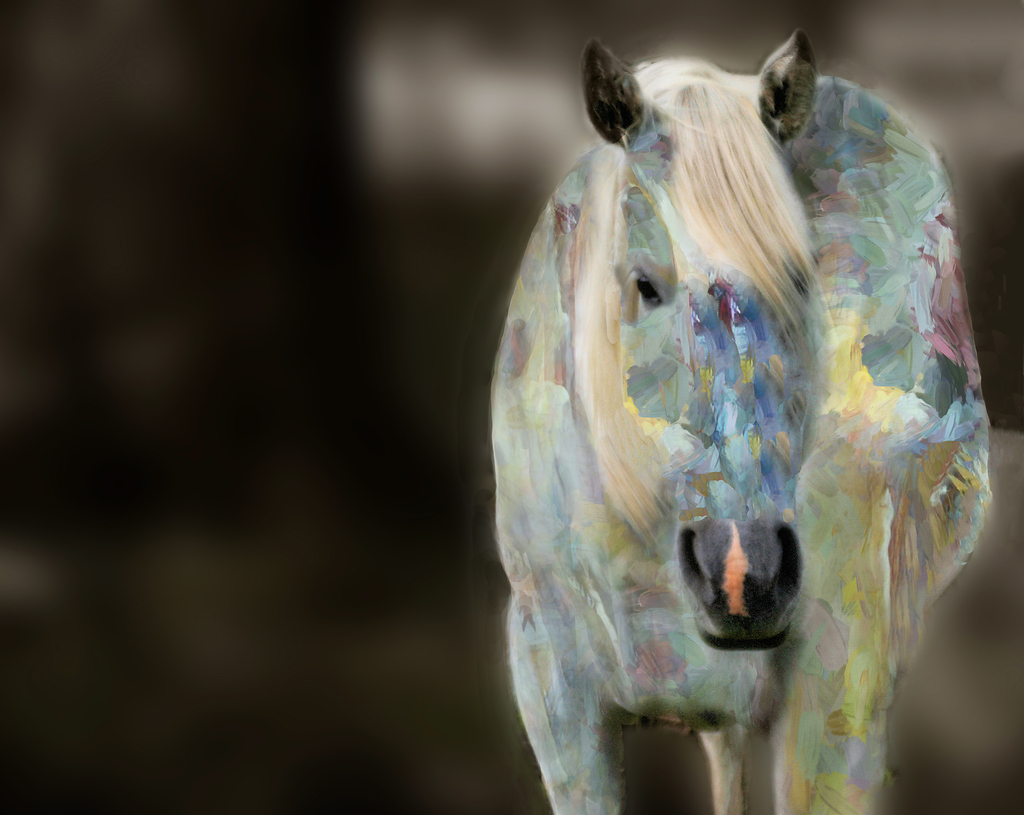
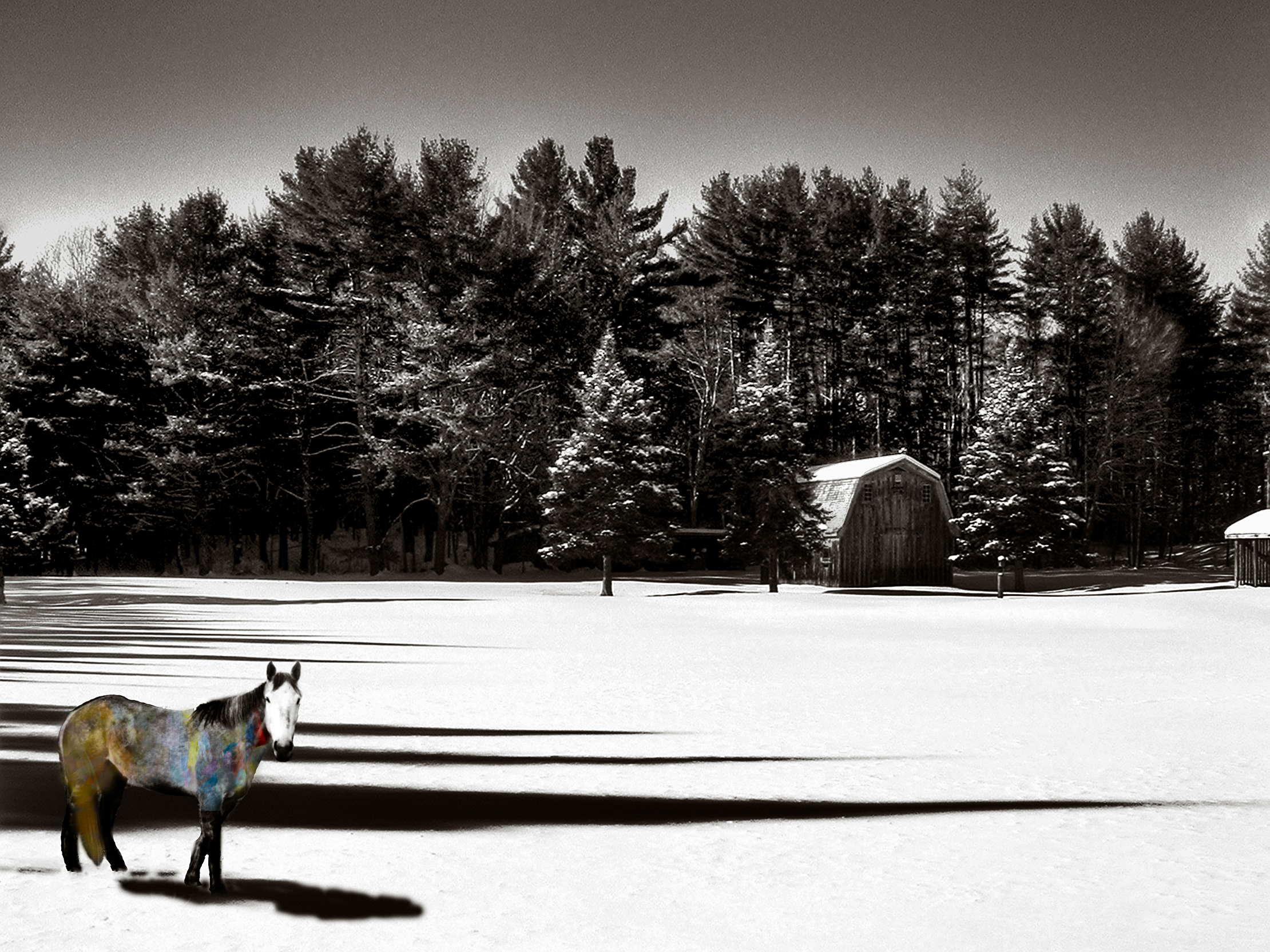
Long Shadows on a Spirit Pony
Signed Original    Open Edition Prints


Highland Storm #1 - Dreams of the Storm
Signed Original Edition of 5
Open edition print - unsigned


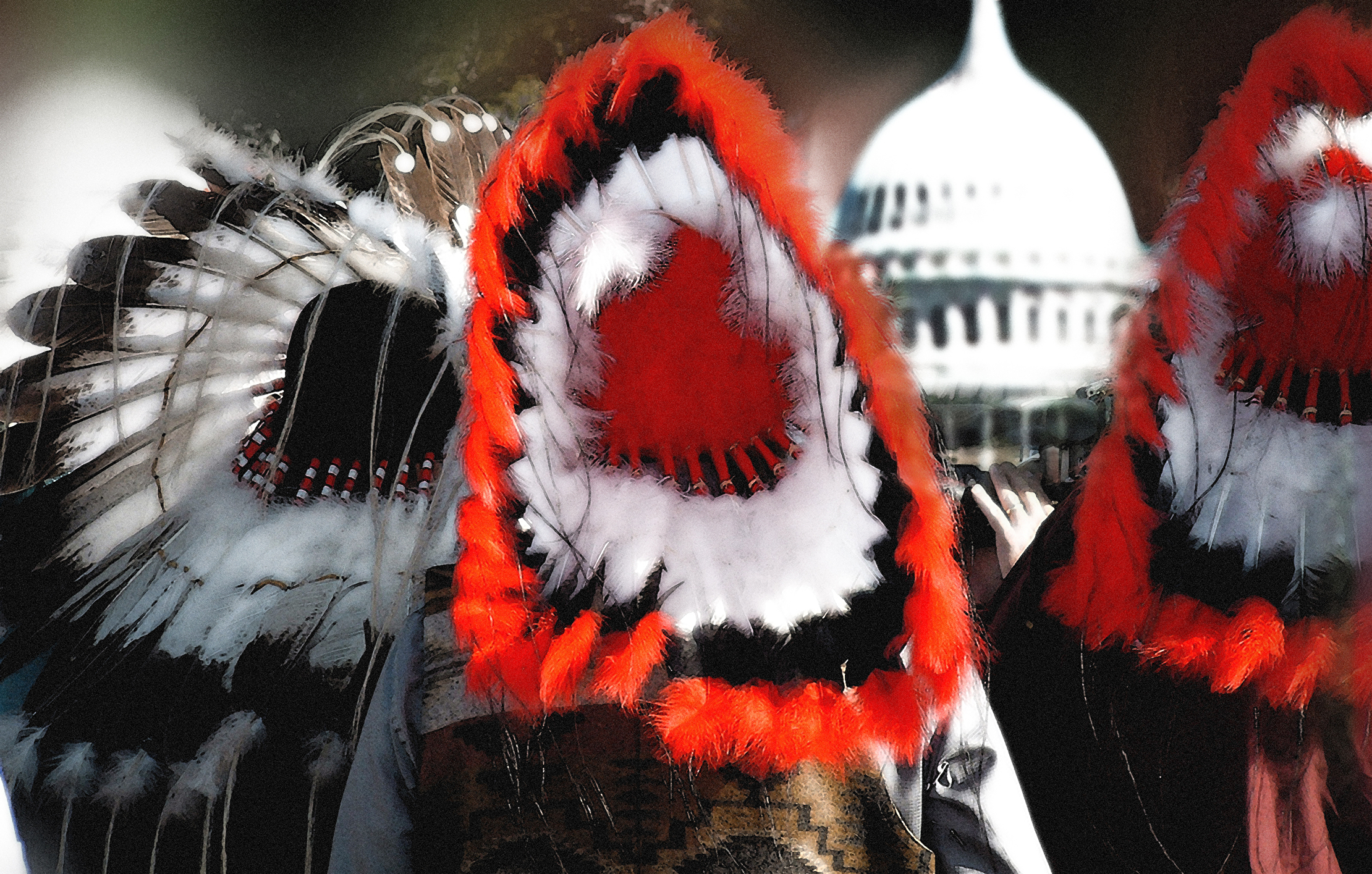
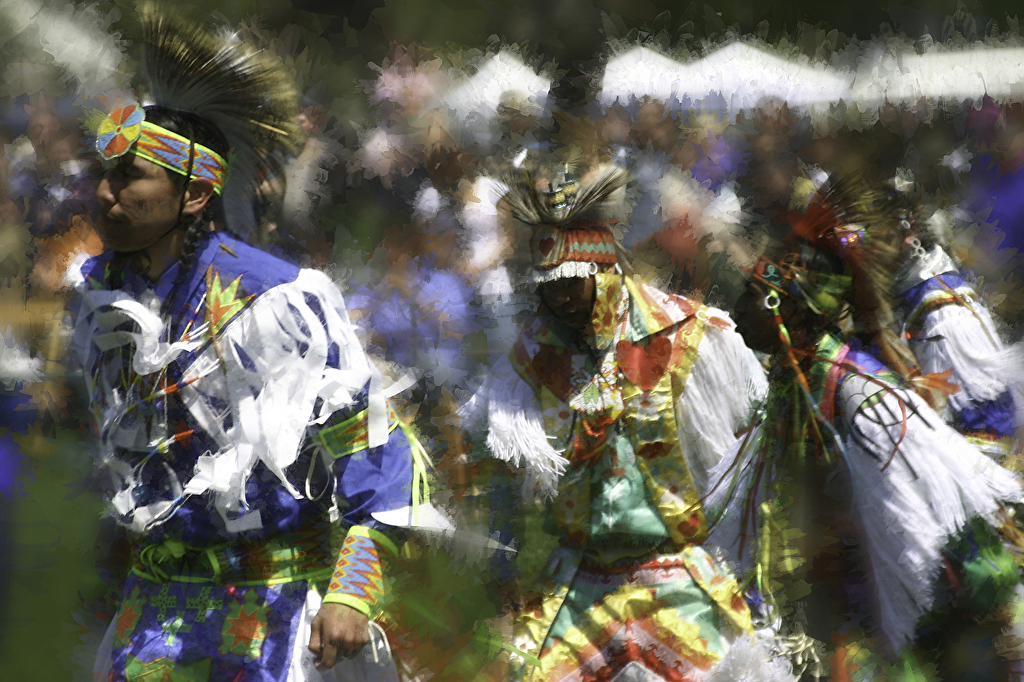
Flowering of Hope at the Pow Wow Originals    Open Edition Prints 


Wednesday, June 21, 2023

What About Democracy? Democrats and Republicans Both Signal their Intentions to Sidestep the Process


Secrets of the Patriot
Signed Original    Open Edition Prints


Democracy is a messy business. We already knew that. 


Even before Newt Gingrich broke the modern-day political process with his 1994 “Contract with America” - waging a contract ON America that has led us in a straight line to the current state of affairs, we’ve had some rocky times. 


During the early years of the Republic, despite the warnings about faction from George Washington and James Madison, the country was quickly drawn into factional conflict and only began to see some level of comity because Dolly Madison made a determined effort to get folks talking with one another again. 


Then in the period leading up to the Civil War when slavery quite nearly broke us. Now today, we are divided between tribal animosities brought on by two political parties more interested in courting the donor class than helping middle-class and working-class Americans.


The principal culprits in this tribal warfare are obviously the Republicans who have gone over the edge and represent a clear and present danger to the Republic. Truth and civility are just not priorities for people like Congressman Jim Jordan, Marjorie Taylor Greene and Lauren Boebert. Unfortunately, the vast majority of elected officials in the Republican Party at the national and state level continue to follow the lead of those who pervert the Constitution and blow through the constitutional norms that are the hallmark of the Democratic system. 


But the Democrats have staged their own assault on the constitutional norms that we rely on as well. The zeal with which they have canceled individuals - like college professors - have turned too many Universities and the public square into a forum for shaming and censoring anyone who disagrees with their perspective on the world. Trading free speech for a culture of trigger warnings, censorship masquerading as public safe space and tribal intolerance.  


For half a century both parties have gradually abandoned the working class and the poor for the comfort and succor of the donor class while the savage disparity of wealth continues to grow. . . an issue that, by the way, none of them has offered a single idea for dealing with. 


The Republicans have contributed to that growing disparity by vilifying the poor and cutting social safety nets while providing tax cuts for the wealthy.  The Democrats have done their part by supporting a welfare bureaucracy that fosters a nanny culture of dependency for a large portion of the population as a means of securing their support as their base. All of this has only deepened the divisions between Americans over race, religion, gender, and culture rather than creating pathways to prosperity, independence, and security that enhance the personal freedom of choice for all of our people, especially marginalized communities. 


Now, with the increasing likelihood that the presidential race will be a rerun of the 2020 election, both parties are raising the drawbridges and creating their individual “cones of silence” intended to short-circuit an open debate about our future. 


The fact is that over 70% of the American public is unhappy with the possibility of a rerun of the 2020 election. Yet both political parties are falling all over themselves to prevent an open and frank debate about our future. 


If the Democrats and the Republicans want to prove their devotion to the American political system and to democracy they can begin by openly debating their opponents.  President Biden and Donald Trump should not hide from the people of New Hampshire and Iowa or any other state by skipping primaries, and refusing to debate, even if their advisors counsel them to do so. 


If our leaders do not have the confidence to engage in open debate on their ideas and policies they do not deserve our votes in either the primary or the general election.  


About Wayne D. King: Author, podcaster, artist, activist, social entrepreneur and recovering politician. A three-term State Senator, 1994 Democratic nominee for Governor. His art (WayneDKing.com) is exhibited nationally in galleries and he has published five books of his images, most recently, "New Hampshire - a Love Story”. His novel "Sacred Trust" a vicarious, high-voltage adventure to stop a private powerline as well as the photographic books are available at most local bookstores or on Amazon. He lives on the “Narrows” in Bath, NH at the confluence of the Connecticut and Ammonoosuc Rivers and proudly flies the American, Iroquois and Abenaki Flags. His publishing website is: Anamaki.com.


Podcasts are produced at Anamaki Studios in Bath, NH. 

This land lies in N’dakinna, the traditional ancestral homeland of the Abenaki, Sokoki, Koasek, Pemigewasset, Pennacook and Wabanaki Peoples past and present. We acknowledge and honor with gratitude those who have stewarded N’dakinna throughout the generations.


Original Signed Art          Open edition


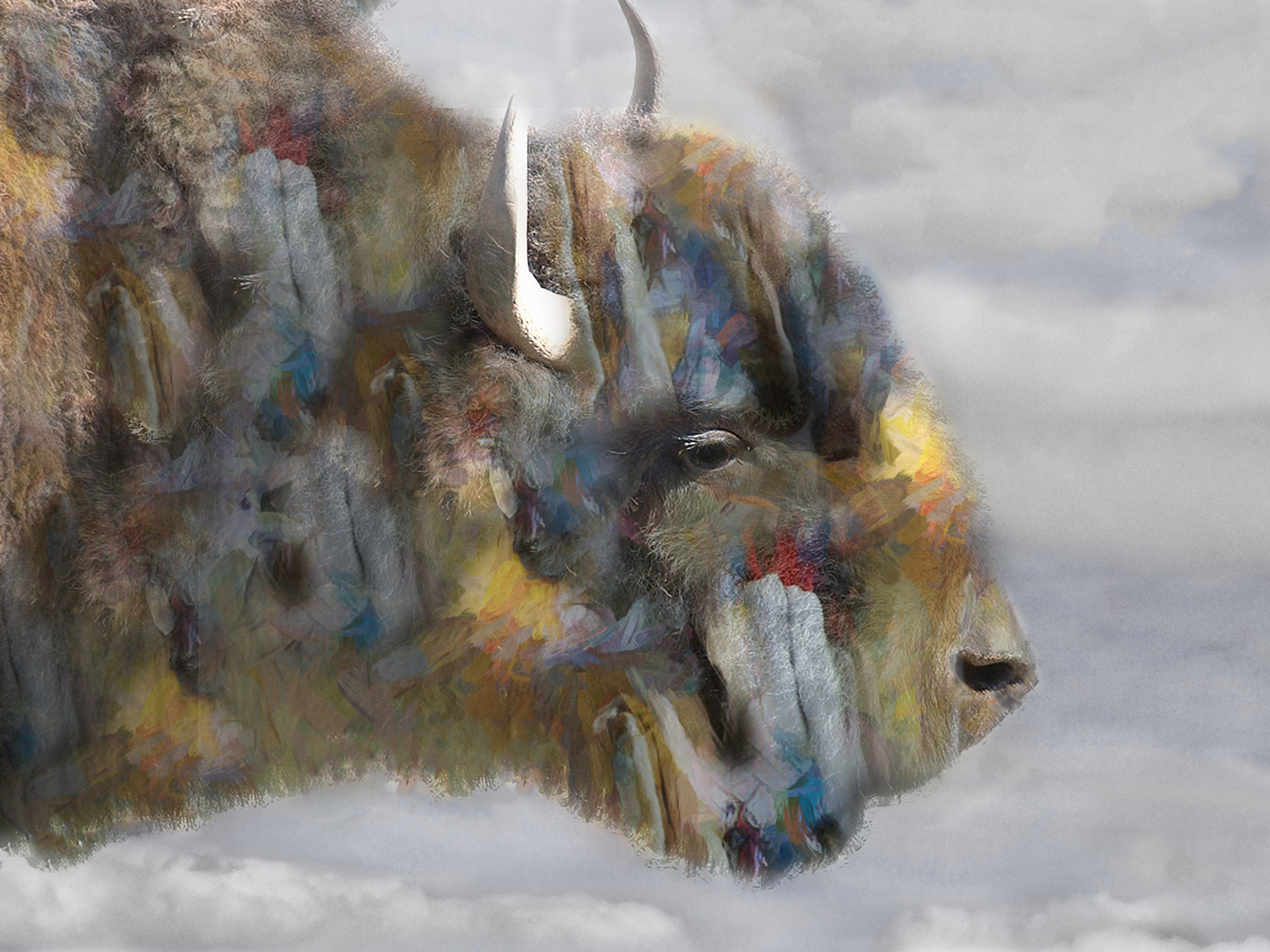
Spirit Buffalo in a Painted Sky Originals    Open Edition Prints


Wonalancet Mindscape
Signed Originals      Open Edition Prints


Our Time Comes
Signed Original 16x24   8x12     Open Edition Prints


I See the Way
Signed Originals      Open Edition Prints


Wind on the Floodplain Forest Floor
Signed Original Prints         Open edition Prints


Spirit Pony in an Old Soul


Autumn Aflame
Signed Originals   Open edition prints   


Monday, May 29, 2023

The Aliens Have Landed - Now What? The triple threats of Climate, Inequality and Ai Offer an International Opportunity

 The Aliens Have Landed - Now What?

The triple threats of Climate, Inequality and Ai Offer an International Opportunity


Lately, as Kodi and I ramble along the Connecticut River on our early morning walks I’ve been thinking a lot about Carl Sagan and R. Buckminster Fuller. These two brilliant scientists lived with one foot in the esoteric and cosmic world of science and the other firmly planted here on earth. 


Long before we knew about climate change “Bucky” Fuller was drawing attention to the need for us to live sustainably on our planet. It was Fuller who coined the term “Spaceship Earth”.  


Carl Sagan stressed many of the same things but he was also an activist; a major force in creating the momentum for a nuclear test ban treaty and the ensuing efforts to limit nuclear weapons.   


Carl Sagan was a brilliant astrophysicist, but he was also a novelist. He would be the first person to remind us that the question posed in the title of this piece is the standard plot of nearly every science fiction story or novel ever written about the arrival of aliens on planet earth. 


In the plot, the approach or arrival of alien life has served to create a clarion call for unity among the nations of the world and they rally together to protect what has suddenly become our mutual home. 


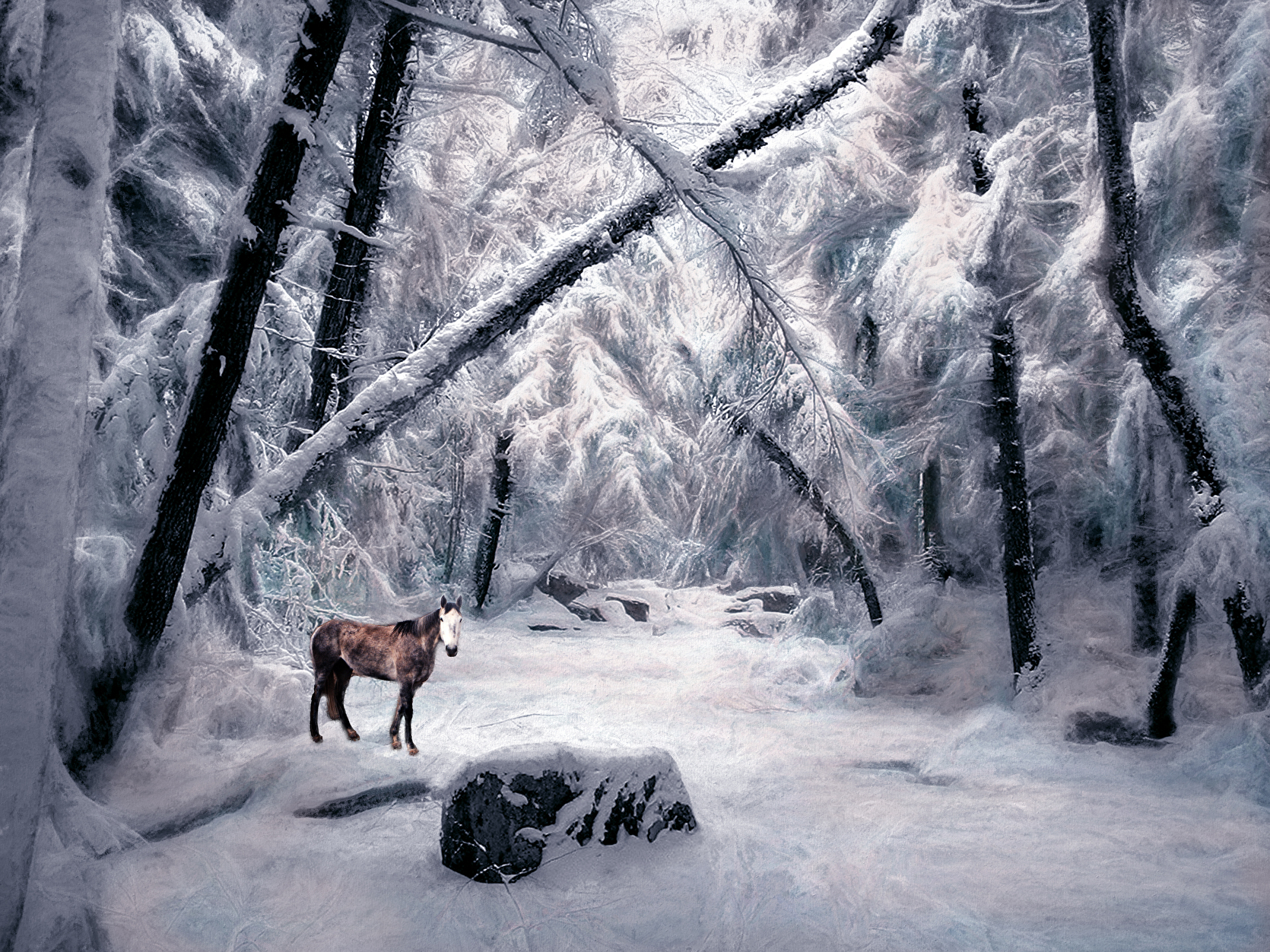
Spirit Pony in Smarts Brook Snow Originals 

The Cheyenne, my brothers and sisters from the plains, call her Esheheman . . . grandmother (or Grandmother Earth in the more obvious translation). Every nation of native people have a different name but today - more than ever before -  she is everyone’s grandmother. 


Having lived through a pandemic that claimed the lives of millions of our brothers and sisters, of every color and origin, across the globe over the last few years we have emerged, bent but unbroken, to find a new existential threat added to the climate emergency and the savage wealth inequality that grew worse over the course of the pandemic, creating a triple threat to humanity: Artificial Intelligence. 


The Buffalo Road Originals        Open Edition Prints

Some of us have been trying to raise the profile of AI for a while now, marveling at the possibilities and, at the same time, warning about the dark forces that might also arise from it including the challenges of the gig economy, robotics and some of the other early warning signs that the power of these computer programs may present an existential danger to humanity.  

Until now AI has been seen as a challenge for future generations, but in the past two years, with the advent of Chat GPT and other iterations of similar technology the changes have started to finally capture the attention of both citizens and the media. What right now seems a persistent hum in the cultural background will very rapidly be a virtual roar very soon. 


There are, of course, those who pooh-pooh the concerns expressed about AI, whether the fear is over the loss of jobs, the tendency for technological revolutions to morph into technological arms races, and a rush to the bottom ethical framework attendant to such an arms race. These technophiles claim that every technological leap has required government to follow behind with regulations to clean up the consequences of the change, but AI is different and the dangers are far too great for us to play cleanup in the arena of public policy.


The report that 50% of those who understand the technology best, AI researchers, believe that there is a better than 10% chance that humans will become extinct as a result of our inability to control the effects of AI should give us all pause.  Further, many of the changes to the technological landscape predicted by these same researchers ten years ago are actually occurring up to four times as fast as their original expectations because of the unforeseen impacts created by the cumulative impacts of various dimensions of AI technology that will result in broader and deeper changes at ever increasing speeds. Let me underline that: change occurring 4 times faster than expected is only the beginning. 

You know that a writer is flummoxed when he or she purposely mixes metaphors, but I’m hard-pressed not to say that the snowball of earth-shattering change is rolling downhill and this genie will not be put back in the bottle.

There is no time to waste. It is probably impossible to get ahead of this technology but it is imperative to try.


Every candidate for public office and especially for President should have a detailed plan for how they will lead in the age of AI. 

There will be hundreds of thousands of books, movies, videos, and articles written about the specifics and the nuances of AI. But if we are going to survive there are two things that I believe are essential components to the journey.

First, we must move rapidly to address the challenges of AI on a dual track, nationally within the US but also on a global scale with an International Convention, logically under the umbrella of the United Nations but including a wide range of stakeholders: governments, corporations, researchers, and civil society.


The risks and challenges posed by AI are multifaceted and extend beyond traditional geopolitical boundaries and our approach to helping to chart the future should involve this wide range of stakeholders. 


Organizing such a convention will take time, but in the meantime, we need an "American University" moment to address the most dangerous aspect of AI: Lethal Autonomous Weapons (Robots). 


In 1963 President John F. Kennedy took the bold step of announcing a unilateral nuclear test ban at American University. This speech launched decades of arms control efforts and a developing consensus around the need to step back from the brink of Nuclear oblivion. Today a similar leadership on the subject of Lethal Autonomous Weapons is essential by the President in this area of AI and every candidate should be challenged to answer the question of how he or she would address the challenge. 


If Carl Sagan were still alive he would be urging us to imagine the opportunity of addressing all three of these existential challenges as one, using Ai as the organizing principle for solving the challenges of climate change and wealth disparity. He would smile and say “just think of what we could achieve on this pale blue dot. . .” 


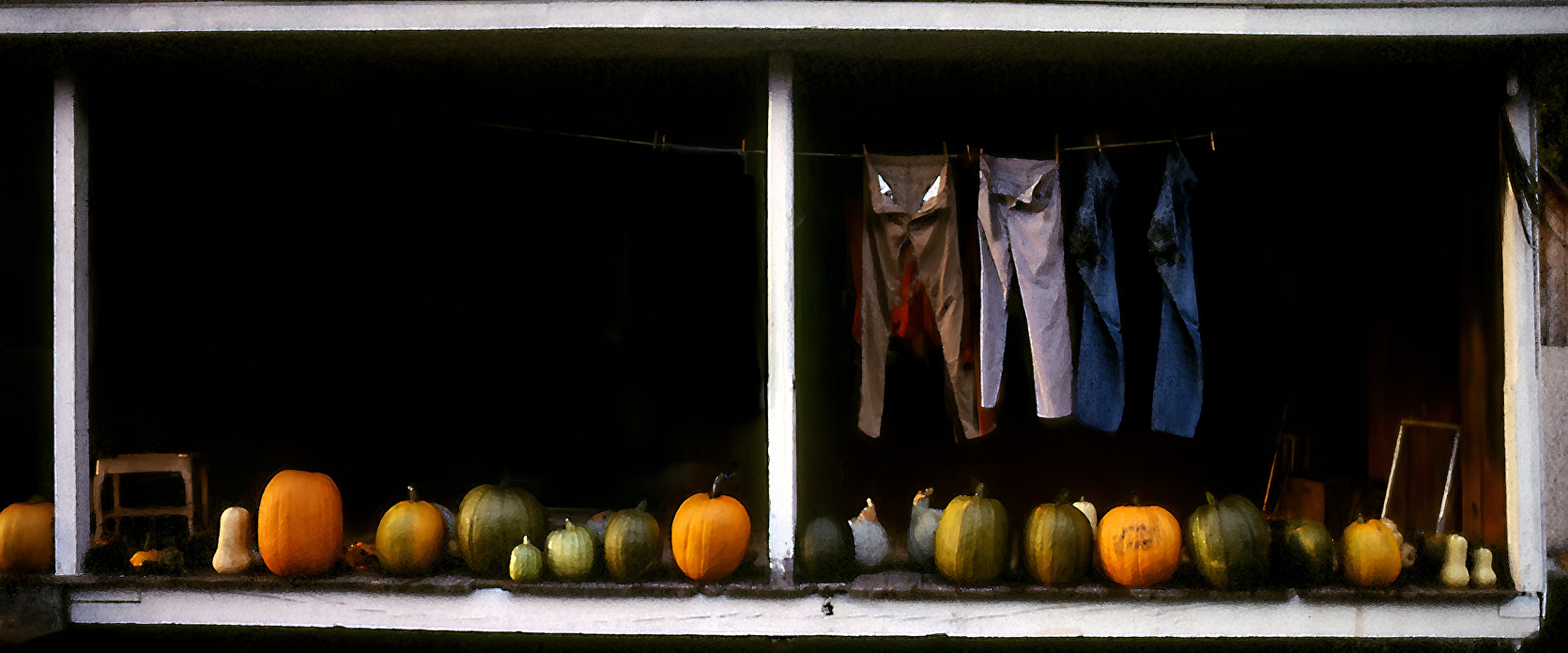
Pumpkins and Wash Original               Open Edition Images


About Wayne D. King: Author, podcaster, artist, activist, social entrepreneur and recovering politician. A three-term State Senator, 1994 Democratic nominee for Governor. His art (WayneDKing.com) is exhibited nationally in galleries, and he has published five books of his images, most recently, "New Hampshire - a Love Story”. His novel "Sacred Trust", a vicarious, high-voltage adventure to stop a private powerline, as well as the photographic books are available at most local bookstores or on Amazon. He lives on the “Narrows” in Bath, NH at the confluence of the Connecticut and Ammonoosuc Rivers and proudly flies the American, Iroquois and Abenaki Flags. His publishing website is: Anamaki.com.


Produced at Anamaki Studios in Bath, NH. 

This land lies in N’dakinna, the traditional ancestral homeland of the Abenaki, Sokoki, Koasek, Pemigewasset, Pennacook and Wabanaki Peoples past and present. We acknowledge and honor with gratitude those who have stewarded N’dakinna throughout the generations.



Notes and Links:


If you wonder about our capacity for addressing this challenge in the current partisan atmosphere in congress you only need to watch the hearing of the Senate Judiciary Committee on the subject of AI held recently to see that this is a matter taken seriously by members of both political parties. Watching this hearing provides a view into how Congress should function.


https://www.youtube.com/watch?v=P_ACcQxJIsg&t=8529s


Friday, May 26, 2023

Don’t Sell Bobby Kennedy Jr. Short - Mainstream media does a great disservice to us all by its censoring of RFK Jr.


Twitter

I know, I know, a lot of my friends and erstwhile supporters are going to have what my grandmother would have termed “a conniption” when they see this headline. The long and short of it is this: I don’t care. As Bob Dylan reminded us "the hour is getting late."


For three decades Bobby Kennedy has fought to clean up our environment, to take on the corporate forces that have given us 50 years of growing income disparity, hollowing out the middle class and seeing lifespans retreat. For three decades he has pushed back against efforts by the fossil fuels industry to continue to deny climate change and to capture government agencies on behalf of their corporate benefactors. 

Flowering of Hope at the Pow Wow Originals    Open Edition Prints 

On the two great existential problems of our times, he has been on the frontlines. Not running for office, not posturing, but rolling up his sleeves and working for a better world, leading a purposeful life and dealing with his own dreams and demons.

He’ll be the first to tell you that he is a flawed human being, but are we not all? Yet his candor is refreshing and much of what he says about the dangers to democracy from our corporate media; an economy defined by socialized risk for the wealthy and savage capitalism for the poor, working and middle classes; and agency capture by corporate interests are issues that are a growing cause for alarm for many of us. 

Spirit Pony in Smarts Brook Snow Originals 
Of course, there is the question of his response to the Covid 19 pandemic and the linkage between vaccines and illnesses like autism. I have to admit to having some concern about all this but let’s face it, US leadership under both Donald Trump and Joe Biden have been no paragon of consistency and virtue  during the pandemic. We were all operating by the seat of our pants.
Most of us knew that Donald Trump was unmoored - every time he opened his mouth that was clear, but he was not alone. When it came to guesswork, the difference between Trump and the Biden Administration was a difference of degrees.  Let's begin the healing process by cutting everyone some slack, including ourselves.  But we should at least start with one verifiable set of facts that almost everyone can concur on: We are 4% of the world’s population yet we have had the highest percentage of deaths (1,163,294 deaths to date); our kids have experienced a massive educational hiccup, and the science has been a moving target, even today . . .  Not a record to hang anyone’s hat on.

Yet, what is even more important - and far-reaching - than individual points of agreement or disagreement on this or any other issue, is the broader question of free speech and our access to differing perspectives.

Justice Louis Brandeis said that “sunshine is the best disinfectant”. . . that the remedy for incorrect, incomplete, or false speech is more speech, not less. 


We create institutions to act as a referee on speech - to exert a moderating influence and to act as a source of a collective “constitution of knowledge” as author Jon Rauch calls it. But in an era where too many institutions have been captured by corporate interests or political ideologies, the default must be more speech - until we have successfully wrested these institutions from their corrupting influences.


For example, time after time I have heard  RFK’s position on vaccines characterized as “vaccine denial” yet a more careful search of the record - which is not easy because he has been silenced so thoroughly -  is not that he opposes them but that we are not taking sufficient steps to ensure their safety and provide alternative pathways to those who object to them. This is hardly a position that qualifies as far outside of the mainstream.


Yet, instead of encouraging a rigorous debate on the entire range of his positions he was effectively shunned by the mainstream media, and banned from twitter and other social media. The result was that the very entities that should have been standing up for free speech were complicit in denying all of us - both those who agree and disagree - the opportunity to participate in a rigorous debate that would be far more likely to lead us to what can be considered “currently accepted truth” in an atmosphere where the ground seemingly changes on a daily basis.  


Now I have to admit my own complicity here. For the past two years I have had a growing sense of discomfort about the ease with which many of us - including myself - have rationalized a lax commitment to the protections of free speech in the face of the pandemic. Even the banning of Donald Trump caused some pangs of conscience in the back of my mind. I regret that I did not stand forcefully enough for free speech, I will not make that same mistake again.


Like a large percentage of Americans, I am now among the 70+% who dread the choice we might face in the upcoming election and the “long-tail” political effects.


Colors Over Franconia Notch

We quite nearly lost our democracy to the slow-motion car crash that was Donald Trump. Joe Biden is a decent man and a skilled politician but are he and Kamela Harris equal to the challenge of leading us forward toward a peaceful revolution, because that is - in fact - what we need to halt this descent into a totalitarian dystopia and climate catastrophe? It’s too late for incrementalists. Millions of Americans went from voting for Barack Obama in 2008 and 2012 to Donald Trump in 2016 and 2020. They are clearly not racist, nor are they unmoored. They are, quite simply, desperate. Desperate for hope and change; desperate to believe again in the American experiment. 


In the Democratic primary process, the only way for the President to demonstrate his vision - and his commitment to it - is for him to compete in the primary process and to debate with Bobby Kennedy and Maryanne Williamson - if she demonstrates sufficient support.


Time is short and of the essence. The existential challenges of climate change and wealth disparity hover over us like the sword of Damocles. Give me a candidate who is not afraid to use the words Love and Peace in a speech, who challenges us to believe in ourselves again, who has the courage to take risks for these things by reaching out to all Americans who long for a leader who will go beyond dogma and lay out a path forward to uniting us. A path that will restore the American promise for us and the American example for the World.   


If Bobby Kennedy Jr. has even a small measure of the compassion and vision of his father, and I think he does, Joe Biden may be in for the fight of his political life.

Throw in a genuine and full-throated committment to free speech and the first amendment and we won’t need to choose between the lesser of evils when we cast our vote for President.

About Wayne D. King: Author, podcaster, artist, activist, social entrepreneur and recovering politician. A three-term State Senator, 1994 Democratic nominee for Governor. His art (WayneDKing.com) is exhibited nationally in galleries and he has published five books of his images, most recently, "New Hampshire - a Love Story”. His novel "Sacred Trust" a vicarious, high-voltage adventure to stop a private powerline as well as the photographic books are available at most local bookstores or on Amazon. He lives on the “Narrows” in Bath, NH at the confluence of the Connecticut and Ammonoosuc Rivers and proudly flies the American, Iroquois and Abenaki Flags. His publishing website is: Anamaki.com.

Produced at Anamaki Studios in Bath, NH. 
This land lies in N’dakinna, the traditional ancestral homeland of the Abenaki, Sokoki, Koasek, Pemigewasset, Pennacook and Wabanaki Peoples past and present. We acknowledge and honor with gratitude those who have stewarded N’dakinna throughout the generations.


Notes & Links

E127: Presidential Candidate Robert F. Kennedy Jr. All In Podcast

348K subscribers


Fact Checking RFK Jr on All In Podcast | I break it down


"Our Environmental Destiny" - Robert F. Kennedy, Jr.


From "Screen Door" to "String Too Short to Keep"

  From "Screen Door" to "String Too Short to Keep"  A poetic journey across time and space in New Hampshire with Poet El...