Thursday, April 18, 2019

John Roberts’ Moment . . . Without Fear or Favor


The Nation’s Chief Justice Has the Opportunity to Help Lead an American Renewal

Here in the town of Rumney, in the shadow of Rattlesnake Ridge, the remarkable history of this place and this nation unfolds like the oxbows, riffles, and rapids of the river that meanders through its valley.

Originally the Asquamchumaukee, variously translated as “place of mountain waters” and “salmon spawning place” from the Algonquin language of my Great Grandmother and later renamed by European settlers for Lt. Thomas Baker who led a raid on a temporary fishing encampment of Pemigewasset Indians at the confluence of the Baker and Pemigewasset Rivers - attacking while the men were off hunting - and killing and scalping the women and children remaining in camp. It was here too that John Stark, later credited with the famed phrase “Live Free or Die” was taken captive by Abenaki warriors and then adopted into their nation - so impressed were they by his bravery in the face of danger. Stark’s leadership at the Battle of Bennington is often credited as the turning point of the American Revolution.

Just a few hundred feet from the Rattlesnake Mountain Trail that leads to the top of Rattlesnake where the twice-burned-over-summit looks down upon the meandering river as it makes its way to join the Pemigewasset River in Plymouth, is a granite marker denoting the birthplace of Nathan Clifford, United States Supreme Court Justice. Clifford was self-taught in the law and ended up on the Supreme Court for almost 23 years. In 1877 Clifford was the Chairman of the Presidential Commission that decided the outcome of the Tilden v. Hayes Presidential Election; the closest election in American history to that point. He was on the losing side of the outcome if one considers the political party he had served for years before becoming a judge, but in an act of American heroism, he cast the deciding vote to seat Republican Rutherford B. Hayes. Clifford was by no means a perfect man - or jurist - and there is much speculation about what went on among the members of this commission behind the scenes but the fact remains that Clifford accepted the outcome, even though it was not his preferred outcome because he was dedicated to the democratic process.

With this history in its rearview mirror, it’s no wonder that many of the people who live in the shadow of Rattlesnake Ridge have allegiance for the role of the court in steering the ship of state.

Clifford was not the first nor the last Supreme Court Justice to find that the role of a Justice was bigger than party politics. He was not the first or last to realize that the interests of the country and the constitution were bigger than the passions of the day. To some extent, almost every Justice discovers this after they have been welcomed into the country’s most elite club. It’s why we hear stories of the deep friendships between judges like Ruth Bader Ginsburg and Antonin Scalia. However, some Justices, and particularly Chief Justices are summoned to a higher calling than even their esteemed colleagues.
Dance of the Lupine and Birch
Chief Justice Earl Warren was one such Justice. Appointed by Eisenhower as the Chief Justice during the turbulent days of the Civil Rights movement. Warren had not been a judge prior to his appointment. Of all Justices - having been a prosecutor first and then Governor of California - he might have been expected to take a more partisan approach. Yet Warren would rise to the occasion in a way that has made him one of the giants of Supreme Court history, building the consensus for a unanimous decision in Brown Vs. Board of Education and shepherding other decisions such as the Miranda decision and the Baker Vs. Carr decision that solidified the “one person one vote” concept.

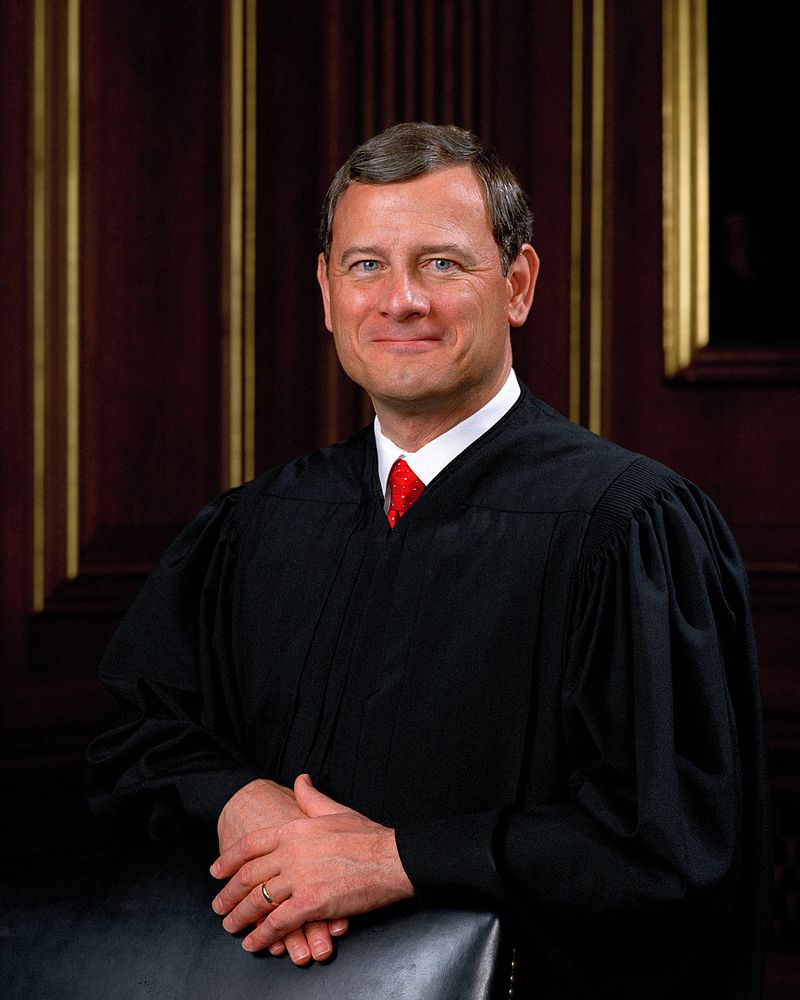
Chief Justice Roberts own personal hero is Chief Justice John Marshall - probably the most extraordinary man among the founders, beside George Washington, and the man who is credited with saving the nation in the post-revolutionary period when the passions and rivalry of Jefferson and Adams threatened to tear apart the young nation. Marshall carved a careful path between the Federalists and the Anti-federalists, employing humor, civility, and humility to strengthen the Courts as a genuinely co-equal branch of government. With his Marbury vs Madison decision that made the US Supreme Court the final arbiter of what was constitutional his court stabilized a country rocked by turbulence, rioting, and discontent.

In recent months there has been a general sense of alarm among the more conservative court watchers that Chief Justice Roberts has been leaning more and more to the left. Recent decisions where he has sided with the more liberal justices have caused them to raise the alarm but there is more at play than meets the eye. Make no mistake about it, John Roberts is a conservative but more important than even that, he is an institutionalist. In his zeal to protect the integrity of our Judicial system, he is quite likely to become the new swing vote on the court. Seeking to find common ground that reflects both the country’s direction and his allegiance to the Constitution.

Webster's Confidence

As the Trump administration continues to spiral downward, even while a majority of elected Republican representatives and his base seem willing to suspend all that they have stood for since 1946, Chief Justice John Roberts can’t help but be thinking that the role of the court in preserving the Republic has suddenly become far more imperative than hewing to an ideological line. The partisanship of the Kavanaugh nomination process can only have further stoked the flames of his concerns.

Among Democrats, panicked by the conservative shift in the Supreme Court, there have been various “reforms” contemplated, and in some cases proposed; from some version of Franklin D. Roosevelt’s court-packing scheme to term limits for judges. Short of a constitutional convention, that most experts agree would be a bad idea, none of the ideas are immune to change the moment the other party controls the levers of power. Those who are most vocal, particularly about expanding the Supreme Court, justify their proposal by pointing to the stolen election of judge Merrick Garland who would have maintained some semblance of balance on the court. But meeting the outrages of the Republicans over the Garland nomination with further offenses against the norms and values of our democratic system only takes us deeper into the darkness.

Stepping back from the brink requires that one party or the other, or in the best of all worlds both, say “no more” to the growing violations of American values and political norms.

Just as important, it requires all of us to stand behind those who halt our drift, irrespective of their political party. It also requires all of us to join in a new “21st Century Federalism”. A community by community, state by state, region by region, contest of ideas to define the national norms of our democracy. As Dean Heather Gerken of Yale University, who has done the deepest thinking on this subject says, we all have to “suit up” because you can only win if you are in the game. Short of a lightning strike the Supreme Court is not going to change dramatically. If We the People actively help define the direction of our country, I’m betting that Justice Roberts will take notice.

Links:

21st Century Federalism, Heather Gerken
https://www.youtube.com/watch?v=GwP99tFqnOs

In the Clouds
Hikers in the Presidential Range of NH find themselves in the clouds buffeted by winds and rain. Printed in a signed limited edition of 25 prints on fine art rag paper with archival inks. To purchase the original or open edition prints or a poster in one of 2 sizes, email Waynedking9278@gmail.com or click here: http://spreesy.com/waynedking

About Wayne D. King: Wayne King is an author, artist, activist and recovering politician. A three-term State Senator, 1994 Democratic nominee for Governor, former publisher of Heart of New Hampshire Magazine and CEO of MOP Environmental Solutions Inc., and now host of two new Podcasts - The Radical Centrist (www.theradicalcentrist.us) and NH Secrets, Legends and Lore (www.nhsecrets.blogspot.com). His art is exhibited nationally in galleries and he has published three books of his images and a novel "Sacred Trust" a vicarious, high voltage adventure to stop a private powerline all available on Amazon.com. He lives in Rumney at the base of Rattlesnake Ridge. His website is: http://bit.ly/WayneDKing . You can help spread the word by following and supporting him at www.Patreon.com/TheRadicalCentrist .



Spring's Dance of Form


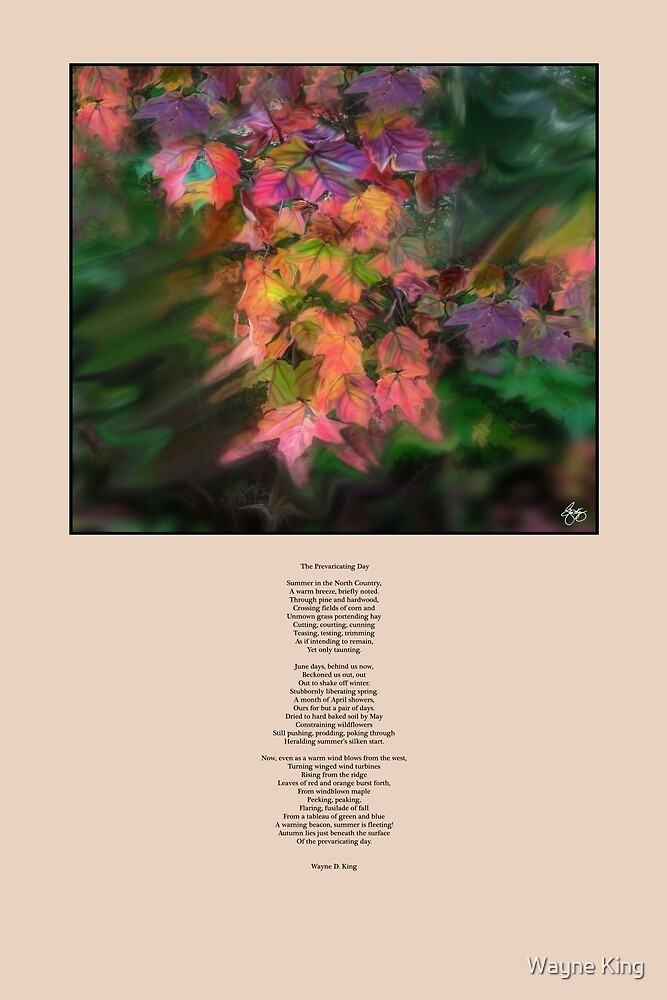
The Prevaricating Day

Purchase a signed original here.


The Gathering Storm Haiku

Purchase a signed original here.


Wind in the Washline Haiku


Whisper of a Winter Wood Haiku


Thursday, February 14, 2019

The NH Presidential Primary Centennial May Be its Swan Song

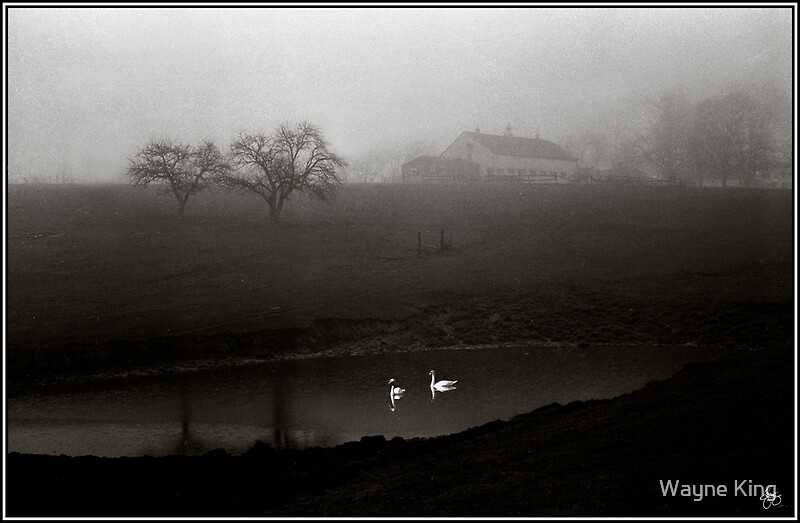
Swans on Scamman Pond


The NH Presidential Primary Centennial May Be its Swan Song
Without Ranked Choice Voting New Hampshire Presidential Primary Will Likely Become Irrelevant
Here in the shadow of Rattlesnake Ridge the sense that Democracy is broken is pervasive and alarming. Republicans and Democrats alike along with Libertarian and Independent voters seem to share a growing disgust with the tone and tenor of the election process and even more so the results of the elections - won by candidates with far less than a majority of votes - and the behavior of those elected by 17%, 20% or 30% of the voters, as they constantly seek partisan advantage rather than trying to work together.

The negative campaigning, that only seems to grow worse with each succeeding year; The bitter and poisonous partisanship that has infected the election process - characterizing even the elections for NH State House and Senate seats - are deeply discouraging to average voters. Worse still, what use to be the “governing phase” of the process where State Representatives and Senators settled into a far less partisan rhythm, intent on governing in the best interests of all their constituents - has virtually disappeared and the two parties now vie to see who can draw the most blood at a time when their constituents want them to be solving problems.
A Child's Dream Among Lupine

As if all this weren’t bad enough, The New Hampshire First in the Nation Presidential Primary, a near sacred institution here in the Granite State - already under attack from those who would like to see its preeminence abolished - is at its hour of maximum danger. Ironically, for the First in the Nation Primary - about to celebrate its Centennial year - that Centennial may also be its Swan Song.

Now I won’t represent that I have always been the staunchest defender of the NH Primary. I have in the past suggested that the divisiveness of the Primary process is harmful to the unity of both the Democratic and Republican parties and a distraction from confronting the challenges we face as a state, but as Emerson said “The years teach much which the days never knew.” The fact is that I have become convinced that the people of New Hampshire take very seriously their solemn responsibility to put the candidates through their paces and to narrow down the field. That alone is reason enough to defend the Primary.

But there has always been a procedural problem with New Hampshire’s Primary and with the size of the field among Democrats this year, that problem is magnified tenfold, just as it was for Republicans in the last Primary. In 2016 there were 17 candidates running in the Republican primary. Only 4 of the 17 received any delegates. As a result over 40,000 Republican voters choices were disregarded completely when it came to handing out delegates. To make matters worse the Democratic Party has recently raised their threshhold for awarding delegates in the Presidential Primary to 15%. In other words only those with at least 15% of the vote qualify for delegates. With as many as 30 potential candidates for the Democratic nomination there is a better than even chance that NO ONE will reach that threshhold. Leaving 100% of voters disenfranchised and allowing the Democratic Party to award those delegates to whomever they choose. In other words, the First in the Nation Primary will be nothing but white noise in the most consequential election of our lifetimes.

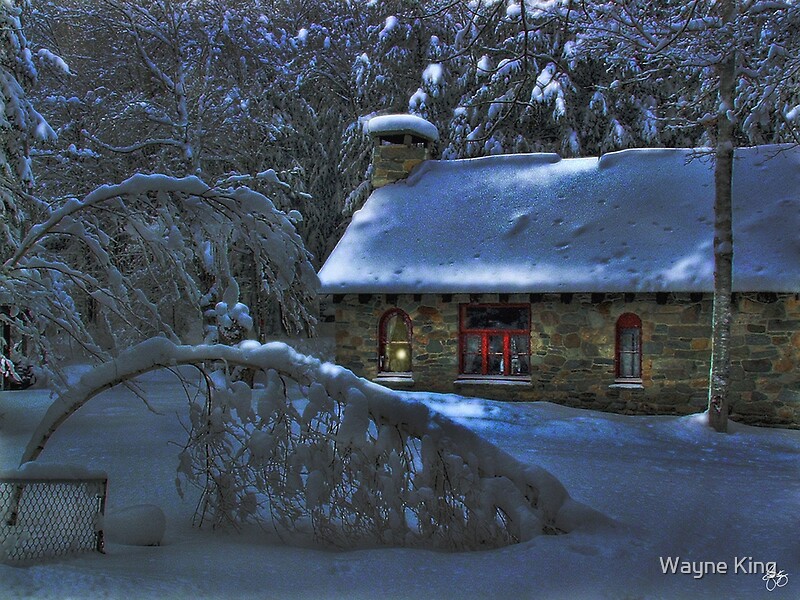
Moonlight On the Stone House


There is a way to resolve this and to save the NH Primary. Ranked Choice Voting. A bill before the NH House, HB 728, Sponsored by Rep Ellen Read of Newmarket, would institute a new system of voting called Ranked Choice Voting allowing every voter to rank their choice in order of preference. So instead of simply choosing one candidate you can select and vote for your first choice, your second choice and your third choice. When the ballots are counted if no one receives a majority of the votes the ballots for those with the fewest votes are reallocated to the second choice.

Maine has just moved smoothly to ranked choice voting with only 3 months between the final court challenge and the election. Mainers voted in record numbers and polling since the election shows broad support for the new system of voting. Iowa too is considering Ranked Choice for their Presidential Caucuses.

Ranked Choice has had a dramatic positive impact on the civility of elections in Maine and California where it is being used. After all what do you think would be a voters second and third choice if a candidate bad mouthed their competition with nasty nicknames or mudslinging?

Mr. Lincoln's Legacy
Ranked Choice means that all of the voters voices are heard, not just a small minority.

Ranked Choice voting puts 3rd party candidate on a level playing field with those in the two major parties but prevents them from becoming spoilers if voters don’t find their message compelling: Think the Bush-Gore-Nader Florida Primary.

Ranked Choice Voting is coming. It is a wave that will not be held back. The only question is whether the members of the NH House of Representatives will choose to be led astray this year by the major parties and sacrifice the NH Presidential Primary in the process. If that happens, the blame will fall squarely on their shoulders. Unfortunately, by then it will be too late.


About Wayne D. King: Wayne King is an author, artist, activist and recovering politician. A three term State Senator, 1994 Democratic nominee for Governor, former publisher of Heart of New Hampshire Magazine and CEO of MOP Environmental Solutions Inc., and now host of two new Podcasts - The Radical Centrist (www.theradicalcentrist.us) and NH Secrets, Legends and Lore. His art is exhibited nationally in galleries and he has published three books of his images and a novel "Sacred Trust" a vicarious, high voltage adventure to stop a private powerline all available on Amazon.com. He lives in Rumney at the base of Rattlesnake Ridge. His website is: http://bit.ly/WayneDKing . You can help spread the word by following and supporting him at www.Patreon.com/TheRadicalCentrist . 

Links:
One minute video description of Ranked Choice Voting


HB 728


Status of Bills NH House and Senate


NH House and Senate Information


Ranked Choice Voting - The Radical Centrist Podcast


Friday, January 18, 2019

There is a Force Bringing Americans Together - Donald Trump

Mr. Lincoln's Legacy


Ideologies separate us. Dreams and anguish bring us together.
~ Eugene Ionesco, Playright

There’s a change in the wind here in the shadow of Rattlesnake Ridge. For months after the 2016 election there was no change in the public polling. Even today, pollsters are still finding the responses from voters reflect little change in the support for the President among his base but they are missing the winds blowing here, that I suspect are blowing in small towns all across America. There is a force beginning to develop that may just bring Americans together after our long winter of discontent.

Among Republicans I sense a new found respect for the corruption-free Presidency of Barack Obama. Among Democrats, a new found respect for presidents George H.W. Bush - even George W Bush - who believed in the rule of law and appreciated, respected and lived by the norms of Democracy - those unwritten rules by which our laws and our constitution are translated into our American anthem, above the din of partisanship and the divisions of tribalism.

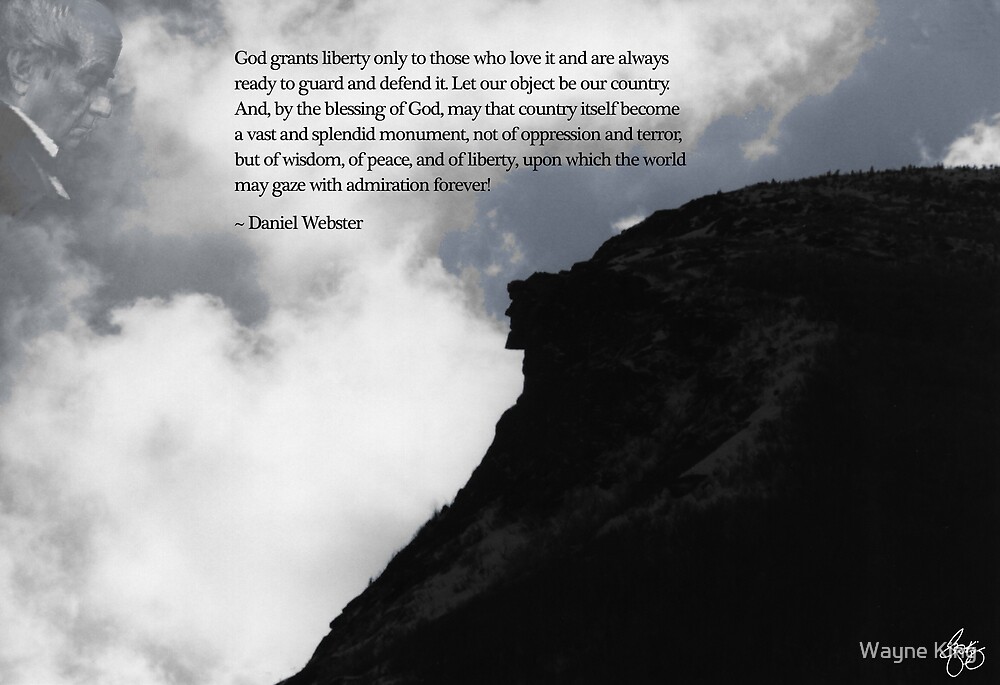
Webster - Wisdom, Peace, Liberty

In this shift lay the seeds of hope for our Republic, and for a world that too often, of late, seems to be sinking in a sea of despotism. World leaders inclined toward authoritarianism have been emboldened by a President who has abandoned the traditions exemplified in the past by American moral leadership. A President who telegraphs his approval for those leaders who flout the rule of law and the civil and human rights of their citizen - turning a blind eye to the excesses of nations like Saudi Arabia, Russia, Turkey and Philippines. These countries are only the tip of the iceberg. What lies below the surface are not only other countries taking their lead from Donald Trump’s rhetoric but also those simply taking advantage of the fact that they no longer feel constrained by American leadership.

In 1997 I spent five hours in a Nigerian jail with my team, held at gunpoint by 5 automatic rifles in the hands of the Nigerian secret police. They arrested us, ostensibly, because one member of my team took a photograph of an old woman selling fruit on a street in Lagos but we believe it was because we were working with pro-democracy, environmental and healthcare NGOs to bring the Internet to West Africa's civil society community. Nigeria at the time was living under military dictatorship. Yet, largely because of pressure from the United States within a year Nigeria held elections and a democratic government began a deliberate and steady climb out of the authoritarian darkness. Within only a few years the corruption, the bribery, the fear had dramatically subsided. However, after nearly two decades of improvement and a growing confidence about the future among the Nigerian people, in the last two years Nigeria has spiraled down at the hands of a President unconstrained by American authority and a State Department crippled by inattention and demoralized by indifference and ignorance. This tragedy has been repeated in countries from Brazil and Nicaragua to Venezuela.

Here at home the walls are closing in on Donald Trump. Most political scientists will tell you that this is likely the most corrupt administration in American history - sadly and finally a real apex achievement for a President so fond of puffing himself up and telling us that one achievement or another is the “biggest, longest, best ever”.

The Gathering Storm Haiku

In a previous column I warned that a storm is coming. Weathering that storm will require all hands on deck. Local, State and Federal governments and agencies, law enforcement, advocacy groups and most of all citizens will be needed to save the Republic from the excesses of Donald Trump.

If we are strong we will prevail, despite a Senate that still remains in Trump’s corner and regularly bullied into submission, a House crippled by partisanship and a Supreme Court that remains an enigma. There will be growing calls for impeachment despite this but replacing a tyrant with a sycophant who will likely pardon him is no victory for the Republic. It will only prolong the agony and anguish.

My advice to those who would be inclined toward impeaching the President is this: America’s best hope - Democracy’s best hope - resides in our people and their capacity for knowing in their hearts and in their minds what is best for our country and for our world. We need to have this change brought about in an election. Not in the partisan bickering of a Congress that has lost touch with the people and the times. We need to send a strong and unambiguous message from the people of the United States of America across this land and to the rest of the world. A liberty love letter. A message that this is NOT who we are. That we are taking back our country, warts and all, and committing ourselves to rebuilding by talking with, and listening to, one another as we face the real challenges of building a brighter future and another American Century.


About Wayne D. King: Wayne King is an author, artist, activist and recovering politician. A three term State Senator, 1994 Democratic nominee for Governor, former publisher of Heart of New Hampshire Magazine and CEO of MOP Environmental Solutions Inc., and now host of two new Podcasts - The Radical Centrist (www.theradicalcentrist.us) and NH Secrets, Legends and Lore. His art is exhibited nationally in galleries and he has published three books of his images and a novel "Sacred Trust" a vicarious, high voltage adventure to stop a private powerline all available on Amazon.com. He lives in Rumney at the base of Rattlesnake Ridge. His website is: http://bit.ly/WayneDKing . You can help spread the word by following and supporting him at www.Patreon.com/TheRadicalCentrist . 


Albert Camus Quote

"In the depth of winter 
I finally learned 
that there was in me 
an invincible summer."
~ Albert Camus


Friday, December 14, 2018

The White Mountain National Forest at 100


On October 8, 1910 an important conference was held in Atlanta Georgia. It was called The Southern Conservation Congress and two giants of conservation were present. Initially the conference started off focused on regional conservation issues but when former President Teddy Roosevelt and Gifford Pinchot, former Director of the US Forest Service strode to the microphone together they had more on their minds than the regional issues of Georgia. Their joint speech called on attendees to join together with thousands of other conservation minded people from Maine to Georgia to support the Weeks Act, that was languishing in the United States Congress. Stalled in large part by the influence of large land-owning timber barons who were wreaking havoc on northern forests from Maine to Georgia.

Almost every adult in America knows that Teddy Roosevelt, with the wise counsel of Pinchot, had built a substantial part of his legacy on the protection of the nation’s natural resources. The Weeks Act was sponsored by New Hampshire born and raised, Congressman John Weeks, now a Congressman from Massachusetts. Weeks had moved to Massachusetts for work but maintained a Summer residence in the area of the family homestead. Today the Weeks Estate is a part of the New Hampshire State Park system and part of the estate in listed in the register of national historic sites. In the act, Weeks had stipulated that “the federal government has the constitutional right amounting to a national duty to acquire lands for forest purposes in the interest of a future timber supply, watershed protection, navigation, power, and the general welfare of the people.”

Though recent interpretations of the Commerce Clause of the Constitution have confirmed the correctness of Week’s position, in 1910 there was little national experience with national investments to protect public resources and Weeks was running afoul of Senators and Representatives who were determined to keep the Federal Government from encroaching on the rights of their states to control these lands, especially because many of these same Senators were beholden to the timber interests in their own states. Until a Supreme Court Decision could clear the way on this matter, it was incumbent upon Weeks, Roosevelt, and conservation leaders from throughout the country to secure specific permission from the Congress to make land purchases that protected watersheds and the people and environments they served.


A substantial number of the votes needed to pass the Weeks Act would be required to come from Southern Congressmen and Senators. Roosevelt and Pinchot were appealing to the enlightened self interest of these representatives by calling upon their constituents to use their political clout. Although the Week’s Act did not contain provisions covering the forests and lands of the South, it would not be long before they too would see its benefits for they too had experienced similar problems. By the time conservationists had gathered together for this conference more than 50% of the South’s original woodlands were gone and a sense of alarm about the sustainability of the forests was beginning to grow. This concern put them four-square in alliance with the conservationists of the Northeast who were raising the alarm over the devastation of the woodlands in the Northeast.

Learning to Fish
Nowhere was this emergent environmental crisis more apparent, and immediate, than in the regions of New Hampshire along the major river corridors: The Connecticut; The Baker; The Pemigewasset and the Merrimack into which it flowed; the Androscoggin and the Saco. Thoughtless clear cutting, especially on the steep mountainsides was resulting in catastrophic flooding, landslides and fires that devastated the towns affected and turned the rivers into open sewers of ash, effluent and refuse that affected not only the regions being logged but all of the downstream communities that relied on these rivers for everything from drinking water to irrigation, power and more.

TR and Gifford Pinchot left the conference that fateful day with the explicit support of this powerful southern conservation organization for the Weeks Act and, in a little recognized historic moment, may have made the difference for the struggling Weeks Act because these conservationists launched a ripple that soon would turn to a wave of reform. At their urging, states began passing laws that granted the US Forest Service and other Federal Agencies permission to purchase lands for the protection of critical watersheds and advocates could feel the winds beginning to shift.

The Eye of the Stone


The country itself was in the middle of a “great awakening”, today known as the Progressive Era. A time when science, and the newly emerging fields of social science, were on the ascendency and where research and progressive activism were becoming the twin driving forces of social change. The research gave legitimacy and power to ideas; and progressive activism lent direction and momentum.

Still there were those who resisted . . . the climate change deniers of their day. Speaker of the House Joseph Cannon responded to calls for the protection of critical lands with the simplistic quip that there “would not be one cent for Scenery;” proving that the simplistic soundbite is not unique to modern times.

According to many historians, Cannon was one of the most powerful speakers in American history. With Cannon at the helm, the House of Representatives rejected more than 40 different bills that would seek to authorize the purchase of land by the federal government during his eight year tenure. Fortunately for the Weeks Act supporters Cannon’s tenure ended in 1911 and in the final months of his speakership Weeks and NH Senator Jacob Gallinger, who had submitted an identical bill in the US Senate, were finally able to convince Cannon to at least remain neutral on the Act. With the support of powerful environmental conservation organizations like the Society for the Protection of New Hampshire Forests, which had already been advocating for the protection of critical watersheds for more than ten years, the Congress finally began to turn around. In early spring, March of 1911, President Taft signed the Weeks Act into law. Now the difficult task of establishing National Forests in the Northeast could begin.

Daylight Fades on Eisenhower
It is important to understand, here, the difference between National Parks and National Forests. National Parks are preservation lands where National Forests are conservation lands. Where National Parks are preserves for wilderness recreation and wildlife and habitat protection, National Forests are multiple-use conservation lands, allowing for limited private use - including sustainable forestry. This difference made the process of convincing the people of the region to support the National Forest a much simpler task, but still not simple in a country where private land ownership had become a way of life that differentiated the still-young America from most other countries.

The first priority lands identified for protection were those around the Presidential Mountain Range in New Hampshire and the surrounding mountain ranges. These included the Carter Moriah Range - which extends into Maine - as well as the Franconia Range and the Pemigewasset River Wilderness area, where logging by steam engine had already laid most of the timbered land bare. The Forest Service and Conservation groups issued calls for donations of land and offers to sell at reduced rates.

Not surprisingly, logging consortiums that had already laid waste to many areas were more than happy to sell off land that would take nearly one hundred years to regrow its cash crop. For them this was an unexpected windfall (so to speak) and they were among the first to sign on. Still, a surprising number of public spirited citizens also stepped forward to join in the effort offering their property in these areas at substantial discount from market based prices with some even donating land outright. By 1915 a substantial portion of the lands that would become the White Mountain National Forest had been purchased or donated and on May 16, 1918 President Woodrow Wilson signed Executive Order 1449 creating the White Mountain National Forest in Maine and New Hampshire.

For those interested in the broader history of the White Mountains, a Centennial within a BiCentennial occurs on this auspicious occasion. In the year that the WMNF was first established Abel Crawford and his son Ethan Allen Crawford, had they still been living, would have celebrated the first one hundred years of the trail that they built to guide the first intrepid (European*) hikers up Mount Washington. The Crawford Path, the nation’s oldest continuously used hiking trail extended from the site of the Crawford’s original homestead and Inn, in Hart’s Location, to the summit of Mount Washington. 

Spring's Dance of Form


The Crawford Path was initially built as a hiking trail but in 1698 Abel Crawford - at the ripe old age of 80 - accompanied by Ethan Allen, summited Mount Washington on horseback as the hiking trail was opened as a double duty “Bridal Path” to the summit as well.

Initially in the range of about 435,000 acres, today the WMNF has expanded to nearly 800,000 acres having most recently added woodlands in the Great North Woods section of New Hampshire. The forest plays a major role in what has become a nine (9) billion dollar a year outdoor recreation industry in New Hampshire, supporting nearly 80,000 jobs.


Interesting Links:
The Battle for the Weeks Act: http://bit.ly/WeeksActBattle
Record of the Vote on the Weeks Act: http://bit.ly/WeeksVote
The John Weeks Story: http://bit.ly/JohnWeeks
The Weeks Estate, Weeks State Park: http://www.nhstateparks.org/visit/state-parks/weeks-state-park.aspx


*While it is commonly believed that Native American people - mostly those of the Algonquin Speaking First Nations people - did not climb mountains, there is no solid evidence that this is anything more than an assumption on the part of early European settlers. The extent of the evidence seems to be based upon superstitions related by some early traders, both Native and European - to early settlers in the area specifically about Mt. Washington (“Agiochook” or “Agiocochook” in Abenaki an Algonquian speaking tribe and part of the Wabanaki Confederacy of tribes). These general superstitions may or may not have been true. Furthermore, general superstitions shared among members of the Algonquin people would not necessarily preclude an ascent by an individual First Nations hunter or traveler from either the Algonquin speaking tribes of the Wabanaki Confederacy or members of the Iroquois Confederacy who dominated the region of New Hampshire above Dixville Notch including the disputed territory known for a short time as The Indian Stream Republic. Hence, Darby Field, the white man credited with the first ascent of Mount Washington, may or may not have been the first person to the summit. We will never know for sure. We do, however, know that Field ascended Washington with two Native American Guides who went all the way to the summit with him. The names of those guides appear to have been lost to history. However, the fact that they summited the mountain with Darby Field is, in and of itself, reason enough to suspect the presumption.


About Wayne D. King: Wayne King is an author, artist, activist and recovering politician. A three term State Senator, 1994 Democratic nominee for Governor, former publisher of Heart of New Hampshire Magazine and CEO of MOP Environmental Solutions Inc., and now host of two new Podcasts - The Radical Centrist (www.theradicalcentrist.us) and NH Secrets, Legends and Lore (www.nhsecrets.blogspot.com). His art is exhibited nationally in galleries and he has published three books of his images and a novel "Sacred Trust" a vicarious, high voltage adventure to stop a private powerline all available on Amazon.com. He lives in Rumney at the base of Rattlesnake Ridge. His website is: http://bit.ly/WayneDKing . You can help spread the word by following and supporting him at www.Patreon.com/TheRadicalCentrist .

The Prevaricating Day

Purchase a signed original here.

Friday, November 9, 2018

Run Beto Run - For President


Dusk Dims Not Her Colors
http://bit.ly/DuskColors


Run Beto Run - For President
Losing Texas Race Might Just Have Been the Best Outcome for America
Almost exactly ten years ago I sat down at my old Mac to write the very first OpEd piece in New Hampshire encouraging a young Barack Obama to run for President. At the time, I said that he was the first person who gave me the same sense of optimism and hope that Bobby Kennedy had given me. I have not, since then, written such an editorial. Not that I didn’t like some of the Democrats who ran for office, even some of the Republicans, but Obama was different.

The Obama Presidency was not all we had hoped it would be but I was always proud to call him our President. His Presidency was the victim of a poisonous and pernicious partisanship that has developed since Newt Gingrich’s “Contract With America” abandoned the time honored tradition that our adversaries are not our enemies, that they love their country every bit as much as we do.

This surge of partisanship and downright hatred has become a vicious cycle with both parties feeling that the other’s actions justify pushing the bounds of accepted norms.

I have watched with a growing dismay the trail of potential candidates troop into New Hampshire to begin the process of making their case to the people, highly qualified people, including a few Republicans but none of them have given me the sense that they can help bring the country back together again.

The times call for someone different than the usual suspects.

The times call for a fresh face, untainted by scandal, and unpolluted by the winds of arrogance and corrupting power that blow through the Capitol city. The times call for a leader who can call on all Americans to focus on what unites us, to take pride in ourselves and our country; and to play a role in restoring the moral leadership of this planet. That’s a very tall order. . . We’ve seen the rest – we need the best. And I believe that there is one uniquely qualified person to do that – Beto O’Rourke.

As I said, it’s a tall order, restoring a sense of common purpose.The good news is that this bilious atmosphere is almost exclusively driven from the Federal level. New York Times columnist Thomas Friedman is fond of saying that “America looks a lot more united if you stand on your head.” By this he means that on the local level and on the state level Americans have not forgotten who they are, even if far too many politicians in Washington have. Day after day they set aside their differences to work together on overcoming shared challenges. They recognize that there is far more that unites us than that which divides us.

I’m not looking for everyone to join hands and sing Kum Bah Yah together. I’m looking for a leader who will stand for the things he or she believes but will respect those who disagree and seek ways to find common ground where possible or to build new ground where we might all stand together around shared American values. Beto O’Rourke has proven he can do that.

He ran one of the best races for the United States Senate that I have ever seen and came within a few points of beating a well entrenched Senator in a state that both Ted Cruz and Donald Trump won by wide margins in their last elections. Beto was positive, optimistic, hopeful and he reached out to everyone. He ran a campaign that did not take one penny of special interest money and he stood up for what he believed: No trimming, no waffling, no prevaricating. Most of all, he was and is genuine, a characteristic that most Americans long for right now in their leaders.

Put Beto O’Rourke on the national stage and I believe he wins. Not just the popular vote but the electoral college. He’d be a President that would make us proud to be Americans again and restore American leadership in the world.

This guy is ready for prime time, and I’m ready to stand with him.

By the way Beto, Sally Yates would make a helluva VP . . . so would Jeanne Shaheen.

About Wayne D. King: Wayne King is an author, artist, activist and recovering politician. A three term State Senator, 1994 Democratic nominee for Governor, former CEO of MOP Environmental Solutions Inc., and now launching a new Podcast - The Radical Centrist. His art is exhibited nationally in galleries and he has published three books of his images and a novel "Sacred Trust" a vicarious, high voltage adventure to stop a private powerline all available on Amazon.com. He lives in Rumney at the base of Rattlesnake Ridge. His website is: http://bit.ly/WayneDKing . You can help spread the word by following and supporting him at www.Patreon.com/TheRadicalCentrist .

From "Screen Door" to "String Too Short to Keep"

  From "Screen Door" to "String Too Short to Keep"  A poetic journey across time and space in New Hampshire with Poet El...